
Plants
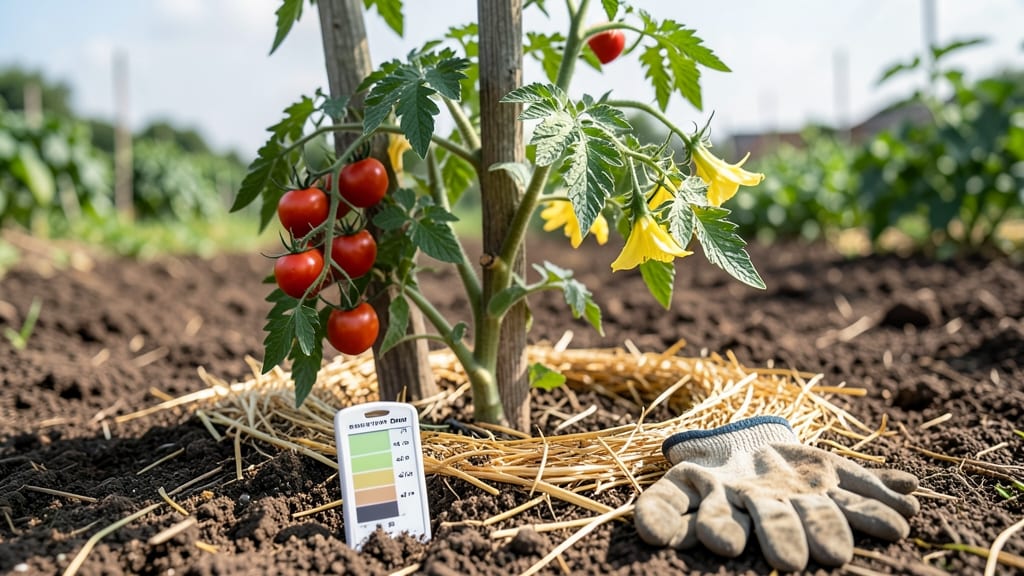
Tomatoes prefer well-draining, nutrient-rich soil with a slightly acidic to neutral pH between 6.0 and 6.8, combined with loose texture and organic matter like compost for optimal root health and productivity.
Tomatoes aren't picky, but they do best in soil that mimics their natural environment—think of the rich, crumbly earth they'd find in Mediterranean regions. 🌱 The ideal pH range (6.0-6.8) ensures they can absorb essential nutrients like nitrogen for leafy growth and potassium for fruit development.
I've found that adding aged compost not only improves drainage but also introduces beneficial microbes that help break down nutrients into forms the plant can use efficiently.
For gardeners with heavy clay or sandy soil, don't worry—simple amendments like peat moss or coconut coir can transform the texture. A quick at-home pH test (available for under $10) lets you adjust with lime to raise pH or sulfur to lower it.
The key is consistency: tomatoes hate soggy roots but also struggle when nutrients wash away too quickly.
Pro tip: Mulch with straw or wood chips to maintain moisture levels and prevent soil compaction. This mimics the natural ground cover tomatoes would find in their native habitat, keeping roots cool and reducing stress.
💡 In This Article
- Tomato Soil pH and Nutrient Requirements
- How to Improve Garden Soil for Tomatoes
Tomato soil pH and nutrient requirements
Tomatoes thrive in soil with a pH range of 6.0 to 6.8 because this balance unlocks their ability to absorb critical nutrients efficiently.
At this slightly acidic to neutral level, essential elements like nitrogen (for leaf growth), phosphorus (for root development), and potassium (for fruit production) become readily available. 🌱 For example, when soil pH drops below 5.5, phosphorus becomes locked away in the soil, starving your plants even if you've added fertilizer.
I've seen firsthand how tomatoes in overly acidic soil develop yellow leaves from nitrogen deficiency, despite having plenty of fertilizer in the mix.
The science behind this lies in the soil chemistry. Tomatoes have root systems that release hydrogen ions to acidify their immediate environment, creating what's called a "rhizosphere." This micro-zone needs to stay within that 6.0-6.8 range for optimal nutrient exchange.
The ideal soil also contains 5-10% organic matter, which acts like a nutrient reservoir. Organic matter breaks down slowly, releasing nitrogen over time while improving soil structure. Think of it as nature's slow-release fertilizer system—far more effective than synthetic granules that wash away quickly.
Nutrient uptake becomes particularly critical during flowering and fruiting stages. At these growth phases, tomatoes require higher levels of potassium and calcium to prevent blossom-end rot and strengthen cell walls. The soil's cation exchange capacity (CEC)—its ability to hold and release nutrients—peaks in well-amended soils with good organic content.
A simple test: squeeze a handful of ideal tomato soil—it should crumble easily between your fingers with a slightly moist feel, similar to a well-worn sponge that still holds water without being soggy.
What most gardeners overlook is how soil texture affects root health. Tomatoes need loose, aerated soil because their roots require oxygen. Compacted soil creates anaerobic pockets where roots suffocate, while sandy soil drains too quickly, depriving plants of moisture and nutrients.
The perfect balance is a loamy texture—about 40% sand, 40% silt, and 20% clay—which provides both drainage and moisture retention. This is why adding compost (which contains all three particle sizes) transforms poor soil into tomato-growing gold.
Consider this comparison: A heavy clay soil might hold nutrients well but suffocates roots, while pure sand drains too fast and offers no nutrient storage. The solution lies in creating that loamy structure through amendments.
For instance, mixing in 2-3 inches of compost per 12 inches of soil depth can transform even the worst garden plot into fertile ground. The organic matter also introduces beneficial microbes that help break down nutrients into forms tomatoes can absorb efficiently.
One common mistake is assuming all tomatoes have identical soil needs. While the pH range remains consistent, heirloom varieties often benefit from slightly more organic matter compared to hybrid types. This is because heirlooms have deeper root systems that require more extensive nutrient reserves.
For example, a San Marzano tomato plant might need 5-6 inches of amended soil depth to support its robust growth, while a smaller cherry tomato variety can thrive with just 3-4 inches of improved topsoil.