
Advice
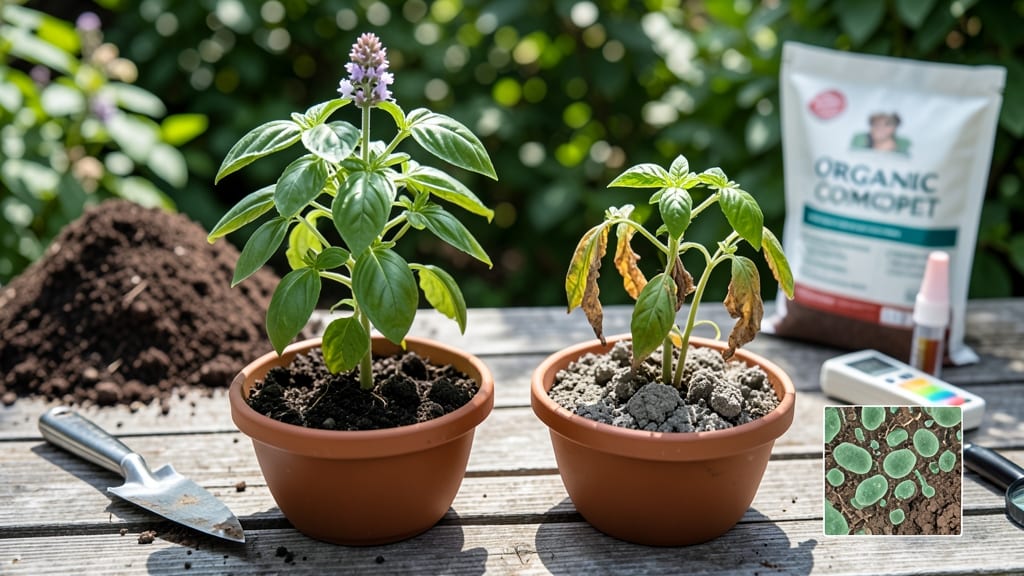
Yes, that soil does go bad over time as nutrients are exhausted, its structure breaks down from compaction or erosion, and contaminants build up from chemicals or organic decay. You'll notice it when plants struggle to grow, water pools on the surface, or the soil smells foul—typically a sign it needs refreshing every 3–5 years.
Soil isn't just dirt—it's a living ecosystem that naturally loses vitality when its microbial communities shrink or essential minerals like nitrogen and phosphorus get used up. 🌱 Over time, tilling or heavy foot traffic can crush the soil's crumbly texture, while salt buildup or chemical residues (like from old pesticides) create toxic conditions.
Even pH imbalances—whether too acidic or alkaline—lock out plants from accessing nutrients. The good news? Many problems can be fixed with compost, mulch, or simple tests like the ribbon test to check moisture retention.
Think of it like a sponge: when it gets too dirty or compressed, it can't hold water or nutrients anymore. That's why gardeners often mix in aged compost or switch to raised beds—both tricks to reset soil health without starting from scratch.
💡 In This Article
- How Soil Degrades Over Time: Science Behind Fertility Loss
- Revitalizing Old Soil: Renewal Methods for Gardens and Potted Plants
How soil degrades Over time: science behind fertility loss
Soil degradation starts with the invisible: microbial communities. Healthy soil teems with billions of bacteria, fungi, and protozoa that break down organic matter and cycle nutrients. When these populations dwindle—due to synthetic fertilizers or poor organic input—the soil loses its natural fertility engine.
For example, a single teaspoon of fertile soil can contain up to 1 billion bacteria, but overworked soil may see this drop by 80% in just 2-3 years.
The physical structure also suffers when organic matter (like decomposed leaves or compost) breaks down. This material acts like a sponge, holding 3-5 times its weight in water and creating air pockets for roots. Without it, soil becomes dense and hydrophobic—repelling water instead of absorbing it.
Compaction from machinery or foot traffic crushes these pores, reducing oxygen flow by 50% or more, which suffocates roots and beneficial microbes.
Chemical imbalances accelerate the decline. Plants absorb nitrogen, phosphorus, and potassium, leaving behind depleted soil.
Over time, this creates a vicious cycle: weakened plants attract fewer microbes, which further reduces nutrient availability. pH swings—whether too acidic (below 6.0) or alkaline (above 8.0)—block essential nutrients like iron or calcium, even if they're present.
Erosion washes away the top 1-2 inches of fertile soil every year, exposing sterile subsoil beneath.
Contaminants add another layer of damage. Salt buildup (from irrigation or poor drainage) creates osmotic stress, making it harder for plants to absorb water. Old pesticides or heavy metals (like lead) can linger for decades, while organic matter decay releases methane—a greenhouse gas that further disrupts soil chemistry.
The result? A once-vibrant ecosystem becomes a lifeless, nutrient-poor substrate that struggles to support plant life.
Think of it like a bank account: you can only withdraw so much before the balance hits zero. Soil fertility operates on the same principle—continuous use without replenishment leads to collapse.
Even in potted plants, soil can degrade in 1-2 years if not refreshed, as roots exhaust nutrients and salts accumulate from tap water.
Here’s what’s happening at a microscopic level: organic matter decomposes into simpler compounds, releasing carbon dioxide but losing the complex structures that hold soil together. Without these "glues," particles clump into hardpan layers that roots can’t penetrate.
The loss of microbial diversity also reduces disease suppression—making plants more vulnerable to pests and pathogens.
Recognizing these signs early is key. If your soil feels gritty, repels water, or smells like rot, it’s already past its prime. The good news? Many of these processes are reversible with the right amendments—but the longer you wait, the harder the reset becomes. 🌱