
How To
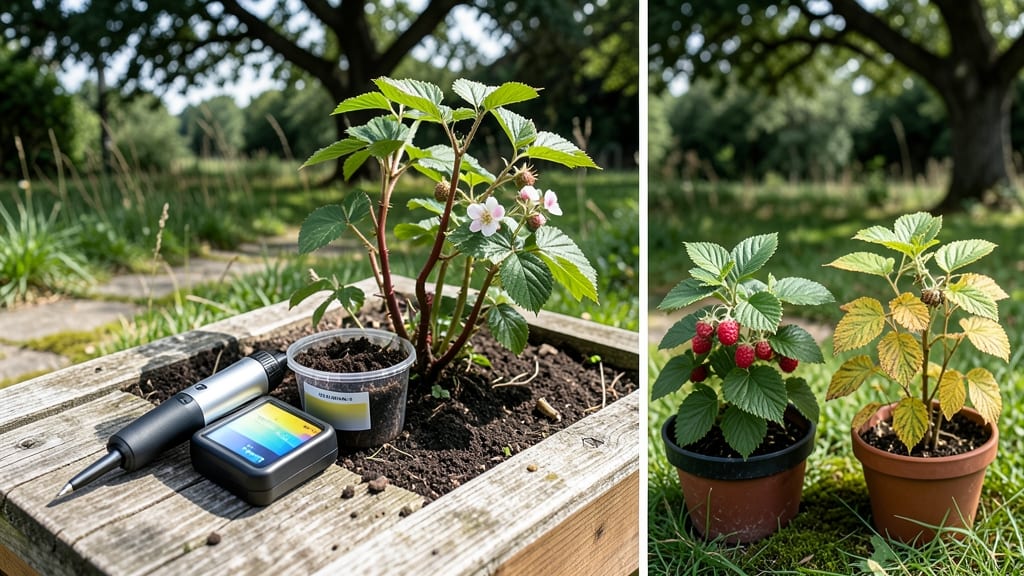
The perfect raspberry soil pH is the difference between a meager harvest and a bountiful one 🍇 — and most gardeners are getting it wrong without even knowing it.
Your raspberry bushes could be producing half the berries they’re capable of—simply because their soil isn’t acidic enough. Raspberries thrive in a precise pH range, and getting it right is the secret weapon behind lush canes and sweet, abundant harvests.
Too high or too low, and you’ll see yellowing leaves, stunted growth, or even fruit that never ripens. The good news? Testing and adjusting your soil’s pH is easier than you think—and once you nail it, your berries will thank you.
In this guide, I’ll walk you through the ideal pH range for raspberries, how to test your soil, and the organic fixes to keep your plants happy all season long.
Ideal raspberry soil pH levels: the exact range for maximum growth
Raspberries are acid-loving plants that demand precise soil conditions to thrive. The ideal raspberry soil pH range is between 4.5 and 6.5, with 5.5 to 6.0 being the sweet spot for most varieties.
When soil pH strays outside this range, your plants struggle to absorb essential nutrients, leading to stunted growth, poor fruit set, or even disease susceptibility. Understanding and maintaining this pH balance is the key to unlocking your raspberry bushes' full potential.
Soil pH directly impacts nutrient availability. In acidic soil (pH 4.5–5.5), raspberries can access more iron, manganese, and phosphorus, which are critical for root development and berry sweetness. However, if the pH drops below 4.5, these nutrients become toxic, burning roots and leaves.
On the other hand, alkaline soil (pH 6.5+) locks out essential nutrients like phosphorus and zinc, causing yellowing leaves and weak canes.
Before diving into adjustments, you’ll need to test your soil pH. Home test kits (like LaMotte or MySoil) are affordable and easy to use. For a more precise reading, send a sample to your local cooperative extension service.
Dig a 6-inch-deep sample near your raspberry canes, remove debris, and follow the kit instructions. This step is non-negotiable—guessing pH can ruin your harvest.
Here’s the golden rule: Raspberries prefer slightly acidic to neutral soil. The 4.5–6.5 range ensures your plants have access to all the nutrients they need without toxicity.
For example, Heritage raspberries (a popular heirloom variety) perform best at pH 5.5–6.0, while Boyne Golden raspberries tolerate a slightly wider range of 5.0–6.5. Always check the specific needs of your raspberry variety, as slight variations exist.
| Soil pH Range | Nutrient Availability | Raspberry Response | Action Needed |
|---|---|---|---|
| Below 4.5 | Excess iron/manganese; locked-out calcium | Stunted growth, yellow leaves, root burn | Raise pH with lime or wood ash |
| 4.5–5.5 | Optimal iron, manganese, phosphorus | Healthy canes, sweet berries, strong roots | Monitor and maintain |
| 5.5–6.5 | Balanced nutrients, no toxicity | Maximized growth and fruit production | Ideal range—no adjustments |
| Above 6.5 | Locked-out phosphorus, zinc, iron | Yellowing leaves, poor fruit set, weak canes | Lower pH with sulfur or peat moss |
Even a half-point deviation from the ideal pH can reduce berry production by up to 30%. For instance, if your soil tests at 6.8, your raspberries may show signs of chlorosis (yellowing leaves) because they can’t absorb enough iron.
Conversely, soil at 4.2 might cause leaf scorch due to excess aluminum. The goal is to keep your soil in that 4.5–6.5 window—not just for berry size, but for overall plant vigor.
Organic matter plays a huge role in buffering soil pH naturally. Adding compost or well-rotted manure (like cow or chicken manure) helps stabilize pH over time. Aim for 2–3 inches of compost mixed into the top 6 inches of soil annually.
This practice also improves soil structure, which is just as critical as pH for raspberry health. Think of compost as the insurance policy for your soil’s long-term fertility.
If your soil tests too alkaline (pH 7.0+), you’ll need to lower the pH using organic amendments like sulfur, peat moss, or pine needles. Elemental sulfur is the most effective but takes 2–3 months to adjust pH. For faster results, use sulfur-coated urea or alfalfa meal.
Always apply these in small amounts and retest your soil after 6–8 weeks to avoid overshooting the target.
On the flip side, if your soil is too acidic (pH 4.0–), you’ll want to raise the pH using lime (calcium carbonate) or wood ash. Dolomitic lime adds both calcium and magnesium, which are essential for raspberry growth.
Start with 5–10 pounds per 100 square feet and work it into the top 6 inches of soil. Avoid quick-lime (calcium oxide), as it can burn roots and cause pH spikes.
Remember, pH adjustments take time. Don’t expect overnight changes—soil chemistry is a slow but steady process. Retest your soil every 3–6 months during the growing season to ensure you’re staying within the 4.5–6.5 range.
This consistency is what separates a mediocre raspberry harvest from a bountiful, sweet berry feast.
By mastering your raspberry soil pH, you’re not just growing plants—you’re cultivating a thriving ecosystem that rewards you with juicy, flavorful berries year after year. Start testing today, and watch your raspberry bushes transform
How to adjust raspberry soil pH: organic fixes for acid-loving plants
Raspberries are acid-loving plants that demand precise soil conditions to thrive. If your soil pH is too high (alkaline), nutrients like iron and manganese become locked away, stunting growth and reducing berry production.
The key is making gradual, organic adjustments that won’t shock your plants or disrupt the microbiome in your soil.
Before diving into fixes, test your soil pH using a simple DIY test kit or send a sample to your local extension office. Raspberries prefer a pH range of 5.5–6.5, but slight variations can still yield great results with the right amendments.
Organic methods take patience—expect changes over 2–4 months—but they’re safer for your plants and the environment.
Lowering pH (For Alkaline Soil)
| Method | Pros | Cons |
|---|---|---|
| Elemental Sulfur | Slow-release, long-lasting (3–6 months) | Requires moisture to activate; can over-acidify if overused |
| Peat Moss | Improves soil structure and water retention | Harvesting peat moss is environmentally harmful; short-term effect |
| Pine Needles | Free and natural; adds organic matter | Slow to break down; may attract pests if overly thick |
| Cottonseed Meal | High in nitrogen; doubles as fertilizer | Can attract insects if not mixed deeply |
Raising pH (For Acidic Soil)
| Method | Pros | Cons |
|---|---|---|
| Wood Ash | Fast-acting; adds potassium | Use sparingly—can make soil too alkaline; avoid near roots |
| Crushed Oyster Shells | Slow-release calcium; improves soil texture | Limited availability; takes time to break down |
| Garden Lime (Calcium Carbonate) | Long-lasting; widely available | Can raise pH too quickly if overapplied; avoid synthetic forms |
To lower pH organically, start with elemental sulfur—the gold standard for acid-loving plants. Apply 1–2 pounds per 100 square feet and mix it into the top 6–8 inches of soil. Water thoroughly to activate it.
For a quicker (but temporary) fix, spread pine needles or peat moss as mulch around your raspberry canes. This mimics their natural forest habitat while slowly acidifying the soil.
If your soil is too acidic (pH below 5.5), opt for wood ash or crushed oyster shells. Sprinkle 1–2 cups per plant around the drip line (not directly on roots) and lightly scratch into the soil.
Re-test your soil pH in 4–6 weeks to gauge progress. Avoid synthetic lime, which can disrupt soil biology and lead to nutrient imbalances over time.
Pro tip: Pair your pH adjustments with a thick layer of compost (2–3 inches) to buffer extreme changes and improve soil structure. Compost also introduces beneficial microbes that help raspberries absorb nutrients more efficiently.
Think of it as a soil health insurance policy—your plants will thank you with bigger, sweeter berries.
Remember, patience is key. Soil pH isn’t something you’ll fix overnight, but with consistent organic amendments, you’ll create the perfect acidic environment for your raspberries to flourish. Test, adjust, and repeat—your future harvests will reward your effort! 🍇