
How To
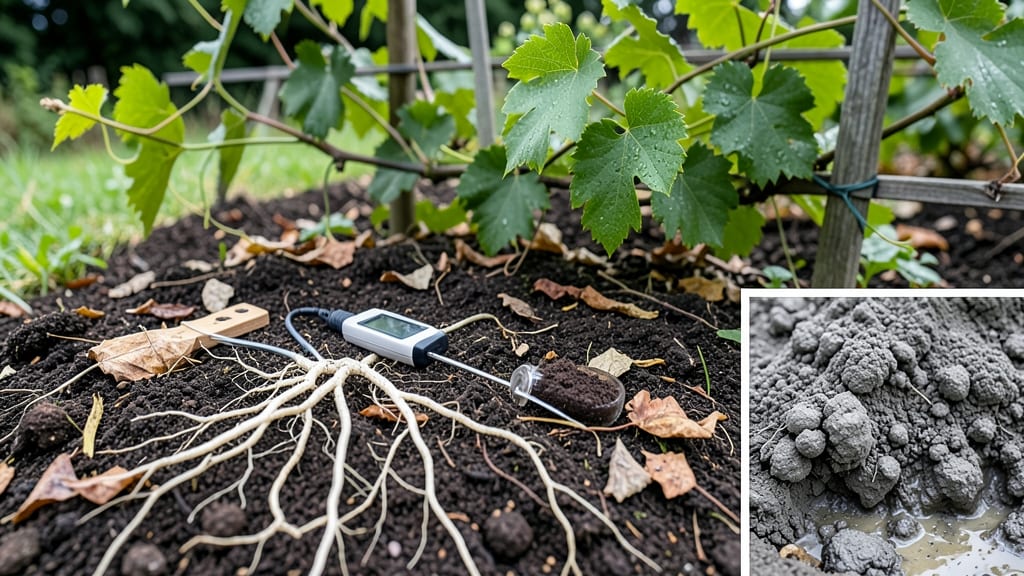
The soil type for grapes craves well-drained loam, not soggy clay or sandy wasteland. ✨ The right soil type isn't just about drainage—it's the foundation for flavorful fruit and vigorous vines that produce for decades.
I learned this the hard way when my first vines struggled in heavy soil, producing small, watery berries instead of the juicy grapes I dreamed of.
Ideal grape soil is a mix of 60% mineral particles (sand, silt, clay) and 40% organic matter, with a slightly acidic pH between 5.5 and 6.5. Most commercial vineyards use loamy soil because it holds moisture without drowning roots while providing essential nutrients.
If your soil is too heavy, amend with compost and coarse sand; if it's too sandy, add peat moss or well-rotted manure to improve water retention.
You'll know you're on the right track when your vines show strong, dark green leaves and produce clusters of grapes that taste like sunshine—sweet, complex, and bursting with flavor. The key is testing your soil first (a simple home kit costs under $20) and adjusting before planting.
Most grape varieties, from Concord to Cabernet Sauvignon, thrive in this balanced environment once the soil is right.
Regional adaptations matter: Northern climates benefit from extra organic matter to insulate roots, while hotter southern areas need deeper drainage to prevent rot. Whether you're growing in containers or in-ground, the same principles apply—just scale the amendments to your space. Let's get your soil grape-ready!
📚 In This Guide
- What you need
- Instructions
- Tips and common mistakes
- Wrapping up and next steps
What you need
- ● Well-drained loam soil (ideal pH: 5.5–7.5): 60–70% sandy loam (for drainage)
- ● 20–30% silt (for moisture retention)
- ● 10% clay (for nutrient holding)
- ● Organic matter: 2–3 inches of compost or well-rotted manure (per planting area)
- ○ Optional: leaf mold or peat moss (for acidity adjustment)
- ● Soil amendments (if needed): Gypsum (for clay-heavy soils, 20–30 lbs per 100 sq ft)
- ● Sand (for compacted soils, 1–2 inches mixed in)
- ● Basic tools: Garden trowel or spade
- ● Soil pH test kit (digital or liquid)
- ● Garden fork (for aeration)
- ● Wheelbarrow (for mixing soil amendments)
- ○ Optional (but helpful): Soil moisture meter
- ● Drip irrigation system (for consistent watering)
- ● Mulch (straw or wood chips, 2–3 inches)
- ● Test your soil’s drainage (dig a 12-inch hole; if water pools, amend with sand or organic matter).
- ● Ensure full sun exposure (6–8 hours daily).
- ● Choose a grapevine variety suited to your climate (e.g., Concord for cool regions, Thompson Seedless for warm areas).
How to choose and prepare the perfect soil for grapes
Grapes thrive when their roots breathe freely—here’s how to create the ideal foundation for flavorful vines.
🌱 Step 1: Test Your Current Soil’s Drainage and Composition
Grapes despise soggy roots, so start by assessing your soil’s natural drainage. Dig a 12-inch deep hole and fill it with water—if it drains completely within 4-6 hours, your soil is already suitable. If water pools or seeps slowly, you’ll need to amend it. I like to mix in 1-2 inches of coarse sand or perlite per square foot to improve aeration.
Pay attention to texture: ideal grape soil feels like a damp sponge—light enough to crumble between fingers but holds moisture without clumping. If your soil is heavy clay, blend in 20-30% composted organic matter to loosen it. Sandy soil? Add 10-15% peat moss or coconut coir to retain moisture without suffocating roots.
🌿 Step 2: Build a Well-Draining Loam Base
Grapes prefer a slightly acidic to neutral pH of 6.0-7.0. Test your soil’s pH with a kit—if it’s off, adjust with lime (to raise pH) or sulfur (to lower pH), following package rates. I spread amendments evenly over the planting area and till them into the top 12 inches of soil.
For new plantings, create a raised mound or berm 6-8 inches high to improve drainage. This prevents water from pooling around the base, which grapes hate. Mix in 3-4 inches of compost and 1 cup of bone meal per plant for phosphorus—this boosts root development and fruit set. Avoid fresh manure; it can burn young roots.
☀️ Step 3: Layer for Long-Term Root Health
Grapes have deep roots, so focus on a 36-inch deep planting zone. Start with a 6-inch layer of coarse gravel or broken pottery at the bottom of the hole to create a drainage layer. This prevents waterlogging during heavy rains. Next, add a 12-inch layer of amended loam mixed with 10% perlite—this keeps roots oxygenated while holding enough moisture.
Top with 6 inches of finished compost mixed with native soil. This gradual transition mimics natural soil layers and encourages roots to spread deeply. Mulch the surface with 2-3 inches of wood chips or straw, keeping it 6 inches away from the trunk to prevent rot. Replenish mulch annually to maintain moisture and suppress weeds.
💧 Step 4: Monitor and Adjust Over Time
After planting, check soil moisture weekly by sticking your finger 2-3 inches deep. If it feels dry, water deeply until moisture reaches 12 inches down. Grapes need consistent moisture but hate soggy feet—water in the morning so foliage dries by evening, reducing disease risk.
Every 2-3 years, retest your soil’s pH and amend if needed. Grapes are heavy feeders, so in spring, spread 1 cup of 10-10-10 fertilizer per vine and water it in. Avoid high-nitrogen fertilizers after bud break—they promote leafy growth at the expense of fruit. Instead, switch to a low-nitrogen, high-phosphorus blend to encourage flowering and fruiting.
✂️ Step 5: Prune for Soil Health
Pruning isn’t just about shaping vines—it’s about directing energy to root growth. In late winter, remove 20-30% of last year’s growth, focusing on inward-growing or crossing branches. This improves air circulation and reduces fungal pressure in the soil. I also thin out excess suckers (shoots from the base) to prevent overcrowding, which competes with root development.
After pruning, top-dress with 1-2 inches of compost** around the drip line (the area where water naturally falls from the canopy). This feeds beneficial microbes and improves soil structure over time. Avoid piling compost against the trunk—it can cause rot or attract pests.
Tips & tricks for perfect grape soil preparation
Creating ideal soil for grapes isn't just about mixing ingredients—it's about understanding how each layer works together to support those deep roots. Here's what I've learned from years of trial and error in my own vineyard.
Drainage Test Accuracy: When testing your soil's drainage in that 12-inch hole, use a clear container to measure the water level before pouring. This gives you a more precise baseline than eyeballing it. I've found that adding 1-2 inches of coarse sand (not fine sand) makes the biggest difference in preventing compaction while still allowing water to move freely. The goal is to mimic natural riverbank conditions where grapes originally thrived.
Layering Strategy: The 36-inch deep planting zone in Step 3 is non-negotiable for mature vines. I recommend using broken pottery shards instead of gravel for the bottom drainage layer—they create more surface area for water to disperse. For the 12-inch loam layer, mix in 10% perlite by volume, not weight, to maintain that perfect air-to-moisture ratio. Think of it like building a skyscraper foundation—each layer must support what's above it.
pH Adjustment Timing: Don't rush the pH adjustment process. After amending the top 12 inches of soil, wait 4-6 weeks before planting to let the amendments fully integrate. I've seen growers add lime or sulfur right before planting only to have uneven pH levels that stress young roots. Test again after that waiting period to confirm your soil is in that 6.0-7.0 range before committing to your vines.
Mulch Placement Precision: The 6-inch clearance between mulch and the trunk isn't just about preventing rot—it's about creating a temperature gradient. The outer mulch keeps roots cool while the inner soil stays slightly warmer, encouraging deeper root penetration. I use wood chips because they break down slowly, adding organic matter over time without smothering the soil like straw can.
Pro Tips for Soil Type For Grapes
- Creating ideal soil for grapes isn't just about mixing ingredients—it's about understanding how each layer works toge...
- Drainage Test Accuracy: When testing your soil's drainage in that 12-inch hole, use a clear container to measure the ...
- Layering Strategy: The 36-inch deep planting zone in Step 3 is non-negotiable for mature vines. I recommend using bro...
Frequently asked questions
Got questions about the best soil for your grapevines? You’re not alone! Here are some of the most common concerns—and their answers—to help you grow thriving vines with confidence.
What’s the best soil type for growing grapes?
Grapes thrive in well-drained loamy soil with a mix of sand, silt, and clay. Sandy loam (60% mineral, 40% organic) is ideal—it balances drainage and nutrient retention. Avoid heavy clay or waterlogged soils, which can stunt roots and invite disease.
How long does it take for soil to become suitable for grapevines?
If your soil isn’t perfect, don’t worry! With amendments like compost or sand, you can improve it in 3–6 months. For heavy clay, focus on adding organic matter and tilling deeply. Patience pays off—healthy soil builds over time.
Can I grow grapes in containers if my yard’s soil isn’t ideal?
Containers work well for grapes, especially in well-draining potting mixes (like 60% mineral soil, 30% compost, 10% perlite). Just ensure the pot has drainage holes and is at least 15–20 gallons for mature vines. Dwarf varieties are perfect for small spaces!
What signs mean my grapevine’s soil is too wet or too dry?
Watch for yellowing leaves (overwatering) or crispy edges (drought stress). Poor drainage may also cause root rot (mushy, black roots). Adjust watering and amend soil with organic matter or sand to restore balance. Mulching helps regulate moisture too!
Do different grape varieties need different soil types?
Most grapes prefer loamy soil with pH 6.0–7.0, but some have tweaks. Muscadine grapes tolerate clay better, while European varieties (like Cabernet) need excellent drainage. Always check your variety’s needs—local nurseries can help!
Wrapping up and next steps
Choosing the right soil type for grapes is the foundation of a thriving vineyard—well-drained loam isn’t just ideal, it’s a game-changer for flavor and yield! 🍇 Whether you’re a seasoned grower or just starting, understanding your soil’s composition, pH, and drainage will set you up for success.
Don’t let uncertainty hold you back: test your soil, amend as needed, and watch your vines (and harvests) flourish.
Ready to take the next step? Start small—plant a few test vines, monitor their progress, and refine your approach. With the right soil and a little patience, you’ll be sipping wine (or grapes!) straight from your own land in no time. Cheers to your future harvest! 🍷