
How To
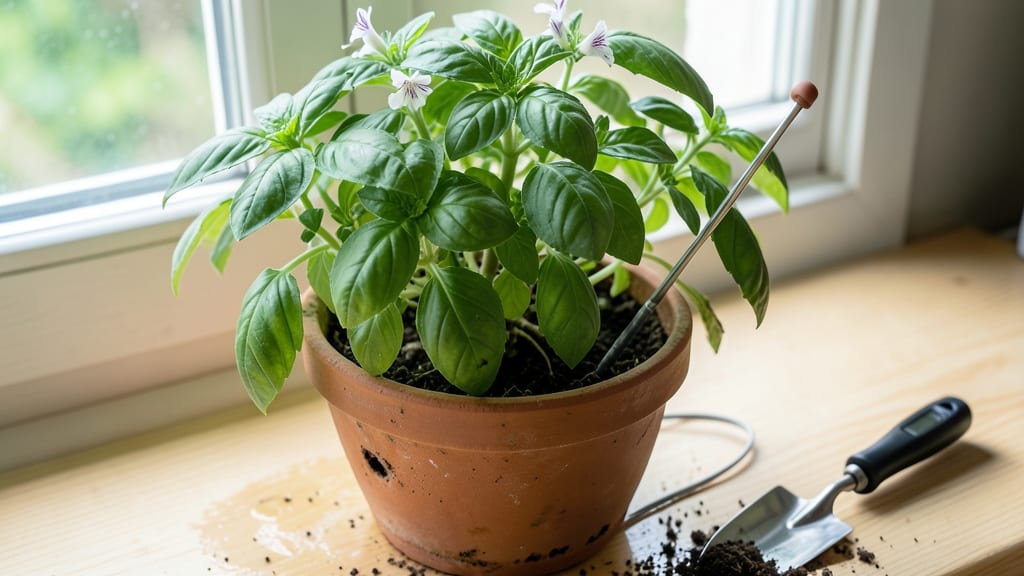
Checking potting soil moisture involves pressing the soil lightly with your finger—dry top inch means watering, while dampness indicates waiting. For precision, use a moisture meter or the finger test at multiple depths to ensure even hydration for healthy plant roots.
Soil moisture isn't just about whether your fingers come away wet or dry—it's about creating the right balance for your plants. 🌱 Overwatering cuts off oxygen to roots, while underwatering stresses them, and both can lead to plant decline.
I've found that the finger test works well for most plants, but for moisture-sensitive varieties like orchids, a moisture meter gives you more reliable data. The key is consistency: test the same depth each time and adjust your watering schedule based on what you find.
What's interesting is how different plants thrive at different moisture levels. Succulents, for example, prefer soil that stays on the drier side, while tropical plants like ferns need consistently damp conditions. This is why knowing your plant's specific needs can save you from over- or under-watering.
For instance, if your finger test shows dry soil at the top but moisture deeper down, it might be time to let the soil dry out more before watering again.
💡 In This Article
- Understanding Soil Moisture and Root Health
- Tools and Techniques for Accurate Moisture Testing
Understanding soil moisture and root health
Soil moisture isn't just about hydration—it's about creating an oxygen-rich environment for roots. When soil stays too wet, it displaces oxygen from the pore spaces between particles, suffocating roots and promoting harmful bacteria. This anaerobic condition causes roots to rot, especially in containers where drainage is limited.
The ideal moisture balance keeps soil damp but not soggy, allowing roots to absorb water while still accessing oxygen through the air pockets.
Different plants have vastly different needs: succulents and cacti thrive with soil that stays on the drier side (30-50% moisture retention), while tropical plants like ferns and calatheas need consistently moist conditions (60-80% moisture retention).
The key difference lies in their natural habitats—succulents evolved in arid environments where water is scarce, while tropical plants grow in humid, consistently damp forests. This is why a finger test might show dry soil for a snake plant but indicate watering time for a peace lily.
What most people don't realize is that soil moisture affects more than just the roots—it influences nutrient availability too. Water-soluble nutrients like nitrogen and potassium become locked in the soil when it's too dry, while excessive moisture can leach them away.
This is why a balanced approach matters: testing moisture at multiple depths (top inch and 2-3 inches down) gives you a complete picture of your plant's hydration status.
Temperature also plays a crucial role in moisture dynamics. In hot weather, soil dries out faster due to evaporation, while cooler temperatures slow moisture loss. This is why plants often need more frequent watering in summer—even if the soil feels similarly moist to your touch.
The texture of your soil matters too: sandy soil drains quickly and dries faster than clay-based mixes, which retain moisture longer but risk suffocating roots if overwatered.
Consider this: a soil moisture meter reading of 40% at the surface might be perfect for a jade plant, but the same reading could indicate underwatering for a philodendron. The secret is understanding your plant's specific needs and adjusting your testing approach accordingly.
For example, tropical plants often show wilting before the soil actually needs watering, while succulents can handle looking dry for extended periods.
One advanced technique I've found helpful is the "weight test"—lifting your pot before watering. A consistently lighter pot signals it's time to water, while a heavier one means waiting.
This works because most potting mixes hold about 20-30% of their weight in water when properly hydrated. Combine this with your finger test for even better results.