
Propagation
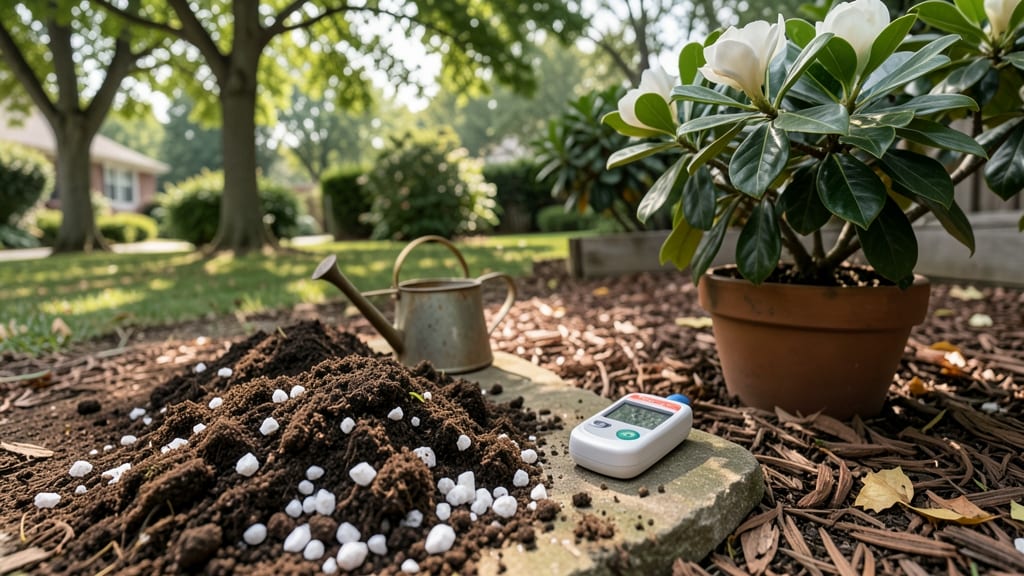
Your gardenias won’t bloom worth a thing if you ignore the gardenia soil requirements—the right acidic loam is the foundation for those heavy, intoxicating blooms. 🌿 The secret starts with soil that drains like a dream—no soggy roots, no chalky misery.
I learned this the hard way after my first gardenia plant fought me for three years before I finally got the soil right.
Think of gardenia soil as the Goldilocks of gardening—not too sandy, not too clay-heavy, but that just-right loam with a pH between 5.0 and 6.5. Too alkaline? The plant wilts.
Too compacted? Roots suffocate. The fix? Mix in 2-3 inches of peat moss or pine bark to lighten heavy soil and keep that acidity locked in.
Once you get it right, you'll see the difference in 6-8 weeks: glossy leaves, new growth, and those signature white blooms appearing like clockwork. The key is testing your soil first—skip this step, and you're gambling with your plant's future.
Works for both in-ground plantings and containers—just adjust the mix. For pots, use a blend of 50% peat moss, 30% pine bark, and 20% perlite. The goal? Soil that holds moisture but never stays soggy, because gardenias hate wet feet.
📚 In This Guide
- What you need
- Instructions
- Tips and common mistakes
- Wrapping up and next steps
What you need
- ● Peat moss or coconut coir: 50% of the soil mix (holds moisture while allowing airflow). Pro tip: 💡 Use sphagnum peat moss for best acidity retention.
- ● Perlite or pumice: 20% (boosts drainage and prevents compaction). Spec: ¼"–½" granules.
- ● Pine bark fines: 20% (adds structure and mimics acidic forest floors). Spec: ¼"–½" chunks.
- ○ Sand (optional but helpful): 10% (only if your soil is heavy clay). Spec: Coarse horticultural sand.
- ● Slow-release fertilizer: 1 tbsp per gallon of mix (e.g., 14-14-14 or acid-loving plant blend).
- ○ Lime (optional): Only if your soil tests too acidic (pH dolomitic lime sparingly.
- ● Garden trowel or spade (for mixing and transplanting).
- ● pH test kit (digital or liquid test strips). Why? Gardenias thrive at pH 5.0–6.5!
- ● Gloves (to protect your hands from peat moss and sharp bark).
- ● Wheelbarrow or large bucket (for mixing ingredients).
- ● Watering can with a fine rose nozzle (for gentle hydration).
- ○ Mulch (optional): Pine needles or wood chips (1–2" layer to retain moisture and acidity).
- ● Test your current soil pH (amend if needed before planting).
- ● Choose a sunny spot (6+ hours of light daily).
- ● Ensure well-draining soil (gardenias hate soggy roots!).
- ● Watering schedule: Consistent moisture (never let soil dry out completely).
Step-by-step guide to creating ideal gardenia soil
Here's how to craft the perfect acidic loam blend that brings out your gardenia's signature fragrance and vibrant blooms.
🌱 Step 1: Start With Acidic Base Materials
Gardenias demand soil with a pH between 5.0 and 6.5—any higher and they refuse to bloom. Begin with 50% peat moss or coconut coir as your acidic base. These materials hold moisture while maintaining that critical acidity. I like to mix equal parts of both for better aeration—peat moss can get too dense when wet.
Add 30% perlite or pumice to create air pockets. This prevents the roots from sitting in soggy conditions, which causes rot. The perlite should make up about 1/3 of your mix—enough to keep roots breathing but not so much that the soil becomes unstable. Sift everything together gently to ensure even distribution before proceeding.
💧 Step 2: Incorporate Organic Matter for Nutrients
Add 20% composted pine bark fines—this is key for gardenias. The bark breaks down slowly, releasing nutrients while maintaining acidity. Avoid regular compost, which is often too alkaline. I use 1 part pine bark to 3 parts peat mix for balance. This combination ensures your soil stays loose yet nutrient-rich.
For extra nourishment, mix in a handful of sulfur granules per gallon of soil. This boosts acidity over time and prevents nutrient lockout. Work it in thoroughly—you should see no visible granules remaining. The sulfur will dissolve slowly, keeping the pH stable for months.
✂️ Step 3: Test and Adjust Before Planting
Use a soil pH test kit to check your mix. If the reading is above 6.0, add more sulfur or peat moss. For every 0.5 pH point too high, mix in 1 cup of elemental sulfur per 5 gallons of soil. If it's below 5.0, blend in a handful of limestone chips to raise the pH slightly. Gardenias are fussy, but this step ensures they'll thrive.
Finally, moisten the soil to the consistency of a wrung-out sponge—damp but not dripping. Pack it lightly around the roots when planting. The goal is a fluffy, airy medium that holds moisture without suffocating roots. Water it in gently after planting to settle everything without displacing the soil structure.
☀️ Step 4: Maintain Soil Conditions Year-Round
Top-dress with 1-2 inches of fresh pine bark mulch annually in spring. This refreshes the acidity and prevents weeds. Avoid wood chips from deciduous trees—they raise pH as they decompose. I also add a slow-release acidic fertilizer every 6-8 weeks during growing season to keep nutrients flowing.
Monitor drainage by checking how long water takes to drain through a 4-inch deep hole in the soil. It should take no more than 30 minutes to drain completely. If it drains too slowly, add more perlite. If it drains too fast, mix in a bit of composted leaf mold to improve moisture retention. Adjust as needed—gardenias reward precision with stunning blooms.
Tips & tricks for perfect acidic loam blends
Between us, these small adjustments make all the difference when crafting gardenia-friendly soil. The devil's in the details—and I've learned this the hard way after watching perfectly good gardenias refuse to bloom.
Layering Matters: When combining your 50% peat moss or coconut coir with 30% perlite, alternate layers rather than mixing everything at once. Start with a 2-inch layer of peat, then sprinkle perlite evenly, and repeat. This creates better air pockets throughout the entire mix rather than just at the surface. Think of it like making a lasagna—each layer has a specific purpose.
Acidity Precision: That handful of sulfur granules per gallon is your secret weapon for maintaining the perfect 5.0-6.5 pH range. Here's the trick: crush the sulfur granules slightly before mixing—this increases surface area and speeds up dissolution. Also, never mix sulfur directly with limestone chips; keep them in separate containers until you absolutely need to adjust pH. The sulfur will work its magic gradually over months, while limestone acts immediately.
Drainage Test: The 30-minute drainage test is non-negotiable, but here's how to make it foolproof. Use a 4-inch deep hole in a container that's at least 6 inches wide—this mimics real planting conditions. Pour in 1 cup of water and time how long it takes to completely drain. If water pools at the bottom after 30 minutes, your mix is too dense. Add 10% more perlite and retest. This simple adjustment prevents root rot while maintaining moisture retention.
Optional Add-Ins: For an extra boost of nutrients, consider adding 1 tablespoon of fish emulsion per gallon (clearly marked optional!). This provides nitrogen without altering pH. I've found gardenias respond beautifully to this when applied during the 6-8 week fertilizer schedule mentioned in Step 4. Just be sure to water thoroughly after application to prevent salt buildup.
Pro Tips for Gardenia Soil Requirements
- Between us, these small adjustments make all the difference when crafting gardenia-friendly soil. The devil's in the ...
- Layering Matters: When combining your 50% peat moss or coconut coir with 30% perlite, alternate layers rather than mi...
- Acidity Precision: That handful of sulfur granules per gallon is your secret weapon for maintaining the perfect 5.0-6...
Frequently asked questions
Got questions about gardenia soil? You’re not alone!
Here are answers to the most common concerns—from pH tweaks to troubleshooting—so your fragrant blooms stay happy and healthy.
What’s the ideal pH range for gardenia soil?
Gardenias love acidic soil with a pH between 5.0 and 6.5. Test your soil with a kit—if it’s too alkaline (above 7.0), amend it with sulfur or peat moss. Yellow leaves? That’s often a sign of soil that’s too alkaline! Pro tip: Mix in pine bark fines or coir to maintain acidity naturally.
How often should I adjust the soil pH for gardenias?
Check your soil’s pH every 3–6 months, especially if your gardenia’s growth slows or leaves yellow. If you’re using container gardening, pH can drift faster—flush the soil with rainwater (not tap water) to help stabilize it. Note: Over-amending with sulfur can harm roots, so start slow!
Can I grow gardenias in regular garden soil?
Regular garden soil is usually too alkaline and lacks the organic matter gardenias crave. Instead, blend 60% acidic potting mix (like pine bark) with 30% peat moss or coconut coir, and 10% perlite for drainage. For in-ground plantings, dig in composted pine needles or leaf mold to mimic their natural habitat.
Why are my gardenia leaves turning yellow, even with the right soil?
Yellow leaves can mean overwatering, nutrient deficiency (like iron or magnesium), or root rot. Check the soil—it should stay evenly moist but never soggy. If roots look mushy, repot in fresh, well-draining mix. Feed with an acid-loving plant fertilizer (like 8-3-9) every 4–6 weeks in spring/summer.
What’s the best alternative to peat moss for acidic soil?
If peat moss is hard to find, try these eco-friendly swaps:
- Coconut coir – Holds moisture and mimics peat’s acidity.
- Composted pine bark – Adds organic matter and acidity.
- Leaf mold – Breaks down into nutrient-rich, slightly acidic humus.
- Sphagnum moss – Retains moisture and stays acidic (great for containers!).
Wrapping up and next steps
Gardenia plants thrive when their soil requirements are met—think acidic, well-draining loam with a touch of organic matter. The secret to those fragrant blooms? A balance of pH (5.0–6.5), proper aeration, and moisture control.
With the right setup, your gardenia will reward you with lush foliage and stunning flowers year after year! 🌸
Ready to give your gardenia the perfect home? Test your soil today and adjust as needed—your plant (and your senses!) will thank you. Happy gardening! 🌱