
Shrubs
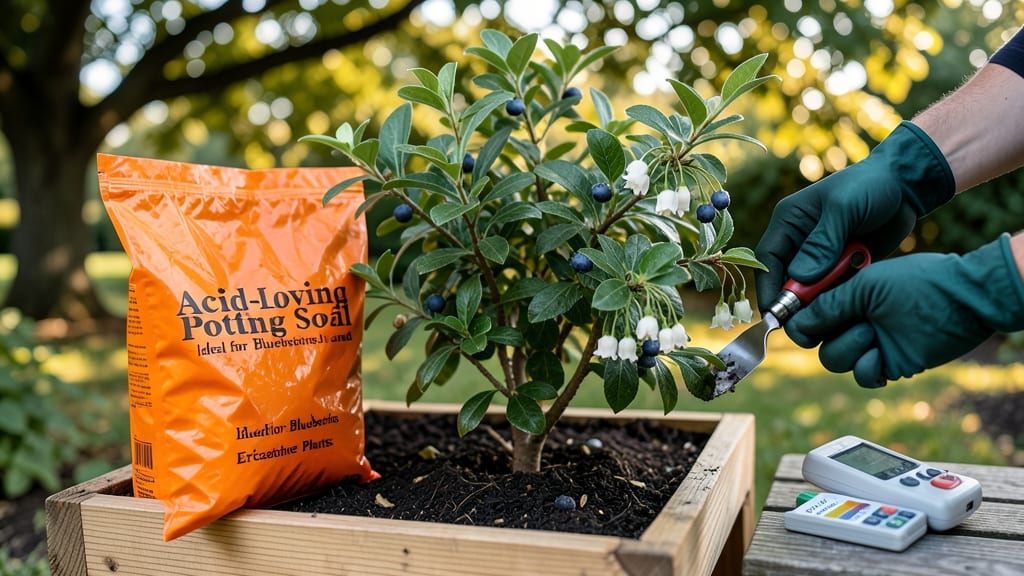
Potting soil for blueberry bushes requires an acidic mix with a pH between 4.5 and 5.5, blending peat moss, pine bark fines, and perlite in a 50-30-20 ratio. Avoid composted materials that raise pH, and test soil annually for acidity adjustments.
Blueberry bushes thrive when their soil mimics their natural bog habitat, where acidity unlocks essential nutrients like iron. 🌱 The 50-30-20 mix creates ideal drainage while maintaining that crucial low pH—peat moss holds moisture and acidity, pine bark fines add structure, and perlite prevents compaction.
I've seen firsthand how even a slightly higher pH can stunt growth, so testing with a simple pH meter every spring keeps your bushes happy. For container plants, consider adding a handful of sulfur to your mix to boost acidity if needed.
What many gardeners overlook is how organic matter like pine needles or oak leaves can naturally acidify soil over time. These amendments break down slowly, providing a steady pH buffer. I recommend mixing in a thin layer of these materials when repotting or refreshing your soil blend.
The key is consistency—blueberries are finicky about their environment, but with the right acidic foundation, you'll see stronger canes and bigger harvests.
💡 In This Article
- Why Blueberry Bushes Need Acidic Potting Soil
- DIY Blueberry Soil Mix Recipes for Containers
Why blueberry bushes need acidic potting soil
Blueberries evolved in acidic environments like bogs and wetlands, where the naturally low pH—typically between 4.5 and 5.5—allows them to absorb iron efficiently. At this acidity level, iron remains soluble in soil water, making it available for uptake through the plant's roots.
When pH rises above 6.0, iron becomes locked in insoluble forms like iron oxide, causing chlorosis (yellowing leaves) even when the soil contains plenty of iron.
This is why your blueberry bushes might show yellow leaves with green veins—a classic sign of iron deficiency despite sufficient iron in the soil.
The acidity also influences other nutrients. Phosphorus, for example, becomes more available at lower pH levels, while potassium uptake remains steady. Organic matter like pine needles or sphagnum peat releases hydrogen ions as it decomposes, naturally lowering pH over time.
These materials break down slowly, providing a steady acidity buffer that mimics the plant's native habitat. For instance, pine bark fines release organic acids during decomposition, which can lower soil pH by 0.5 to 1.0 units over a growing season when used in the right proportions.
What many gardeners miss is how even small pH shifts can drastically alter nutrient availability. A 0.5 pH increase from 5.0 to 5.5 might seem minor, but it can reduce iron availability by up to 50%.
This is why testing your soil's pH annually with a simple meter is critical—it lets you make adjustments before problems arise.
If your soil tests above 6.0, adding elemental sulfur (which converts to sulfuric acid in soil) can help lower the pH gradually, but it takes 2-3 months to take full effect.
Another key factor is the soil's cation exchange capacity (CEC), which measures how well it holds onto nutrients. Acidic soils have a higher CEC for essential cations like calcium and magnesium, but they also bind aluminum and manganese more tightly.
While these can be toxic in excess, the right balance—achieved through proper pH management—ensures your blueberries get the nutrients they need without harm. For example, manganese toxicity often occurs in overly acidic soils (pH 4.0 or lower), which is why maintaining that 4.5-5.5 range is so crucial.
Consider this real-world example: In my own garden, I noticed my container-grown blueberries struggled until I switched to a 50-30-20 mix of peat moss, pine bark fines, and perlite. The peat moss provided the necessary acidity, while the pine bark improved drainage—a critical balance.
Without this acidic foundation, even the best fertilizers would fail to produce healthy growth. The lesson? Blueberries aren't just picky about soil—they require it to be acidic for optimal health and productivity.