
Light Requirements
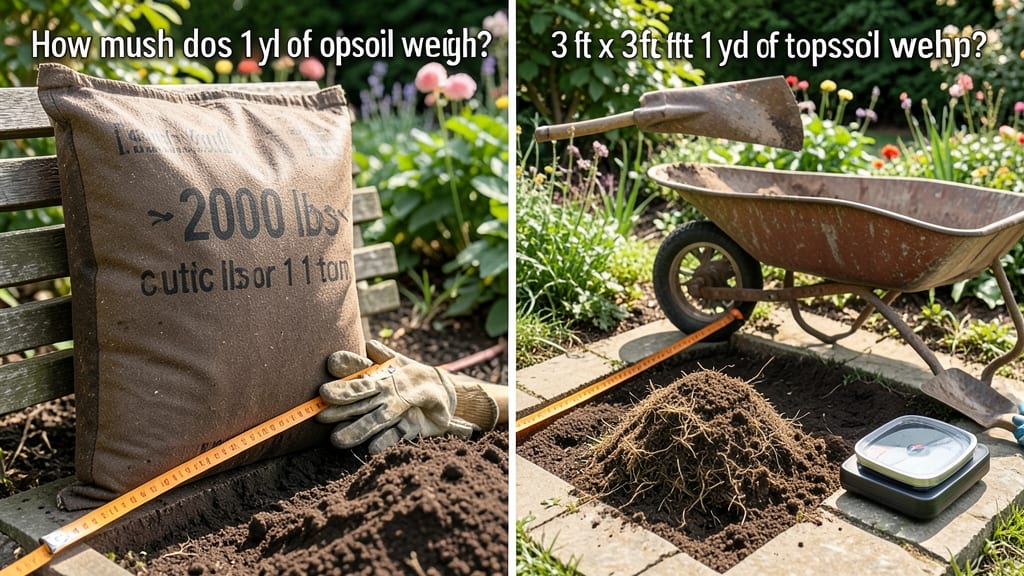
To determine how much 1 yard of topsoil weighs, expect between 1,700 and 2,200 pounds, though this can shift based on moisture levels, soil composition, and how tightly packed it is. Wet or clay-rich soil may push past 2,500 pounds per cubic yard.
Understanding topsoil weight is all about moisture—water alone can add hundreds of pounds to a cubic yard. 💫 For example, a dry, sandy mix might weigh closer to 1,500 pounds, while the same soil saturated after rain could hit 2,500 pounds.
This variation explains why landscapers always ask about your project's moisture conditions before delivery. Even small changes in organic matter (like compost) or clay content can tip the scale significantly.
For practical purposes, most suppliers use 2,000 pounds per cubic yard as a baseline estimate when calculating delivery costs. But if you're planning a large garden bed or slope project, I recommend asking for a moisture-adjusted weight—it could save you from unexpected heavy loads or delivery fees.
Pro tip: compacted soil weighs more, so loosen it before spreading to avoid overestimating your needs.
💡 In This Article
- Factors Affecting Topsoil Weight Variations
- Practical Topsoil Weight Calculations for Landscaping Projects
Factors affecting topsoil weight variations
Moisture content is the single biggest factor influencing topsoil weight. Water fills the pore spaces between soil particles, dramatically increasing overall density. For example, a cubic yard of dry topsoil might weigh 1,500 pounds, but when saturated—like after heavy rain—it can swell to 2,500 pounds or more.
This happens because water's density is about 8.34 pounds per gallon, and topsoil can absorb 25-50% of its weight in water depending on particle size and organic content.
The mineral composition plays a critical role too. Clay particles are flat and dense, packing tightly together, while sandy soils have larger, loosely arranged grains. A clay-heavy mix can weigh 2,200-2,700 pounds per cubic yard, while sandy topsoil typically falls in the 1,500-1,900 pound range.
Organic matter—like decomposed leaves or compost—adds bulk but reduces overall weight because it's less dense than minerals. For instance, adding 10% compost to clay soil can lighten the mix by 100-200 pounds per cubic yard.
Compaction further affects weight by reducing air pockets. Foot traffic or heavy machinery can compress soil by 10-20%, increasing its density. This is why freshly tilled soil often weighs less than the same volume after being walked on. The difference?
Compacted soil has fewer voids for air and water, forcing particles closer together. For example, a 3-inch-deep layer of compacted topsoil in a garden bed might weigh 500 pounds per square yard compared to 400 pounds when loose.
Temperature also creates subtle variations. Cold soils hold moisture differently than warm ones, altering weight. In winter, frozen water expands between particles, temporarily increasing volume but reducing density. Meanwhile, summer heat can dry out soil, lowering its weight.
These seasonal shifts explain why suppliers often adjust delivery estimates based on when you order—spring deliveries may include 10-15% more water weight than summer orders.
To visualize these differences, imagine three identical 1-cubic-yard bags: one filled with dry sand (1,600 pounds), one with wet clay (2,600 pounds), and one with loamy garden soil (2,000 pounds).
The clay bag feels heavier because its particles are tightly packed and waterlogged, while the sand bag stays lighter due to larger air gaps. This variation is why landscapers always specify "dry weight" when calculating project needs.
For DIY gardeners, this means measuring moisture before purchasing. Stick your finger 2 inches deep into the soil—if it feels damp, expect 20-30% more weight** than advertised dry measurements. Pro tip: Use a soil moisture meter for precise readings, especially in clay-heavy areas where water retention is high.