
Landscaping
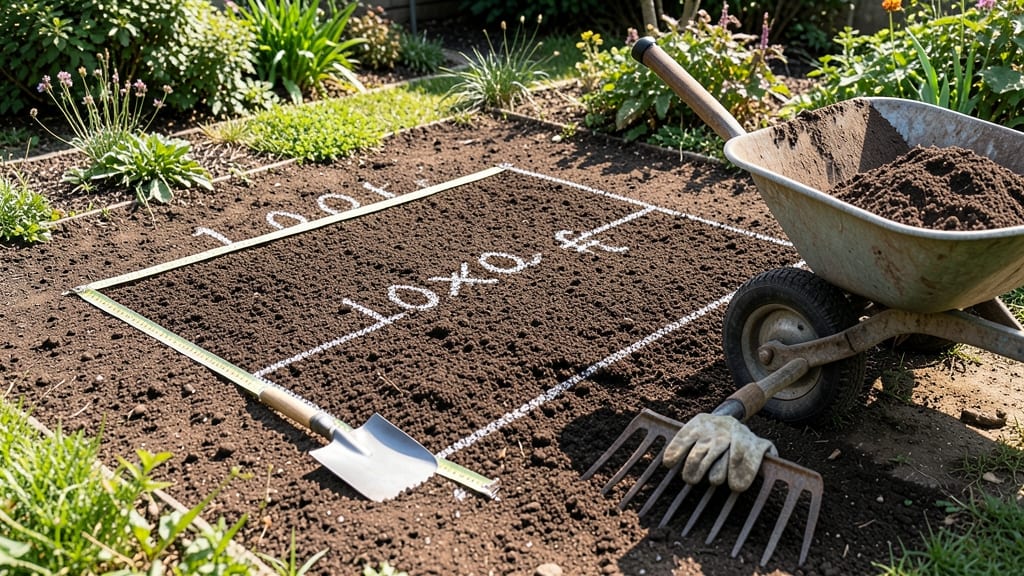
A yard of topsoil covers 100 square feet when spread 3 inches deep, but coverage varies by project needs: 2 inches for seed beds, 4+ inches for lawns or heavy planting, and deeper for raised beds or slopes. Always calculate depth first to avoid shortages or waste.
A yard of topsoil actually measures 3 feet long × 3 feet wide × 3 feet deep (27 cubic feet), so the square footage it covers depends entirely on how thick you spread it. 🌱 For example, if you're creating a new flower bed that needs 4 inches of topsoil, you'll need about 75 square feet per yard—less than the standard 100 square feet.
I've found that most gardeners underestimate how much they need because they don't account for settling over time, which can reduce coverage by up to 25% after the first rain.
Pro tip: Use a simple formula to calculate your needs—multiply your project's length by width by desired depth (in feet), then divide by 27. This gives you the cubic yards required, and you can adjust based on your project type.
For slopes or heavy planting areas, I always recommend ordering 10-15% extra to account for uneven surfaces and future settling.
💡 In This Article
- Topsoil Coverage Math: Depth vs Square Footage Explained
- Topsoil Depth Guide for Common Gardening Projects
Topsoil coverage math: depth vs square footage explained
The cubic yard measurement is where the magic happens—and where many gardeners trip up. One yard of topsoil equals 27 cubic feet (3' × 3' × 3'), but its coverage depends entirely on how thin or thick you spread it.
The formula is simple: multiply your project's length by width by desired depth (in feet), then divide by 27.
For example, a 3-inch layer (or 0.25 feet) means 1 yard covers 100 square feet—but that changes dramatically if you need 6 inches for vegetable gardens, cutting coverage to just 50 square feet per yard. 🔥
Moisture content throws another wrench into calculations. Freshly delivered topsoil often contains 20-30% water, which makes it bulkier and reduces its usable volume.
As it dries out over 2-4 weeks, it can settle by 10-25%, meaning that 3-inch layer you planned might end up closer to 2.25 inches.
I've seen projects where gardeners ordered based on dry calculations only to find their raised beds needed extra topsoil after the first rain. Pro tip: Order 10-15% more than your math suggests to account for this natural compression.
Texture matters too—sandy topsoil settles less than clay-heavy mixes because sand particles don't pack as tightly. The particle density (how tightly the soil is packed) affects coverage: loamy soils (ideal for gardens) settle more than coarse sands.
For raised beds, where you might need 12 inches of topsoil, you're looking at just 22.5 square feet per yard. That's why large projects often require multiple deliveries, and why I always recommend measuring your space in feet before ordering. A 10' × 10' area needing 6 inches of topsoil?
That's 2.5 yards, not the 1.5 yards a quick calculation might suggest.
Here's where real-world examples clarify the math: A 50 square foot flower bed needing 4 inches of topsoil requires 0.74 cubic yards (50 × 0.33 ÷ 27). Round up to 1 yard to account for settling.
For a 20' × 30' lawn needing 3 inches, you'd need 6.67 yards—so 7 yards after rounding. The deeper the layer, the faster the cubic yardage adds up, which is why slopes and heavy planting areas often require 30-50% more topsoil than initial estimates. 💫
One common mistake is assuming "a yard covers 100 square feet" applies universally. That's only true for 3-inch layers. For a 2-inch seed bed, you'd cover 135 square feet—but for a 12-inch raised bed, you're down to 22.5 square feet.
Always convert your desired depth to feet first (e.g., 6 inches = 0.5 feet) before applying the formula. This small step prevents costly over- or under-ordering, especially for large projects like vegetable gardens or new lawns where precision matters.
For irregularly shaped areas, break your space into rectangles or triangles, calculate each separately, then sum the results. A kidney-shaped garden bed? Divide it into a rectangle plus two triangles, measure each component's dimensions, and apply the formula to each.
Digital tools like garden planning apps can automate this, but I still prefer sketching it out first—there's something satisfying about seeing the math translate to real-world coverage.
The key is patience: rushing measurements leads to gaps or wasted topsoil, while careful planning ensures your project starts with the perfect foundation. ✨