
Fertilization
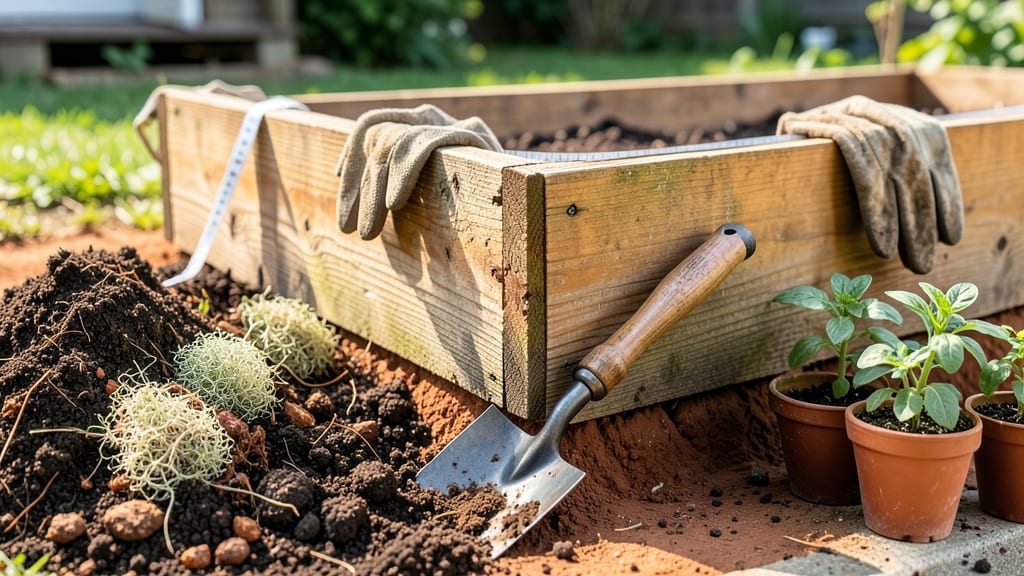
You can use in-ground soil for raised beds, but it requires careful preparation to avoid compaction, poor drainage, and weed/pest issues. Mixing it with compost and organic matter creates a more fertile growing medium for healthier root development.
In-ground soil often contains clay or sand that compacts when layered in raised beds, restricting root growth and airflow. 🌱 Without proper aeration, plants struggle to absorb nutrients efficiently, leading to stunted development.
The biggest challenge is balancing the soil's natural composition—adding 30-40% compost by volume typically solves most issues, while also introducing beneficial microbes. For heavy clay soils, I recommend mixing in perlite or coarse sand to improve drainage before planting.
Another critical factor is weed seeds and buried debris from the original soil. These can sprout in your raised beds, competing with your crops for nutrients and space. To mitigate this, I always screen the soil through a ½-inch mesh before mixing it with amendments.
This extra step takes time but prevents future headaches with unwanted plant growth.
💡 In This Article
- Why In-Ground Soil Fails in Raised Beds
- How to Safely Use In-Ground Soil in Raised Beds
Why in-ground soil fails in raised beds
In-ground soil often contains high levels of clay or dense particles that compact under the weight of layered raised beds. This compaction reduces pore space between soil particles, restricting oxygen flow to roots—a critical issue since plants need 10-25% air porosity for healthy growth.
Without proper aeration, roots suffocate, leading to poor nutrient uptake and stunted growth. The ideal raised bed soil should have a loose, crumbly texture similar to a well-aerated cake batter, allowing roots to spread freely.
Poor drainage is another major problem with unamended in-ground soil. Clay-heavy soils can hold 40-60% water by volume, creating waterlogged conditions that drown roots. This is especially problematic for raised beds, which lack natural drainage outlets.
The root zone needs to drain within 2-4 hours after watering to prevent anaerobic conditions that stifle microbial activity and nutrient cycling. 🌱 Even sandy soils can become too dense when layered, trapping moisture and depriving roots of essential oxygen.
The natural pH balance of in-ground soil often needs adjustment too. Many native soils have pH levels outside the 6.0-7.0 range that most vegetables prefer. For example, clay soils often test acidic (pH 5.0-6.0), while sandy soils may be alkaline (pH 7.5-8.5).
These imbalances affect nutrient availability—calcium, magnesium, and phosphorus become locked up in alkaline conditions, while micronutrients like iron and manganese leach away in acidic soils. The microbial communities that break down organic matter also thrive within this narrow pH range.
Weed seeds and buried organic debris pose another hidden challenge. A single teaspoon of in-ground soil can contain 100-200 weed seeds, which will germinate when exposed to light and moisture in your raised beds. These weeds compete aggressively with your crops for water and nutrients, often outcompeting young seedlings.
Pest eggs and larvae from the original soil can also migrate into your raised beds, creating a cycle of infestation that's difficult to break without proper soil preparation.
Finally, in-ground soil typically lacks the organic matter needed for sustained plant growth. Healthy raised bed soil should contain 5-10% organic matter by volume to provide both nutrients and soil structure.
Native soils often have only 1-3% organic matter, meaning they lack the humus needed to retain moisture and nutrients while maintaining good tilth. Without this organic component, plants become dependent on frequent fertilization rather than building long-term soil fertility.
Consider this comparison: Ideal raised bed soil acts like a well-structured sponge—it holds moisture for plants while allowing excess to drain away, provides a stable structure for roots, and contains a thriving ecosystem of beneficial microbes.
Unamended in-ground soil often behaves more like a dense brick—hard to penetrate, slow to drain, and lacking the biological activity needed for optimal plant growth. 🌿