
How To
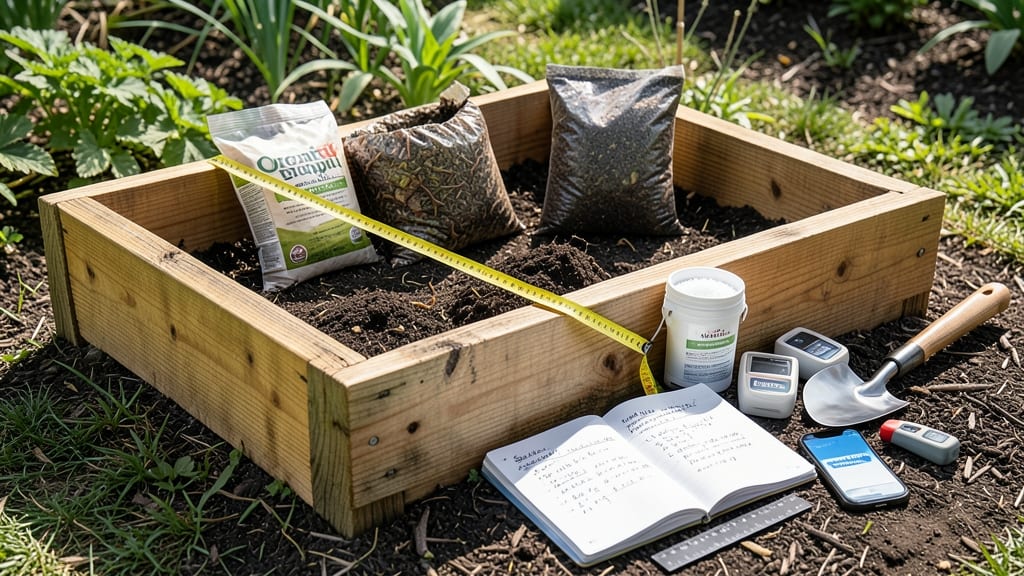
Calculating soil for raised beds saves you from running to the store mid-project. 🌱 I used to eyeball it—until I ended up with either a mountain of extra soil or a half-filled bed that needed more trips.
The right formula ensures you buy exactly what you need, no waste, no shortages.
Start with your bed's length, width, and depth. Multiply those numbers to get cubic feet (e.g., a 4'x8' bed that's 12" deep needs 384 cubic feet of soil).
For plants like tomatoes or peppers, aim for 12-18 inches of depth—they need room to grow strong roots without hitting the bottom of the bed.
Once you know the volume, adjust for your soil mix. A blend of 60% topsoil, 30% compost, and 10% perlite works for most veggies, but heavy feeders like squash might need extra compost. Pre-mix bags make this easier—just check the cubic feet per bag to avoid overbuying.
Pro tip: Round up by 5% to account for settling. And if your bed has curves or slopes? Break it into rectangles, calculate each section, then add them together. No more guessing—just precise, plant-perfect soil every time.
📚 In This Guide
- What you need
- Instructions
- Tips and common mistakes
- Wrapping up and next steps
What you need
- ● Topsoil: 32 cubic feet (1.5 cubic yards) – Look for "garden soil" or "planting mix" with organic matter.
- ● Compost: 8–12 cubic feet (4–6 bags) – Aim for 20–30% of your mix for nutrient-rich soil.
- ● Perlite or Vermiculite: 4–6 cubic feet (2–3 bags) – Improves drainage and aeration.
- ● Peat Moss or Coconut Coir: 4 cubic feet (2 bags) – Holds moisture and adds structure.
- ● Slow-Release Fertilizer: 1–2 lbs (e.g., 10-10-10 or organic options) – Tailor to your plants!
- ● Wheelbarrow or large bin – For mixing soil components.
- ● Garden shovel or spade – For layering and leveling.
- ● Measuring tape & calculator – To verify bed dimensions and soil volume.
- ● Gloves & knee pads – Because gardening is not a spa day! 😉
- ○ Optional but helpful: Soil pH test kit – To adjust acidity/alkalinity if needed.
- ● Landscape fabric – For weed suppression (place under the bed).
- ● Wooden stakes or level – To ensure your bed is even.
Step-by-step guide to calculating raised bed soil volume
Here’s how I calculate soil needs for any raised bed—no guesswork, just precise cubic feet.
📏 Step 1: Measure Bed Dimensions in Feet
Start by measuring your bed’s length, width, and height in feet. Multiply length × width to get the square footage—this tells you how much area you’re covering. For example, a 4×8-foot bed has 32 square feet of growing space. Height matters too: a 12-inch-tall bed (1 foot) will need 32 cubic feet of soil.
I always double-check measurements with a tape measure at ground level and again at the bed’s top edge. Uneven edges mean your soil volume will be off, and you’ll either run short or buy too much. Write these numbers down—they’re your foundation.
📐 Step 2: Calculate Cubic Feet for Soil Depth
Multiply your square footage by the depth in feet to get cubic feet. Most vegetables thrive in 6–12 inches of soil (0.5–1 foot). For a 4×8-foot bed with 10-inch soil (0.83 feet), the math is: 32 sq ft × 0.83 ft = ~26.5 cubic feet of soil needed.
Here’s the trick: I round up to the nearest whole number (27 cubic feet) to account for settling. Loose soil compresses over time, and you don’t want to scramble for extra bags mid-project. Use a calculator for larger beds—my phone’s one works fine.
🛒 Step 3: Convert Cubic Feet to Soil Bag Quantities>
Most soil bags list cubic feet on the label (e.g., 1.5 cu ft per bag). Divide your total cubic feet by the bag size to find how many you need. For 27 cubic feet with 1.5 cu ft bags, you’d need 18 bags (27 ÷ 1.5 = 18). Always buy one extra bag—it’s cheaper than a last-minute trip to the store.
Pro tip: Check the bag’s weight too. A bag labeled "1.5 cu ft" might weigh 40 lbs—heavy for one person to carry. Split deliveries or ask for help if your bed needs 50+ cubic feet. I’ve learned the hard way that lugging 10 bags at once is a back workout, not a gardening one.
⚖️ Step 4: Adjust for Amendments and Plant Type
Heavy feeders like tomatoes or peppers need extra compost or fertilizer. For every 10 cubic feet of soil, add 1–2 cubic feet of compost (e.g., 3 cubic feet of compost for 30 cubic feet of soil). Light feeders like herbs or greens need less—just 5–10% of the total volume in amendments.
I keep a spreadsheet for my beds: one column for soil volume, another for amendments, and a third for plant type. This ensures I’m not over- or under-amending. For example, a 6×2-foot bed with 8-inch soil (9.6 cu ft) might need 1 cu ft of compost for a veggie mix but only 0.5 cu ft for herbs.
🌱 Step 5: Verify with a Test Fill
Before buying, test-fit your soil. Fill the bed with 1–2 bags of soil and measure how much space they occupy. Compare this to your calculations—if the real-world fill looks shallower than expected, you’re likely dealing with settling soil. Adjust your total upward by 10–15% to compensate.
I also check drainage: if water pools after filling, your soil mix is too dense. Add perlite or vermiculite (about 5–10% of the total volume) to improve airflow. This step saves headaches later—trust me, nothing’s worse than a soggy bed mid-summer.
Tips & tricks for calculating raised bed soil volume
Precision is everything when filling raised beds—here's how to avoid common miscalculations and make your soil math foolproof.
Precision in Measurements: Use a rigid tape measure for length and width, not a flexible one that stretches. For height, measure from the base of the bed to the top edge—not the bottom of the frame. I once bought 10 extra bags because I measured height from the bottom, which added an extra 2 inches I didn't account for. Always measure at the top edge where your soil will actually sit.
Depth Matters More Than You Think: The 6–12 inch depth range (0.5–1 foot) is a guideline, but different plants have different needs. Root vegetables like carrots need the full 12 inches, while shallow-rooted herbs can thrive in just 6 inches. For mixed beds, aim for 10–12 inches to accommodate most vegetables. Remember, you can always add more soil later, but you can't remove it without disturbing roots.
Soil Settling Reality Check: That 10–15% buffer for settling isn't just a suggestion—it's essential. I've seen beds that looked perfectly filled after planting, only to settle 2–3 inches by summer. For example, a 4×8 bed with 10-inch soil (27 cubic feet) might actually need 30 cubic feet after settling. When in doubt, round up to the next whole number rather than down.
Bag Size vs. Weight: Don't judge soil bags by their cubic feet label alone—check the weight too. A "1.5 cu ft" bag might weigh 40 lbs, which is tough for one person to handle. For larger beds, consider buying bags with 2 cu ft or more to reduce the total number you need to carry. I've created a simple chart that matches bag sizes to recommended quantities for different bed sizes to avoid overbuying.
Pro Tips for Calculate Soil For Raised Bed
- Precision is everything when filling raised beds—here's how to avoid common miscalculations and make your soil math f...
- Precision in Measurements: Use a rigid tape measure for length and width, not a flexible one that stretches. For heig...
- Depth Matters More Than You Think: The 6–12 inch depth range (0.5–1 foot) is a guideline, but different plants have d...
Frequently asked questions
How do I calculate soil for a raised bed if I don’t know the exact dimensions?
Measure the length, width, and height of your raised bed in feet. Multiply them together (length × width × height) to get cubic feet. For irregular shapes, divide the bed into rectangles or squares, calculate each, and add the totals. Pro tip: Use a tape measure for accuracy—eyeballing can lead to soil shortages!
When is the best time to add soil to a raised bed?
Add soil before planting, ideally 2–4 weeks ahead. This gives microbes time to establish and nutrients to integrate. For fall/winter crops, prep in early autumn. Avoid adding soil during freezing temps—it compacts poorly. Spring is prime time! Just ensure the bed isn’t waterlogged.
Can I use topsoil straight from the garden center?
Not always! Garden-center topsoil is often heavy clay or sandy and lacks organic matter. For raised beds, mix it with compost (30–50%) and consider amendments like perlite or coconut coir for drainage. A 1:1 ratio of topsoil to compost is a great starting point for most veggies.
What if my raised bed soil calculation seems off after planting?
If soil settles too much, top it off with 1–2 inches of fresh compost or aged manure. Overwatering or heavy clay soil can cause compaction. For loose, airy soil, blend in peat moss or vermiculite. Monitor moisture—dry soil shrinks, while soggy soil compacts. Adjust as you go!
How often should I replace or refresh raised bed soil?
Replace soil every 2–3 years for optimal plant health, or refresh it annually with a 2–3 inch layer of compost. Heavy feeders (like tomatoes) may need more frequent top-ups. Test soil pH (aim for 6.0–7.0) and nutrient levels yearly. Less waste, more productivity!
Wrapping up and next steps
Calculating the perfect soil mix for your raised bed doesn’t have to be a guess—just a little math and planning! 🌱 With the right formula, you’ll ensure your plants thrive while avoiding waste or shortages.
Start small, test your soil, and adjust as you go; every gardener’s journey begins with a single shovel of dirt.
Now that you’re ready to measure, mix, and mulch, grab your calculator and get growing! Pro tip: Keep a soil journal to track what works best for your garden each season. Happy planting! 🌿