
Vegetables
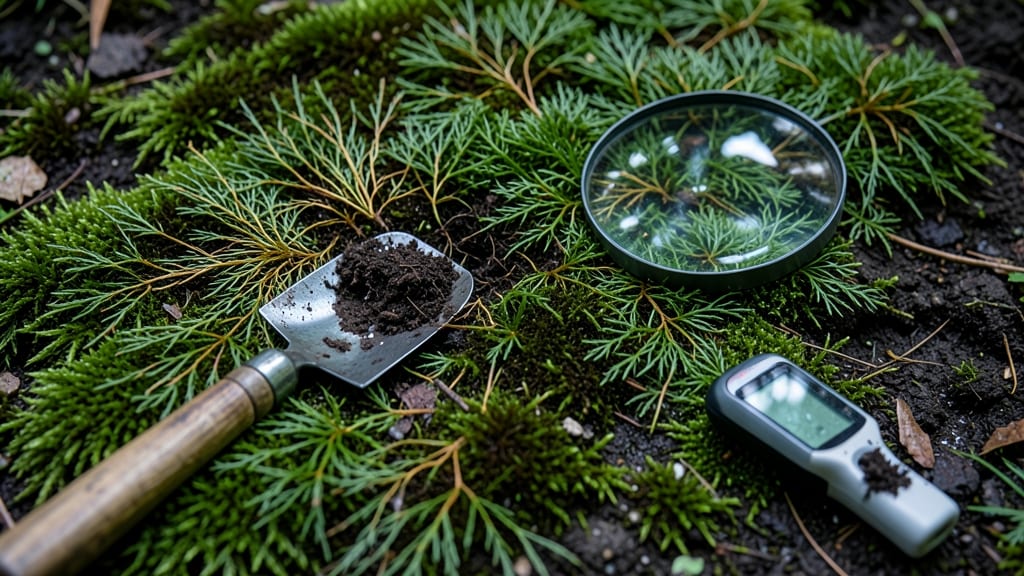
Soil turns green when algae grows rapidly, especially in damp, shaded areas with excess moisture and organic nutrients. This slippery layer can choke out grass and plants if not treated promptly.
Algae thrives because it uses photosynthesis to convert sunlight into energy, but it doesn't need direct sun—just enough light to survive. 🌱 When lawns have poor drainage or thick mulch layers, water pools and creates the perfect breeding ground.
The green film isn't just unsightly; it blocks sunlight from reaching grass roots, weakening your lawn over time. I've found that areas under trees or near foundations are particularly vulnerable because they stay shaded and moist longer.
This problem often worsens in spring and fall when temperatures are mild but humidity remains high. The algae spreads quickly because it reproduces through spores that float in the air and land on damp soil.
Without intervention, it can form a thick mat that prevents water and nutrients from reaching your plants' roots.
💡 In This Article
- How Algae Causes Green Soil and Thrives in Gardens
- Natural Ways to Prevent and Remove Green Algae from Soil
How algae causes green soil and thrives in gardens
Algae growth in soil is primarily driven by photosynthesis, but unlike plants, algae can thrive with just 10-20% of full sunlight—enough to fuel its rapid reproduction. These microscopic organisms, often belonging to the genus Prasiola or Spirogyra, contain chlorophyll that absorbs light even in shaded areas.
When soil stays moist for extended periods, algae spores germinate within 24-48 hours, forming a dense, green mat that can grow up to 1/8 inch thick in ideal conditions. 🌿
The key factors enabling this growth are excess moisture, organic matter, and limited competition. Algae outcompetes grass and plants by absorbing nutrients like nitrogen and phosphorus more efficiently, which are critical for lawn health.
For example, a 1-square-foot area of green algae can contain millions of cells that double in number every 1-2 days under optimal conditions. This rapid expansion blocks sunlight from reaching grass roots, starving them of the energy needed for photosynthesis.
Shaded areas, such as those under trees or near buildings, create perfect conditions because they retain moisture longer while still receiving enough indirect light. The algae’s slimy texture also traps additional water, creating a self-perpetuating cycle.
In my experience, lawns with less than 4 hours of direct sunlight per day are particularly vulnerable, as algae can dominate within weeks. The problem often worsens in spring and fall when temperatures are mild but humidity remains high, providing ideal growing conditions.
Algae doesn’t just turn soil green—it alters the soil’s chemistry by increasing pH levels due to its metabolic byproducts.
Over time, this can create an inhospitable environment for grass and plants, which prefer a more neutral pH. The slimy layer also physically blocks water and air from reaching the soil, further stressing existing vegetation. Without intervention, the algae can form a thick, suffocating mat that smothers lawns entirely.
Interestingly, algae growth isn’t just a lawn issue—it’s also common in garden beds, potted plants, and even sidewalks where water pools. For instance, a 1-inch layer of mulch that retains too much moisture can become a breeding ground for algae within 3-5 days.
The solution often involves addressing the root cause: improving drainage, reducing shade, or introducing competitive plant life to outcompete the algae naturally. 💫