
How To
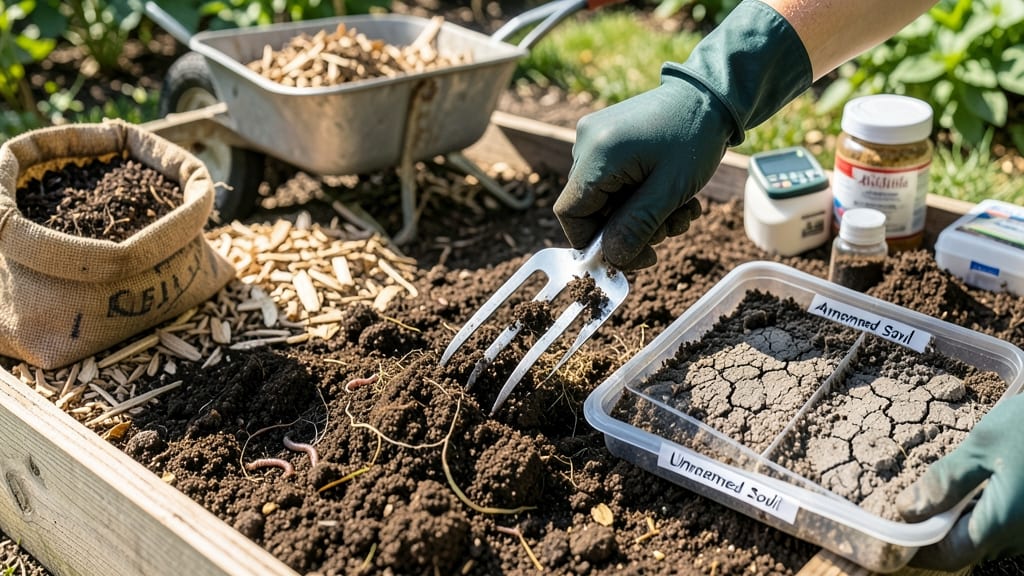
Soil amendment improves soil quality by incorporating materials like compost, peat moss, or lime to boost fertility, drainage, and nutrient availability for stronger plant growth.
Soil amendment is essentially giving your garden a nutrient boost by blending in materials that fix specific problems—whether it's heavy clay that drains poorly or sandy soil that dries out too fast. 🌱 For example, compost adds organic matter that feeds soil microbes, while sulfur lowers pH for acid-loving plants like blueberries.
The key is matching the amendment to what your soil (and plants) actually need, not just throwing in whatever's available.
Think of it like tuning a car engine: the right "fuel" (amendment) optimizes performance (plant growth). A simple soil test can reveal deficiencies, but even without one, visual clues like yellow leaves (nitrogen deficiency) or stunted growth (poor drainage) point you toward solutions.
I've found that mixing amendments—like combining compost with perlite—often works best for long-term soil health.
💡 In This Article
- How Soil Amendments Work to Improve Plant Health
- Choosing the Right Soil Amendments for Your Garden
How soil amendments work to improve plant health
Soil amendments transform your garden's foundation by addressing three core challenges: nutrient availability, water retention, and root oxygenation. Organic amendments like compost introduce microorganisms that break down complex compounds into plant-accessible nutrients. These microbes create a symbiotic relationship with roots, releasing nitrogen, phosphorus, and potassium while also producing growth-stimulating hormones.
For instance, a single gram of healthy compost can contain millions of beneficial bacteria that outcompete harmful pathogens, creating a protective microbial shield around plant roots.
The physical structure of soil changes dramatically with amendments. Clay soils, which often suffocate roots by trapping water and air, benefit from perlite or coarse sand that creates air pockets. These amendments increase porosity by 20-30%, allowing roots to breathe while preventing waterlogging.
In sandy soils, organic matter acts like a sponge, increasing water-holding capacity by 3-5 times—imagine going from a desert to a well-watered meadow in just a few inches of soil.
The magic happens at the microscopic level where tiny soil particles aggregate around organic fibers, forming stable crumbs that resist compaction.
Chemical amendments like lime or sulfur work by altering soil pH, which directly affects nutrient solubility. For example, lime (calcium carbonate) raises pH in acidic soils, unlocking phosphorus that plants can't access below pH 6.0.
The reaction occurs when lime dissolves, releasing calcium ions that displace hydrogen ions bound to soil particles—a process called base exchange capacity. This chemical shift isn't instantaneous; it typically takes 2-6 months to fully stabilize, which is why timing matters when preparing garden beds for spring planting.
One often overlooked mechanism is how amendments improve soil's cation exchange capacity (CEC). This refers to the soil's ability to hold and exchange nutrients like calcium, magnesium, and potassium.
Organic matter can increase CEC by 50-100 meq/100g of soil, meaning more nutrients stay available longer rather than leaching away. The higher the CEC, the more resilient your soil becomes against nutrient depletion—a critical factor for container gardens where nutrients wash out quickly during watering.
Consider the case of biochar, a charcoal-like amendment made from heated organic waste. Its porous structure not only holds water but also acts as a nutrient reservoir, slowly releasing stored minerals over time.
Studies show biochar can increase soil fertility by 20-50% while reducing methane emissions from decomposing organic matter. The dark, crumbly texture contrasts sharply with raw compost, demonstrating how different amendments serve distinct but complementary roles in soil health.
What most gardeners don't realize is how these amendments interact synergistically. For example, combining compost (organic matter) with gypsum (calcium sulfate) not only improves structure but also prevents nutrient imbalances that can occur when using lime alone.
The gypsum provides calcium while the compost supplies the organic acids needed for proper nutrient uptake—a perfect example of how understanding these mechanisms lets you create customized soil solutions for your specific plants.