Companion Plants
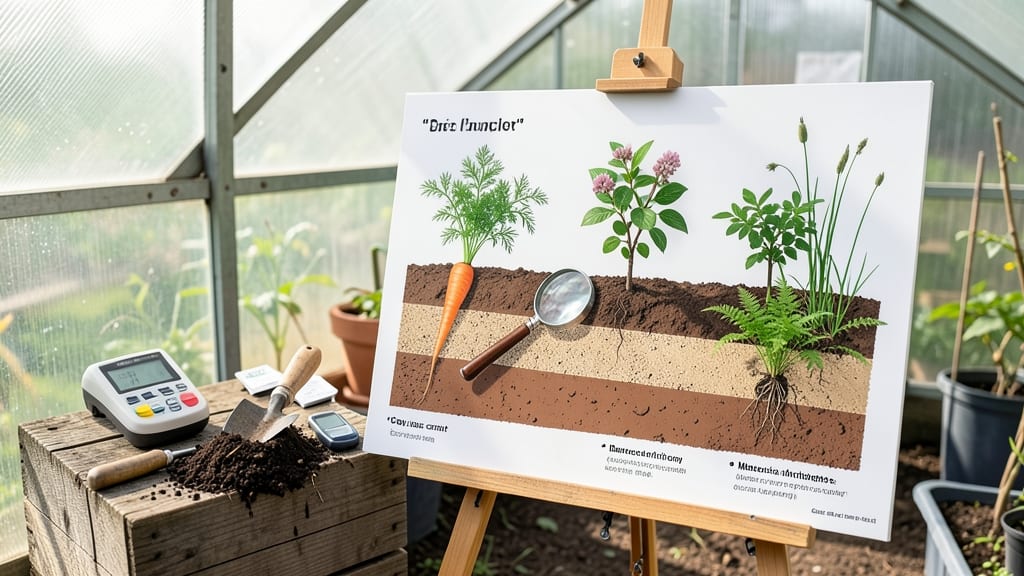
Soil types determine which plants thrive best, from sandy loam for root vegetables to clay-rich soil for moisture-loving perennials. Matching plant roots to soil conditions ensures healthier growth and higher yields.
Understanding soil types helps you select the best plants for your garden. 🌱 Sandy soil drains quickly but lacks nutrients, making it ideal for drought-resistant plants like rosemary and lavender.
Meanwhile, loamy soil—rich in organic matter—supports heavy feeders such as tomatoes and peppers, while clay soil holds moisture well for perennials like hostas. The key is observing your soil's texture, drainage, and pH to create the perfect environment for your plants.
For instance, blueberries thrive in acidic sandy soil, while potatoes prefer loose, well-draining loam. If your soil isn't perfect, you can amend it with compost or organic matter to improve its structure and fertility. This small adjustment can make a big difference in plant health and yield.
💡 In This Article
- How Soil Composition Affects Plant Growth
- Top Plants for Sandy, Loamy, and Clay Soils
How soil composition affects plant growth
Soil isn't just dirt—it's a complex ecosystem where the ratio of sand, silt, and clay determines how plants grow. Sand particles (0.05-2mm) create air pockets for roots, but they drain water too quickly, while clay (<0.002mm) holds moisture but can suffocate roots.
The ideal balance is loamy soil, which typically contains 40% sand, 40% silt, and 20% clay, offering both drainage and nutrient retention. This texture allows roots to breathe while retaining enough water for consistent growth.
The science gets even more interesting when you consider pH levels. Most vegetables prefer slightly acidic to neutral soil (pH 6.0-7.0), while blueberries and azaleas thrive in acidic conditions (pH 4.5-5.5). Clay soils often have higher pH levels, which can lock out essential nutrients like iron and manganese.
Meanwhile, sandy soils may leach nutrients quickly unless amended with organic matter. For example, adding composted manure or peat moss can lower pH in alkaline soils, while lime raises pH in acidic conditions.
Root development is directly tied to these factors. Plants like carrots and radishes need loose, sandy soil to grow straight and long, while deep-rooted trees prefer clay's moisture retention. The porosity of soil—how quickly water and air move through it—affects microbial activity.
Healthy soil teems with beneficial bacteria and fungi that break down organic matter into plant-available nutrients. In compacted clay, these microbes struggle, leading to stunted growth. 🌱
Water management is another critical factor. Sandy soils dry out fast, requiring frequent watering, while clay soils can become waterlogged, leading to root rot. The solution? Amending your soil with organic matter like compost or coconut coir improves structure, creating a crumbly texture that holds moisture without suffocating roots.
This is especially important for container gardening, where drainage is limited. For instance, adding 20-30% compost to clay can transform it into a workable loam within a season.
Consider the case of tomatoes—a heavy feeder that needs consistent moisture and nutrients. In pure sand, they'll bolt (flower prematurely) due to stress, while in pure clay, their roots may suffocate. The fix?
A 50/50 mix of loam and compost provides the perfect balance. This blend retains moisture while allowing roots to expand freely, resulting in 20-30% higher yields compared to unamended soil.
Even the smallest changes in soil composition can dramatically alter plant health. For example, adding perlite or vermiculite to clay improves aeration, while peat moss in sandy soil boosts water retention.
The goal is to mimic nature's ideal conditions—think of a forest floor, where decomposed leaves and roots create a crumbly, nutrient-rich layer perfect for plant growth.