
How To
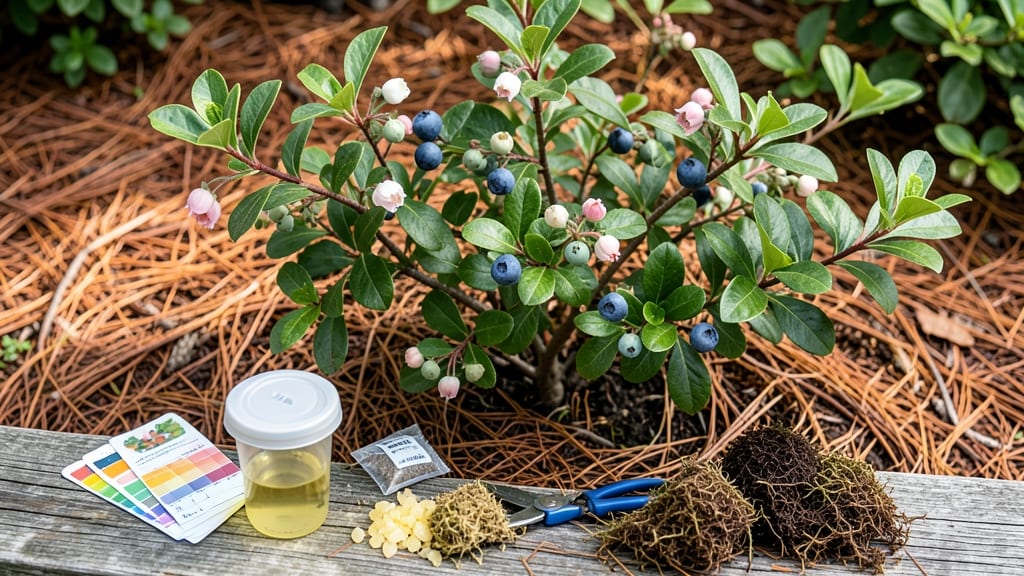
Blueberries need acidic soil between pH 4.5 and 5.5 to grow and produce fruit, requiring a specialized mix of peat moss, pine bark, and sand that mimics their natural wetland habitat while preventing root rot.
This acidity level isn't just a preference—it's essential for unlocking the nutrients blueberries crave. 🌱 At higher pH levels, critical micronutrients like iron and manganese become unavailable, causing yellow leaves and stunted growth.
I've seen firsthand how a simple soil test can reveal whether your garden's pH is too alkaline, which often happens when gardeners use composted manure or lime without realizing blueberries despise it.
The ideal mix isn't just about acidity though—proper drainage through the sand component prevents waterlogged roots while the organic materials retain moisture during dry spells.
For gardeners starting from scratch, I recommend beginning with a 50/50 blend of peat moss and pine bark, then adding 10% sand for structure.
If your soil tests above 5.5, you'll need to lower the pH gradually using elemental sulfur or aluminum sulfate—never quick fixes like vinegar, which can burn roots. The key is patience; adjusting pH takes time, and blueberry bushes will reward you with years of harvests once you get it right.
💡 In This Article
- Why Blueberries Demand Acidic Soil Chemistry
- DIY Blueberry Soil Mix Recipes for Maximum Yield
Why blueberries demand acidic soil chemistry
Blueberries evolved in acidic bogs where the soil pH naturally sits between 4.5 and 5.5, creating the perfect environment for their root systems. At these acidic levels, essential micronutrients like iron and manganese remain soluble, allowing roots to absorb them efficiently.
When soil pH rises above 5.5, these nutrients bind to soil particles and become unavailable, leading to chlorosis (yellowing leaves) and poor fruit development. The roots also struggle to take up phosphorus, another critical nutrient for flowering and fruiting.
The chemistry gets even more fascinating when you consider aluminum and manganese. In acidic soils, these metals exist in forms that blueberries can utilize. However, at higher pH levels, aluminum becomes less soluble and manganese precipitates out of solution—both become toxic to the plant in excess.
This is why you'll often see blueberry bushes with stunted growth or small, underdeveloped berries when planted in alkaline soil. The plant essentially starves for nutrients it can't access, despite being in fertile-looking soil. 🔥
Another critical factor is the role of organic acids produced by blueberry roots. These acids help maintain the acidic environment around the roots, creating what's called a "rhizosphere" that's optimized for nutrient uptake. This natural acidification process works best when the surrounding soil is already acidic.
Without it, the plant has to work harder to acidify its immediate environment, which can lead to stress and reduced yields.
Mycorrhizal fungi, which form symbiotic relationships with blueberry roots, also thrive in acidic conditions. These fungi help extend the root system's reach for water and nutrients, but they become less effective in neutral or alkaline soils.
The fungi's presence is crucial for healthy blueberry growth, as they can increase nutrient uptake by up to 30% in optimal conditions. This symbiotic relationship breaks down when soil pH moves away from the ideal range.
Visual clues can help you spot pH-related issues. For example, leaves that turn yellow between the veins (interveinal chlorosis) are a classic sign of iron deficiency caused by high pH. Similarly, small, hard berries often indicate manganese deficiency.
These symptoms aren't just cosmetic—they directly impact your harvest's quantity and quality. Understanding this chemistry helps you troubleshoot problems before they become severe.
What most gardeners don't realize is that blueberries aren't the only plants that benefit from acidic soil—many other ericaceous plants (those in the heather family) share similar requirements.
This includes plants like azaleas, rhododendrons, and cranberries. The shared soil needs create opportunities for companion planting that can enhance your garden's overall health and productivity. ✨