
How To
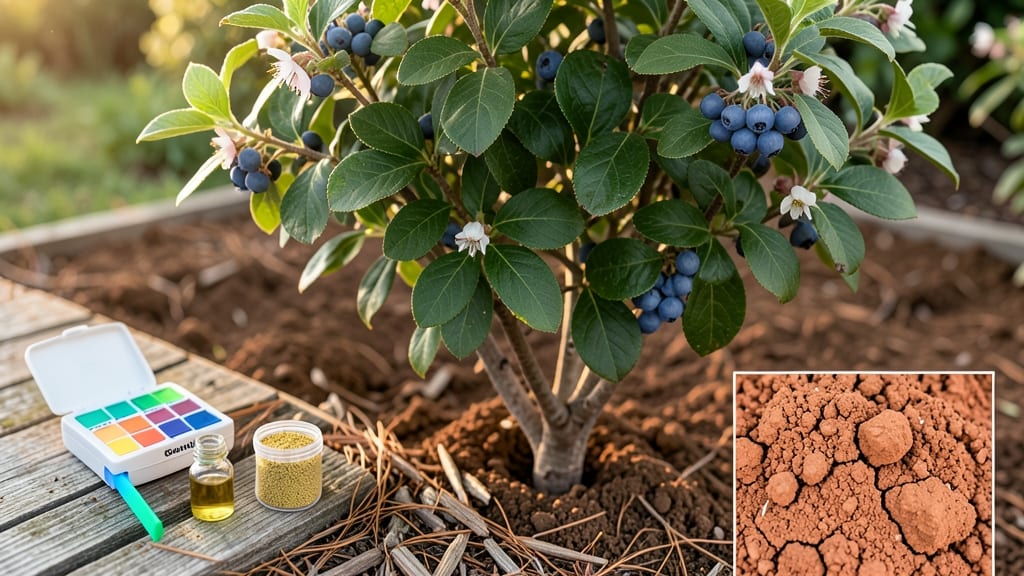
Clay soil isn't naturally acidic, but its compacted nature can accumulate organic acids over time, often lowering pH levels unless you amend it with lime or compost. Most clay-based soils fall between pH 5.0 and 7.0, though precise testing is essential for tailoring plant care.
Clay soil's acidity depends more on what's trapped in its tiny pores than its mineral makeup. 🌱 The dense particles create a tight matrix that holds onto organic acids from decomposed plant matter, which gradually acidifies the soil over time.
This is why many gardeners find their clay soil tests acidic even though the parent material might be neutral. The good news?
Clay soil's natural buffering capacity means it responds well to amendments like crushed limestone to raise pH or elemental sulfur to lower it, giving you control over your garden's chemistry.
What's particularly interesting is how clay soil's acidity affects nutrient availability. For example, phosphorus becomes more available in slightly acidic conditions (pH 6.0-7.0), while iron thrives in more acidic environments (pH 5.5-6.5).
This duality explains why some plants—like blueberries—thrive in acidic clay, while others—like tomatoes—struggle unless you adjust the pH. Testing your soil's pH with a simple kit is the first step toward creating the perfect growing conditions for your specific plants.
💡 In This Article
- How Clay Soil pH Affects Plant Nutrient Availability
- Testing and Adjusting Clay Soil pH for Better Gardening
How clay soil pH affects plant nutrient availability
Clay soil's acidity isn't just about pH numbers—it's about how those numbers control what your plants can eat. The tiny, tightly packed clay particles create microscopic spaces where water, air, and nutrients get trapped.
When organic matter decomposes in these spaces, it releases acids that gradually lower the pH. This process is why clay soils often test acidic even if their mineral composition suggests neutrality.
The key mechanism here is cation exchange capacity (CEC), which is much higher in clay than in sandy soils—meaning clay holds onto nutrients like a sponge, but only releases them when conditions are right.
The pH level directly controls which nutrients become available to plants. For example, phosphorus becomes most available at pH 6.0-7.0, while iron and manganese are most soluble in acidic conditions (pH 5.5-6.5).
This explains why acid-loving plants like azaleas and blueberries thrive in clay soils, while vegetables like tomatoes and peppers need slightly alkaline conditions (pH 6.0-7.5) to access enough calcium and phosphorus.
The dense clay structure also slows microbial activity, which can further limit nutrient breakdown unless you actively manage the soil chemistry.
What's fascinating is how clay soil's natural buffering capacity works against you when you try to change its pH. Because clay holds onto nutrients so tightly, it resists sudden pH shifts.
This is why you often need to apply amendments like pelletized lime (to raise pH) or elemental sulfur (to lower pH) in multiple applications over time.
The process isn't just about adding chemicals—it's about creating the right conditions for microbial life to break down those amendments into usable forms for your plants. Think of it like adjusting the temperature in a fermentation process: too fast, and you shock the system; too slow, and nothing changes.
Here's where things get practical: the pH of your clay soil isn't just about what's in the soil—it's about what your plants can access. For instance, a pH of 5.0 might seem acidic, but if you're growing acid-loving plants like rhododendrons, that's perfect.
However, the same pH would lock out essential nutrients for vegetables. This is why soil testing isn't just a nice idea—it's your roadmap to understanding what your plants are actually getting to eat.
The test results tell you whether you need to wake up your soil's nutrient supply or put it to sleep for certain crops.
Consider this comparison: In a sandy soil with pH 6.5, phosphorus is readily available, but the soil drains too quickly to hold moisture.
In clay soil at the same pH, phosphorus is also available, but the dense structure holds onto water and nutrients—giving plants a steady supply but potentially suffocating roots if not properly amended.
The challenge with clay is finding that sweet spot where the soil's natural retention benefits your plants without creating nutrient lockout or root stress. 🌱
One often-overlooked factor is how clay soil's pH affects beneficial microbes. Fungi and bacteria that help break down organic matter thrive in slightly acidic conditions (pH 6.0-7.0). When you adjust the pH, you're not just changing nutrient availability—you're also altering the microbial ecosystem that keeps your soil healthy.
This is why organic amendments like compost or well-rotted manure work so well in clay soils: they feed these beneficial microbes while gradually improving soil structure and pH over time.
The bottom line? Clay soil's acidity isn't a fixed trait—it's a dynamic balance you can influence. By understanding how pH affects nutrient availability and microbial life, you gain control over your garden's health.
Start with a soil test, then make small, informed adjustments to create the perfect growing conditions for your specific plants. The right pH isn't about hitting a single number—it's about creating an environment where your plants can thrive. ✨