
Light Requirements
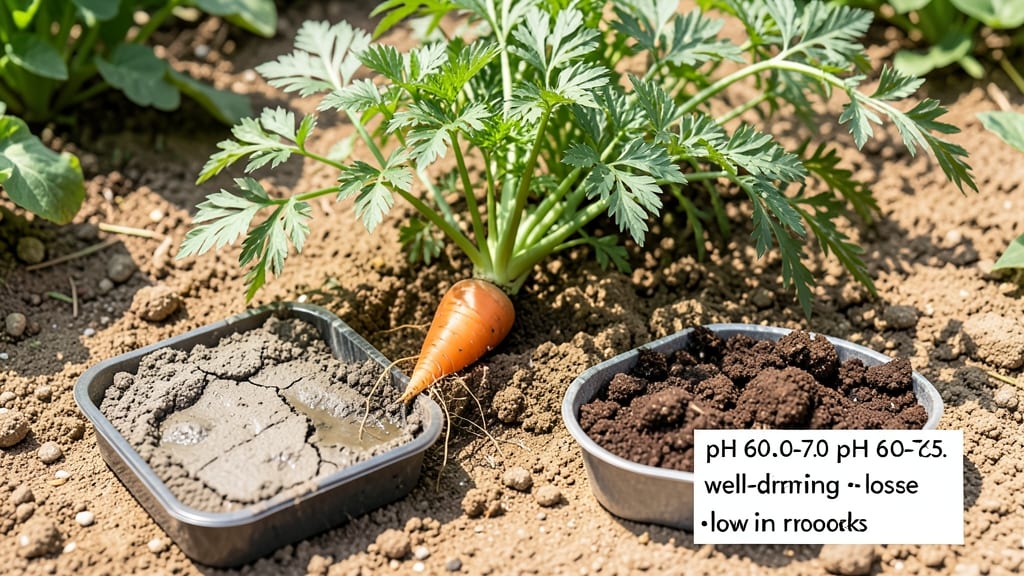
Growing carrots with the right soil requirements means loose, stone-free beds that let roots develop straight and sweet 🥕—the key to avoiding forked or stunted harvests.
Picture this: you’ve planted your seeds, watered them carefully, and waited patiently—only to pull up a harvest of lopsided, knobby roots. That’s not bad luck; it’s soil that’s too dense, rocky, or compacted. The good news? Fixing it is easier than you think, and the results are worth it.
Carrots thrive in well-draining, sandy loam soil with a pH between 6.0 and 6.8, packed with organic matter to keep roots growing freely. If your garden beds are heavy clay or packed with stones, we’ll show you how to lighten and amend them for perfect conditions.
Ready to dig in? Below, you’ll find a step-by-step guide to testing your soil, breaking up tough spots, and adding the right amendments—so you can finally grow carrots that are straight, crisp, and ready to harvest in 70 days or less.
Ideal soil composition for growing perfect carrots
Carrots are finicky about their growing conditions, and soil composition is the foundation for straight, sweet roots. Unlike many vegetables, carrots hate compacted or rocky soil, which causes them to fork or grow crooked.
The perfect bed should feel like a fluffy pillow—light, airy, and free of obstacles that could disrupt root development.
I’ve learned through trial and error that sandy loam soil is the gold standard for carrots. This texture allows roots to penetrate easily while retaining enough moisture to prevent bolting.
The key is striking the right balance between drainage and moisture retention—too sandy, and roots dry out; too clay-heavy, and they’ll struggle to break through.
A pH level between 6.0 and 6.8 is ideal for carrots, as this range ensures they can absorb essential nutrients like phosphorus and potassium. Testing your soil’s pH before planting is a game-changer—it’s the difference between a bountiful harvest and a disappointing one.
I always use a simple soil test kit to check mine.
Organic matter is another critical component. Aim for at least 5% compost or well-rotted manure mixed into the top 12 inches of soil. This improves structure, adds nutrients, and encourages beneficial microbial activity. Without it, carrots may grow slowly or develop bitter flavors.
| Soil Requirement | Specification | Why It Matters |
|---|---|---|
| Texture | Loose, sandy loam | Prevents forking and allows deep root penetration |
| pH Level | 6.0–6.8 | Optimal nutrient uptake for root development |
| Organic Matter | 5%+ compost | Improves soil structure and nutrient availability |
| Drainage | Well-draining | Prevents rot and encourages even growth |
| Stone Content | Stone-free | Eliminates forking and crooked roots |
Drainage is non-negotiable for carrots. They despise soggy conditions, which can lead to root rot or slow, uneven growth. If your soil drains poorly, consider raising beds or amending with coarse sand or perlite to improve aeration.
I’ve seen firsthand how a slight slope in the bed helps water flow away from roots, keeping them healthy.
One of the biggest mistakes I’ve seen (and made!) is planting carrots in soil with hidden rocks or clumps. Even small stones can cause roots to fork dramatically. To avoid this, I always sift the soil through a ¼-inch mesh screen before planting.
It’s a little extra work, but the payoff is worth it for perfectly shaped carrots.
For container gardening, choose a deep pot (at least 12 inches) filled with a mix of potting soil and coarse sand. This mimics the loose, well-draining conditions carrots crave. I’ve grown prize-winning carrots in 5-gallon buckets using this method—proof that you don’t need a large garden to succeed.
Finally, avoid fresh manure or high-nitrogen fertilizers, which can cause leafy growth at the expense of root development. Instead, opt for a balanced fertilizer (5-10-10) applied lightly at planting time. Too much nitrogen is a fast track to lush tops and tiny, underdeveloped roots.
With the right soil composition, your carrots will grow straight, sweet, and ready for harvest in just 70 days. The key is patience and preparation—loose, stone-free soil is the secret to success. Once you master this, you’ll never settle for anything less than perfect roots again! 🥕
How to prepare and amend soil for carrot cultivation
Carrots demand loose, stone-free soil to grow straight and sweet. If your garden bed feels compact or rocky, your harvest will suffer—forked roots and stunted growth are common results. The good news? With the right tools and amendments, you can transform even the toughest soil into an ideal carrot-growing environment.
Start by testing your soil's current condition. Dig a 6-inch deep hole and examine the texture—clay feels sticky, sandy drains too quickly, and loam holds moisture without clumping.
Carrots thrive in sandy loam with 30-40% organic matter. If your soil fails this test, don’t worry—we’ll fix it step by step.
-
1
Test Soil pH
Use a soil pH kit to check levels. Carrots prefer 6.0–6.8 pH. If too acidic (<6.0), mix in lime (1 lb per 100 sq ft). For alkaline soil (>7.0), add sulfur (1 lb per 100 sq ft) or peat moss. -
2
Loosen Compacted Soil
Rent a rototiller or use a broadfork to break up clay or rocky layers to 12 inches deep. For small areas, a garden fork works—poke holes every 6 inches and wiggle to loosen. -
3
Remove Rocks and Debris
Sift through soil with a garden rake or stone picker to eliminate rocks larger than 1/4 inch. Carrot roots will split or stop growing near obstacles—this step is non-negotiable for straight roots! -
4
Add Organic Amendments
Mix in 2-3 inches of compost (for nutrients) and 1 inch of coarse sand (for drainage). For heavy clay, blend in peat moss (1 part peat to 3 parts soil). Avoid fresh manure—it can burn seeds! -
5
Level and Water
Rake the bed smooth to remove clumps. Water deeply to settle amendments and check drainage—if water pools, add more sand or perlite. Let soil dry slightly before planting to prevent seed rot.
For rocky or clay-heavy soil, consider growing carrots in raised beds or containers. Fill with a mix of 50% garden soil, 30% compost, and 20% perlite for perfect drainage. This method also warms soil faster in spring, giving you an earlier harvest.
After amending, maintain soil health by mulching with straw (2 inches deep) to retain moisture and suppress weeds. Avoid walking on beds—compaction undoes all your hard work! With these steps, you’ll grow straight, sweet carrots every time.