
Neem Oil
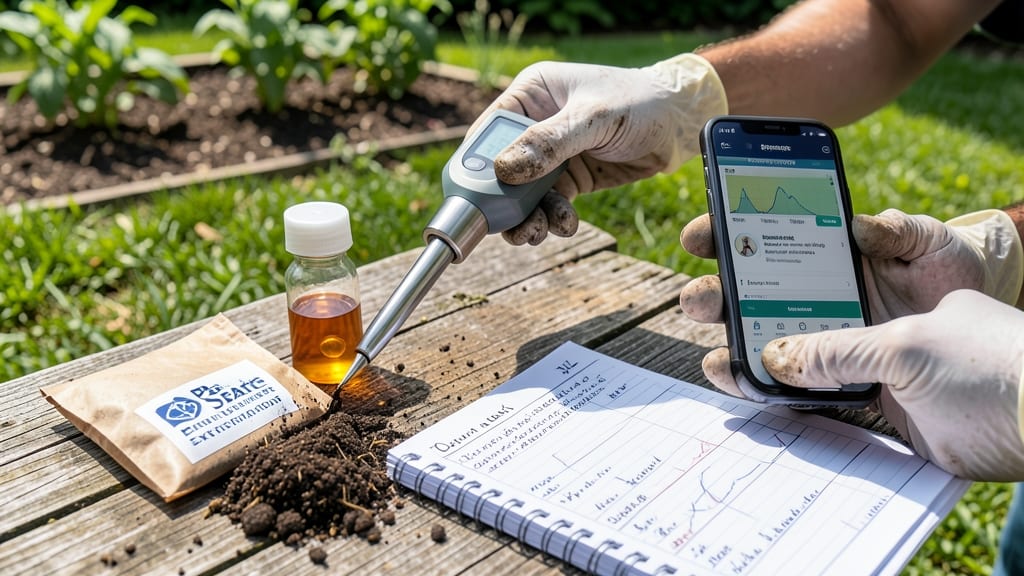
Penn State University soil testing helps gardeners analyze their yard's soil composition by collecting samples from 6-8 inches deep, testing for pH levels, nutrient content, and organic matter, and providing customized fertilizer recommendations within weeks.
This process starts with collecting samples from multiple spots across your yard to ensure accurate representation of your soil's health.
The Penn State lab then examines key factors like nitrogen, phosphorus, and potassium levels, along with micronutrients and organic matter content. 🌱 What sets their testing apart is the tailored fertilizer recommendations based on your specific results—whether you need to adjust pH, add compost, or use specific amendments.
I've found their reports especially helpful for identifying hidden deficiencies that affect plant growth, like magnesium or calcium imbalances.
For gardeners, this means you're not just guessing about what your soil needs—you get precise data to create the ideal growing conditions for your plants.
Whether you're preparing for a vegetable garden or just want healthier lawn grass, understanding these soil health indicators helps you make informed decisions about amendments and fertilizers.
💡 In This Article
- How Penn State Soil Test Lab Analyzes Your Samples
- Interpreting Your Soil Test Report for Garden Success
How Penn State soil test lab analyzes your samples
The Penn State Soil Test Lab uses a multi-step scientific process to evaluate your soil's health. First, they analyze the pH level using a calibrated electrode that measures hydrogen ion concentration in a soil-water slurry.
This tells you whether your soil is acidic (below 6.5), neutral (6.5-7.5), or alkaline (above 7.5), which directly impacts nutrient availability for plants. 🌱 For example, blueberries thrive in acidic soils, while vegetables like tomatoes prefer slightly acidic to neutral conditions.
Next comes the NPK (nitrogen, phosphorus, potassium) analysis, where lab technicians use colorimetric tests to measure each nutrient's concentration.
Nitrogen is tested through a modified Kjeldahl method that converts organic nitrogen to ammonia, while phosphorus and potassium are measured using spectrophotometers that detect specific wavelengths of light absorbed by their compounds.
The lab also screens for micronutrients like zinc, iron, and manganese using atomic absorption spectroscopy, which can detect even trace amounts that affect plant health.
Organic matter content is determined by heating a soil sample to 360°C to burn off carbon compounds, then measuring the weight loss. This gives you a percentage that indicates your soil's ability to retain moisture and nutrients.
What's fascinating is how this organic matter acts like a sponge—soils with 5% or higher organic matter hold nutrients better and resist compaction, while those below 2% may need compost or mulch additions. The lab combines all these measurements to create a comprehensive soil health profile.
What makes Penn State's analysis particularly valuable is their plant-available nutrient testing. Unlike some tests that measure total nutrients, their methods focus on what plants can actually access. For instance, they test phosphorus availability using the Mehlich-3 extractant, which mimics root uptake conditions.
This means their recommendations are based on what will actually improve your garden's productivity, not just what's present in the soil. 💫
Finally, the lab cross-references your results with Penn State's extensive plant database to determine which nutrients might be limiting growth. For example, if your soil tests show adequate phosphorus but low zinc, they'll recommend zinc sulfate applications because many plants (like tomatoes) can't utilize phosphorus without sufficient zinc.
This precision is what transforms raw data into actionable garden strategies.