
Light Requirements
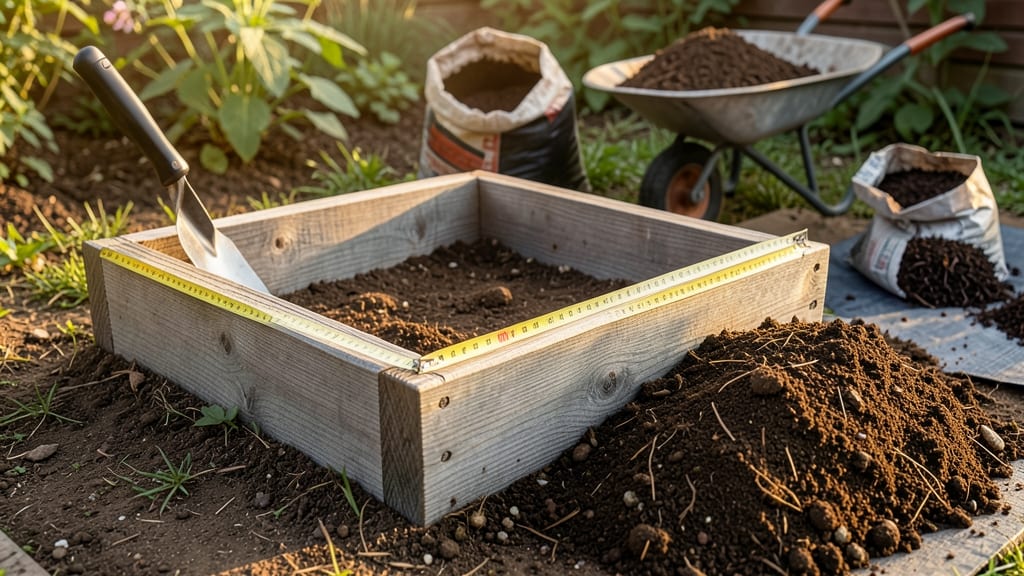
For a 4x2x1 raised bed, you'll need 5.33 cubic feet of soil (or 70 cubic feet for a 4-foot-tall frame), weighing 700–1,050 pounds depending on soil type—sandy soil is lighter, while clay or loam is heavier. Always account for settling by adding 10–20% extra volume.
Calculating soil volume for your raised bed isn't just about dimensions—it's about balancing space, weight, and plant needs.
A standard 4x2x1 foot frame gives you that sweet spot for most vegetables, but deeper frames (like 4-foot-tall versions) dramatically increase soil requirements. 🌱 The extra depth helps roots spread, but it also means hauling significantly more material.
I always recommend testing your soil's compaction first—loose mixes settle more, so adding that extra 20% buffer prevents future top-ups.
Another key factor is soil composition: a mix of compost, coconut coir, and peat stays lighter than pure topsoil but may need more frequent amendments. For heavy clay soils, consider adding perlite or vermiculite to improve drainage while keeping the weight manageable.
The structural integrity of your frame matters too—most wood frames handle 700 pounds easily, but metal or composite frames can support even more if you're going for deeper beds.
💡 In This Article
- Calculating Soil Volume for Different Raised Bed Heights
- Best Soil Types and Mixes for 4x2 Raised Gardens
Calculating soil volume for different raised bed heights
The volume calculation for your raised bed starts with basic geometry: length × width × height. For a 4x2x1 foot bed, that’s 8 cubic feet of raw space. However, soil settles over time—especially when mixed with organic matter—so the actual usable volume shrinks by 10-20%.
This is why gardeners often buy 5.33 cubic feet of soil for that same frame. 🌱 The math gets more interesting with deeper beds: a 4-foot-tall frame jumps to 70 cubic feet, requiring careful planning for both material costs and structural support.
Depth directly impacts root development and soil retention. A 1-foot-deep bed suits shallow-rooted plants like lettuce or herbs, while deeper beds (2+ feet) support root crops like carrots or potatoes. The trade-off?
Deeper beds need heavier soil mixes—clay loam weighs 1,000+ pounds per cubic yard, while sandy soil stays under 800 pounds. This weight distribution stresses frame materials, especially if you’re using untreated wood that may warp over time. Always check your frame’s load-bearing capacity before filling deeper beds.
Why do we measure in cubic feet but weigh in pounds? It’s about practicality. Cubic feet help visualize space, while pounds account for real-world logistics—like how much your truck can haul or whether your helper can lift a 50-pound bag.
The conversion varies by soil type: 1 cubic foot of sandy soil weighs ~70 pounds, while clay-heavy soil can hit 100 pounds. Pro tip: Pre-mixed raised bed soil blends (often 50% compost, 30% topsoil, 20% perlite) strike a balance between weight and nutrient density.
Here’s a quick comparison for common raised bed heights:
- 1-foot bed: 8 cubic feet (buy 9.6 cubic feet for settling) | 560–800 pounds (sandy to clay)
- 2-foot bed: 16 cubic feet (buy 19.2 cubic feet) | 1,120–1,600 pounds
- 4-foot bed: 70 cubic feet (buy 84 cubic feet) | 4,900–7,000 pounds
For tall beds, consider layered soil mixes: place heavier clay-based soil at the bottom (for stability) and lighter compost blends on top (for plant roots). This gradient reduces stress on your frame while optimizing growth conditions. 🌿