
How To
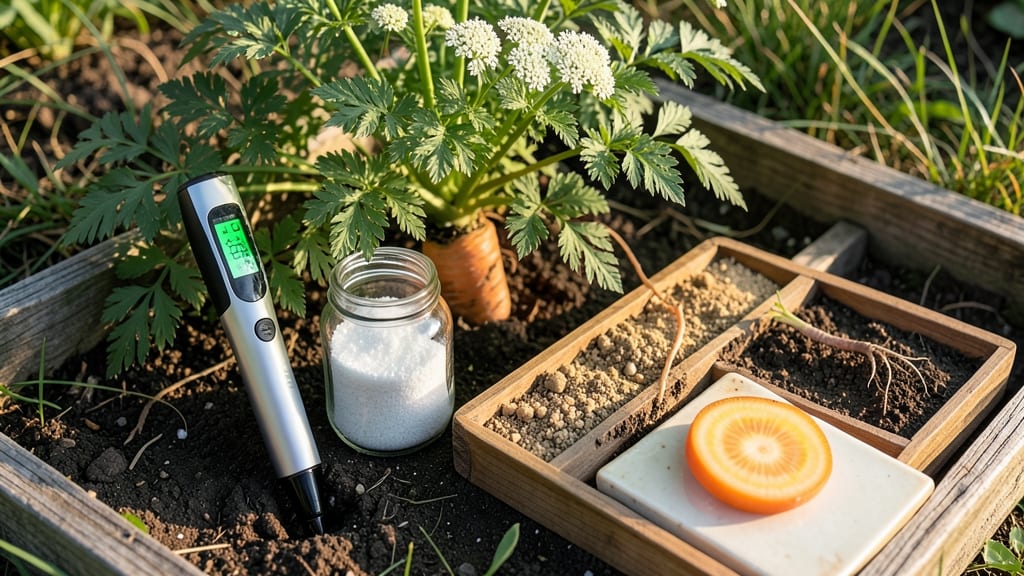
Growing carrots with the right soil pH tolerance 🥕 can transform your harvest from scraggly roots to sweet, straight perfection.
Struggling with carrot crops that refuse to thrive? The secret might be hiding in your soil’s pH levels—getting this right can mean the difference between a bountiful harvest and disappointing yields.
Carrots prefer a slightly acidic to neutral soil range, ideally between 6.0 and 7.0. Too high or low, and you’ll deal with stunted growth, poor flavor, or even forking—those dreaded split roots that ruin the whole batch.
In this guide, I’ll walk you through how to test your soil, adjust the pH naturally, and keep your carrots growing strong from seed to harvest.
Optimal soil pH for carrot growth: what the numbers really mean
If your carrots are growing slow or forking like a lightning bolt, your soil pH might be the culprit. Carrots are pH-sensitive root vegetables that thrive when soil conditions are just right.
The ideal carrot soil pH range sits between 6.0 and 7.0, a slightly acidic to neutral balance that unlocks their full potential.
This pH range ensures carrots can absorb essential nutrients like nitrogen, phosphorus, and potassium efficiently. When pH strays too far from this sweet spot, you’ll see stunted growth, poor root development, or even forked carrots—a gardener’s nightmare.
Let’s break down what these numbers mean and why they matter so much for your harvest.
🌱
Carrots need phosphorus for root development, and this nutrient becomes less available when soil pH drops below 6.0. At a pH of 5.5 or lower, aluminum and manganese become toxic, causing root deformities and poor growth.
On the other end, a pH above 7.0 locks out essential micronutrients like iron and zinc, leading to chlorosis (yellowing leaves) and weak root structures.
Many gardeners assume carrots can tolerate a wider pH range, but the truth is, they’re far more sensitive than most vegetables. While they can survive outside 6.0–7.0, their yield and quality suffer dramatically.
For example, in acidic soil (pH 5.0), carrots may grow but will often fork or develop hairy roots—a direct result of nutrient imbalances.
Another common misconception is that organic matter alone can fix pH issues. While compost improves soil structure, it only slightly raises pH—usually by 0.5 units or less.
To truly adjust pH for carrots, you’ll need targeted amendments like pelletized lime (to raise pH) or elemental sulfur (to lower it). Think of it like tuning a guitar: small adjustments make all the difference.
Let’s talk about how pH affects root development. Carrots grow downward, and their roots need loose, fertile soil to penetrate deeply. When pH is off, roots may fork or split—a classic sign of nutrient stress.
For instance, calcium deficiency (common in alkaline soil) causes blossom-end rot in other veggies, but in carrots, it manifests as cracked or misshapen roots. Keeping pH in the 6.0–7.0 range ensures roots grow straight and strong.
One of the biggest red flags of incorrect pH is stunted growth. If your carrot tops are lush but the roots are tiny, your soil might be too alkaline. Conversely, if leaves appear dark green and stunted with slow root growth, your soil could be too acidic.
Testing your soil’s pH before planting is a game-changer—it’s the first step to unlocking the full potential of your carrot crop.
Don’t let myths about carrot tolerance fool you. While some sources claim carrots can handle pH ranges as wide as 5.5–7.5, the reality is that optimal growth only happens in that 6.0–7.0 window.
Outside this range, you’re playing nutritional roulette with your harvest. For example, purple carrots (like ‘Purple Haze’) are slightly more tolerant of acidic soil, but even they perform best in 6.0–6.8 pH.
🌿
How to test and adjust soil pH for perfect carrot harvests
Getting your carrot soil pH just right is the secret weapon for straight, sweet roots. Carrots thrive in a slightly acidic to neutral range (6.0–7.0), but many gardeners accidentally sabotage their harvests by ignoring this critical factor.
Even if you're using the best carrot varieties and following a perfect planting schedule, off-pH soil can lead to stunted growth, forking, or bitter flavors.
Before you reach for the pH adjustment tools, let's clarify one common myth: carrots are more tolerant than most vegetables, but they still perform best within that 6.0–7.0 window.
Soil outside this range doesn't just reduce yields—it can also make roots more susceptible to diseases like alternaria leaf blight. The good news?
Testing and adjusting your soil's pH is simpler than you think, and I'll walk you through every step—from DIY tests to organic amendments that won't break the bank.
Carrot Soil pH Tolerance: Quick Comparison
Ideal pH Range (6.0–7.0)
- ✅ Optimal nutrient uptake
- ✅ Straight, sweet roots
- ✅ Reduced disease risk
- ✅ Best for root development
Tolerance Limits
- ⚠️ Below 5.5: Stunted growth, bitter flavor
- ⚠️ Above 7.5: Forked roots, poor yields
- ⚠️ Extremes (4.5–8.0): Increased disease susceptibility
Ready to test your soil? The easiest method is a DIY pH test kit (available for under $15), which gives you results in minutes. These kits work by mixing soil with water and comparing the color to a chart—no lab required.
For more precise readings, send a sample to your local cooperative extension office; they often offer affordable testing for around $10–$20. I recommend testing in both spring (before planting) and fall (after harvest) to track seasonal changes.
Once you know your soil's pH, it's time to adjust. For acidic soil (below 6.0), add pelletized lime (organic option) or crushed oyster shell. Work it into the top 6–8 inches of soil 2–3 months before planting.
If your soil is alkaline (above 7.0), use elemental sulfur or peat moss—both lower pH gradually. Remember, changes take time: sulfur can take 2–4 months to fully adjust pH, while lime works faster (about 1–2 months).
Timing your adjustments is just as important as the amendments themselves. For spring plantings, test and amend your soil in late winter so the pH has time to stabilize before seeds go in.
If you're planting in fall or early winter (common in warmer climates), aim to adjust pH 6–8 weeks beforehand. Pro tip: Always water your soil thoroughly after adding amendments to help them integrate evenly. Overworking the soil can compact it, making it harder for carrot roots to penetrate deeply.
One mistake I see gardeners make is overcorrecting pH. If your soil is only slightly off (e.g., 5.8 or 7.2), a small adjustment is all you need. Large changes can disrupt your soil's microbiome and lead to nutrient imbalances.
For example, adding too much lime can tie up phosphorus, a nutrient carrots need for strong root development. To avoid this, test again after amending and make small adjustments over time. Your goal is consistency—carrots reward steady conditions with perfect harvests.