Plants
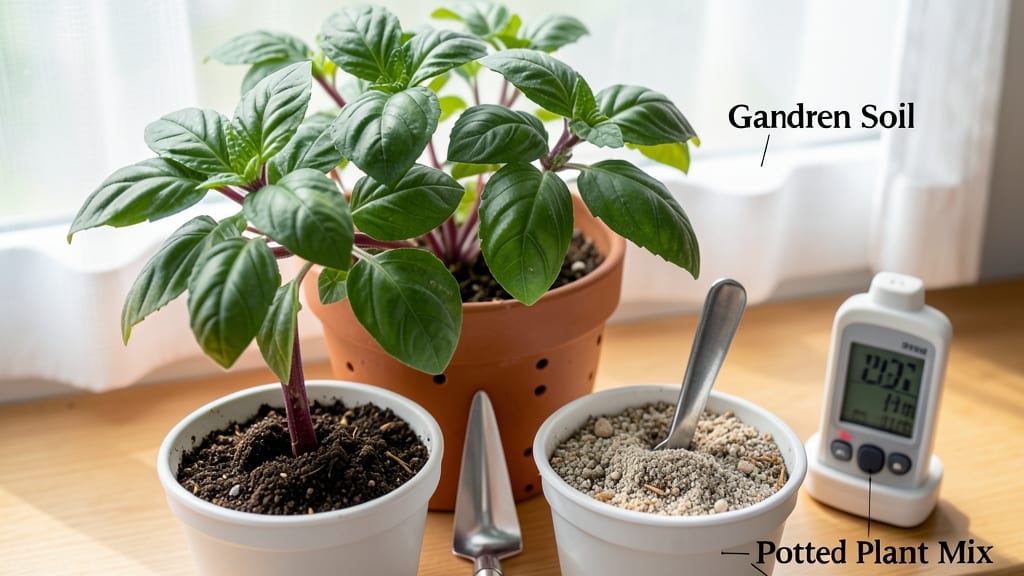
You shouldn't use garden soil for potted plants because it compacts easily, drains poorly, and often contains pests or diseases. Instead, opt for lightweight potting mix combined with perlite or vermiculite for better aeration and moisture control.
Garden soil is heavy and dense, which means it holds too much moisture around plant roots, leading to rot. 🌱 Unlike garden soil, potting mixes are specifically formulated to stay loose and breathe, preventing waterlogging while still retaining enough moisture for roots.
Many garden soils also contain weed seeds or pathogens that can harm your container plants over time.
For best results, I recommend mixing one-third potting soil with two-thirds perlite or coconut coir—this creates the perfect balance of drainage and moisture retention. If you're growing succulents, add extra perlite (up to 50%) to prevent root rot.
The key is mimicking nature's loose, airy soil conditions in a compact container.
💡 In This Article
- Why Garden Soil Fails in Potted Plants
- Best Potting Soil Mixes for Healthy Container Plants
Why garden soil fails in potted plants
Garden soil is designed for in-ground planting where natural drainage and microbial activity work together. In containers, however, the confined space creates a completely different environment. When you pack garden soil into pots, its natural particles—clay, silt, and sand—compress tightly, reducing pore space by up to 40%.
This compression cuts oxygen flow to roots, which plants need to metabolize nutrients efficiently. 🌱 Without proper aeration, roots suffocate, leading to stunted growth or death.
The drainage issue is equally critical. Garden soil typically contains 20-30% clay particles, which absorb water like a sponge but release it slowly—too slowly for container plants. When you water potted plants, excess moisture pools at the bottom, creating anaerobic conditions where harmful bacteria thrive.
This is why garden soil often causes root rot within 2-4 weeks in containers, while proper potting mixes drain excess water within 15-30 minutes.
Nutrient imbalances are another hidden problem. Garden soil contains organic matter that decomposes over time, releasing nutrients unevenly. In pots, this decomposition process accelerates because of higher temperatures, leading to nutrient spikes that can burn roots.
Additionally, garden soil often lacks the balanced micronutrients (like iron or magnesium) that potted plants need for vibrant growth. The result? Yellowing leaves and weak stems that garden soil simply can't support long-term.
Pests and pathogens are the final nail in the coffin. Garden soil frequently contains dormant weed seeds, fungal spores, and insect eggs that lie dormant until activated by the warm, moist conditions of a pot.
For example, nematodes—microscopic worms that attack roots—thrive in compacted garden soil. Once introduced, they're nearly impossible to eradicate without chemical treatments, making prevention the only viable strategy. 💀
Compare this to potting mixes, which are sterilized and blended to include ingredients like peat moss, bark, or coconut coir. These components create a loose, airy structure that mimics the natural forest floor where many potted plants originate.
The result? Roots grow freely, water drains properly, and nutrients release gradually—exactly what container plants need to thrive.
Think of it like this: garden soil is like wearing a heavy wool sweater in summer—it traps heat and moisture, making you uncomfortable. Potting mix, on the other hand, is like breathable linen—lightweight, airy, and perfect for the job.
The science is clear: containers demand a different approach to soil, and garden soil simply can't deliver.