Neem Oil
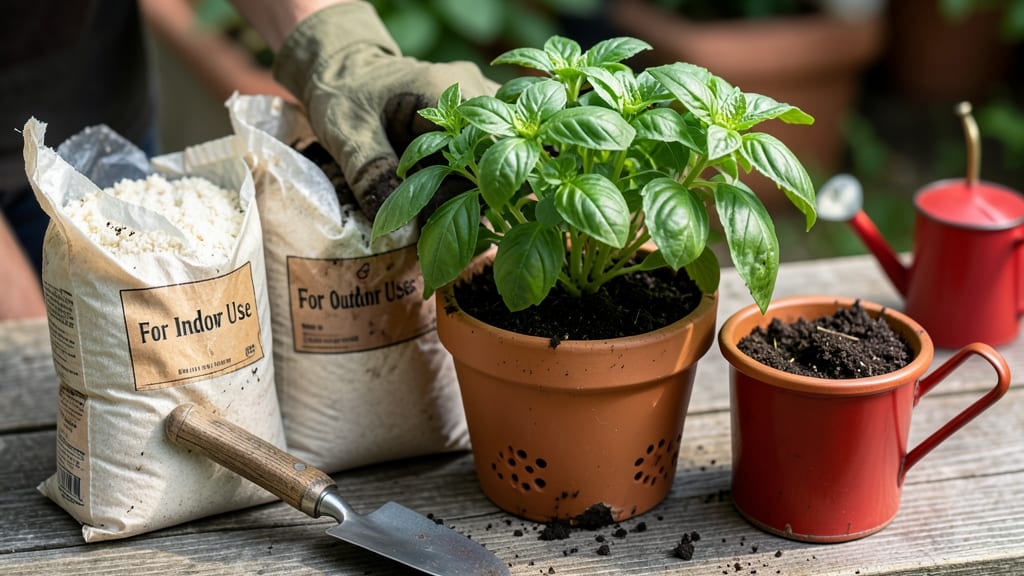
You shouldn't use indoor potting soil outside in garden beds because it lacks essential nutrients, drains poorly, and often contains synthetic additives that harm native soil ecosystems. Instead, blend it with native soil and compost for raised beds or containers.
Indoor potting mixes are designed for controlled environments with different needs than outdoor gardens.
These blends often contain peat moss or coconut coir instead of natural organic matter, which means they compact easily when exposed to rain or irrigation. 🌱 The synthetic fertilizers in many potting soils can also disrupt the delicate balance of native microorganisms, leading to poor plant growth or even root rot over time.
For best results, I recommend mixing potting soil with 50% native soil and 20-30% compost to create a more stable growing medium.
Another key difference is the lack of beneficial fungi and bacteria in potting soil. Outdoor plants rely on these natural communities to break down organic material and provide nutrients.
When you use potting soil directly in garden beds, you're essentially starting with a sterile environment that won't support healthy plant development. For container gardening, however, potting soil works well because it provides the loose, well-draining structure that roots need in confined spaces.
💡 In This Article
- Why Indoor Potting Soil Fails in Outdoor Gardens
- Best Ways to Adapt Potting Soil for Outdoor Planting
Why indoor potting soil fails in outdoor gardens
Indoor potting mixes are engineered for short-term plant growth in containers, not long-term outdoor ecosystems. The biggest issue is their low organic matter content—most commercial blends rely on peat moss or coconut coir (which breaks down rapidly) instead of natural compost.
This creates a medium that compacts quickly when exposed to outdoor elements, suffocating roots and reducing oxygen flow by up to 60% compared to loose garden soil.
The drainage problems become obvious after the first heavy rain. Potting soil lacks the natural pore structure of outdoor soil, causing water to pool around roots instead of draining through the soil profile.
This saturation triggers anaerobic conditions where roots struggle to absorb oxygen, leading to root rot in just 3-5 days for sensitive plants like tomatoes or peppers. The texture difference is dramatic: potting soil feels like damp sponge cake, while garden soil has the crumbly structure of moist sand.
Most potting mixes also contain synthetic fertilizers designed to provide quick nutrients in controlled environments. When introduced to outdoor ecosystems, these chemicals can disrupt the natural microbial balance. Native soil contains thousands of beneficial bacteria and fungi that work together to decompose organic matter—something potting soil simply can't replicate.
The result? Plants may show initial growth spurts from the synthetic boost, but long-term health suffers as the soil ecosystem collapses.
Another critical factor is the lack of soil structure needed for deep-rooted plants. Garden soil develops over years through natural processes like freeze-thaw cycles and biological activity, creating layers that support different root zones.
Potting soil offers none of this depth—it's essentially a temporary growing medium that works for herbs in pots but fails for perennials or vegetables that need to establish deep systems.
Consider this comparison: A raised bed filled with potting soil will bake dry in summer sun because it lacks the moisture-retention capacity of native soil mixed with compost. Meanwhile, the same potting soil in a container stays moist longer because the sides contain the water.
This fundamental difference explains why container gardening thrives with potting mixes while in-ground planting requires different properties.
For plants that do well in containers (like basil or lettuce), the loose structure of potting soil is ideal—but for anything growing in the ground, the lack of microbial diversity and poor long-term structure becomes a major limitation. The solution lies in understanding these fundamental differences before making the switch.