
Neem Oil
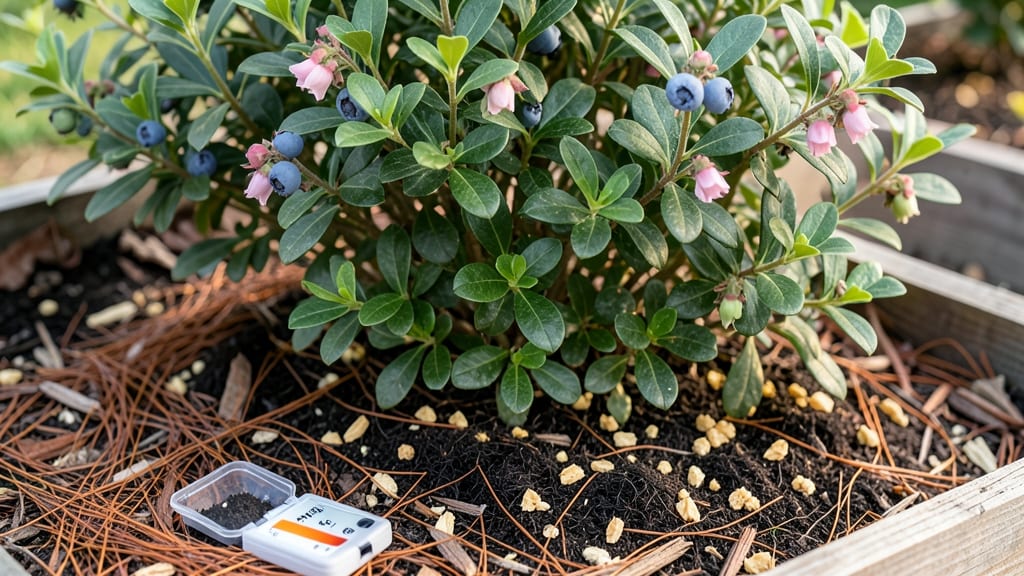
The ideal blueberry soil type is an acidic, well-draining loam with a pH between 4.5 and 5.5, replicating their native wetland conditions. Mixing sandy loam with organic matter like peat moss or pine bark creates the perfect balance of aeration and moisture retention, while compost adds nutrients without altering acidity. Regular soil testing ensures you maintain these critical conditions for healthy growth.
The right soil type for blueberries isn't just about acidity—it's about mimicking their natural bog-like environment. 🌱 In the wild, blueberries grow in acidic, waterlogged soils where organic matter breaks down slowly, creating a sponge-like structure that holds moisture while allowing roots to breathe.
This is why gardeners often blend peat moss or pine bark fines into their soil mixes: these materials stay acidic and improve drainage, preventing root rot while keeping moisture levels consistent.
For container gardening, I've found that a 50/30/20 mix of peat moss, pine bark, and perlite works exceptionally well, providing both structure and the right chemical environment.
What many growers overlook is that soil acidity isn't static—it changes with amendments and weather. That's why I recommend testing your soil every spring and fall.
If your pH drifts above 6.0, you'll need to reacidify with elemental sulfur or aluminum sulfate, but be cautious: too much can harm plants. The goal is to create a stable environment where blueberry roots can access nutrients like iron and manganese without becoming toxic at higher pH levels.
💡 In This Article
- Why Blueberries Demand Acidic Soil Chemistry
- DIY Blueberry Soil Mix Recipes for Containers and Beds
Why blueberries demand acidic soil chemistry
Blueberries evolved in acidic wetlands where the soil chemistry naturally suppresses harmful minerals like aluminum and manganese. At pH levels above 5.5, these metals become soluble and toxic to blueberry roots, causing stunted growth and chlorosis (yellowing leaves).
The plant's roots also struggle to access essential nutrients like iron and phosphorus when the soil pH rises—even slightly. This is why blueberries produce 90% fewer berries when grown in neutral or alkaline soils compared to their acidic native habitats.
The key to maintaining this acidity lies in the soil's organic matter content. Peat moss and pine bark fines release organic acids as they decompose, gradually lowering pH while improving soil structure.
These materials also create a porous environment that mimics the air pockets found in natural bogs, where blueberry roots thrive. For example, a mix containing 50% peat moss can maintain pH levels between 4.5 and 5.0 for up to 3 years without additional amendments, thanks to its slow decomposition rate.
Another critical factor is the role of mycorrhizal fungi, which form symbiotic relationships with blueberry roots in acidic soils. These fungi extend the root system's reach by up to 30%, enhancing nutrient and water uptake—especially important in the nutrient-poor conditions where blueberries naturally grow.
The fungi also help buffer sudden pH fluctuations that might occur with rain or irrigation. Without this microbial partnership, blueberries would struggle to access sufficient nutrients even in perfectly acidic soil.
Soil texture plays an equally important role in blueberry health. While loam soils (a balanced mix of sand, silt, and clay) provide the best drainage and root penetration, pure clay soils can become waterlogged and compacted, while pure sand offers no nutrient retention.
The ideal loam blend for blueberries should have 40-50% sand for drainage, 25-35% silt for moisture retention, and 10-20% clay to hold nutrients. This structure prevents root asphyxiation while ensuring consistent moisture availability—critical for berry development.
What most gardeners don't realize is that even the right soil mix can fail if not properly maintained. For instance, adding lime to lower acidity in neighboring plants can drift into blueberry beds via wind or water, raising the pH over time.
That's why I recommend creating a 1-foot buffer zone around blueberry plants where no alkaline amendments are applied. Regular soil testing with a digital pH meter (accurate to ±0.1 pH units) is essential to catch these gradual shifts before they affect plant health.
One visual clue that your blueberry soil chemistry is off is the color of new growth. Healthy blueberry leaves should be a vibrant green with a slightly waxy texture.
If you notice yellowing between the veins (interveinal chlorosis), it's often a sign of iron deficiency caused by high pH. In contrast, dark green leaves with purple stems may indicate phosphorus deficiency, another common issue in alkaline soils. These visual cues help diagnose soil chemistry problems before they become irreversible.