
How To
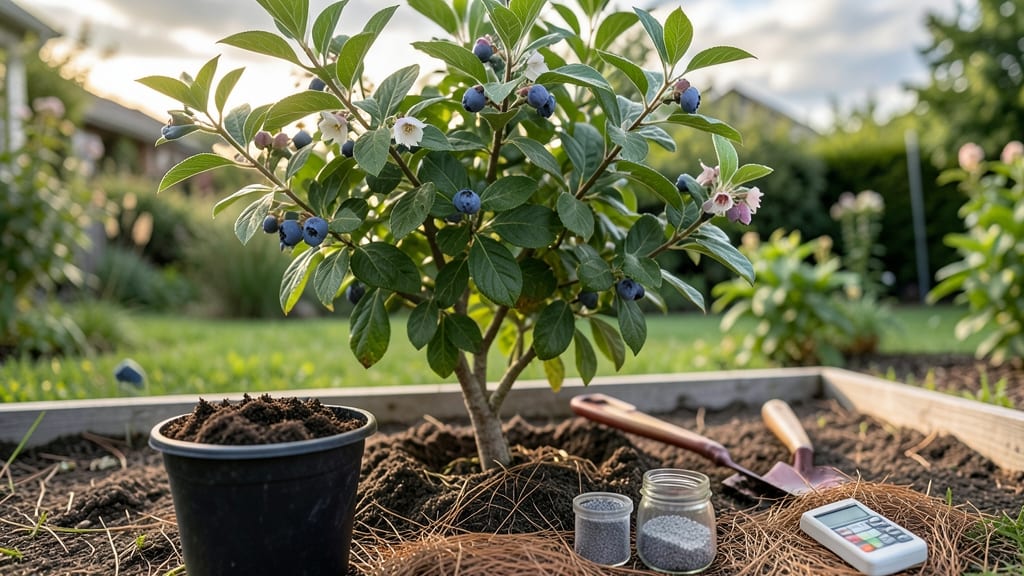
To acidify soil organically, use natural amendments like pine needles, coffee grounds, or sulfur to gradually lower pH. Apply composted materials at 1-2 inches per square foot or elemental sulfur at 1 pound per 100 sq ft, adjusting based on your soil's current pH and target acidity.
Organic soil acidifiers work by either releasing hydrogen ions directly (like sulfur) or through microbial breakdown of organic matter (such as pine needles or coffee grounds). 🌱 The key is patience—these methods lower pH slowly over weeks or months, preventing root damage that can happen with fast-acting synthetic acidifiers.
For example, sulfur converts to sulfuric acid when exposed to moisture, while organic amendments rely on decomposition by soil microbes to release acidic byproducts gradually.
Your plant type determines which amendment works best: pine bark fines are ideal for blueberries and azaleas, while peat moss provides long-term acidity for hydrangeas. Coffee grounds (used sparingly) are great for quick pH adjustments, but they can also attract pests if overused.
Always test your soil pH before and after treatment to avoid over-acidification, which can harm sensitive plants like tomatoes or beans.
💡 In This Article
- How Organic Amendments Lower Soil pH
- Best Organic Soil Acidifiers for Different Plants
How organic amendments lower soil pH
The magic of organic acidifiers lies in their ability to release hydrogen ions (H+) into the soil, which directly lowers pH. Elemental sulfur, for example, undergoes a chemical transformation when exposed to moisture and soil microbes.
Bacteria oxidize the sulfur (S) into sulfuric acid (H₂SO₄), which dissociates into H+ ions and sulfate (SO₄²⁻). This process can drop soil pH by 1-2 points per application over 2-4 months, depending on rainfall and soil temperature.
The reaction works best in warm, moist conditions, where microbial activity peaks at 77-86°F.
Organic matter like pine needles or coffee grounds takes a different approach. As these materials decompose, they release organic acids (such as acetic acid from coffee) and carbon dioxide (CO₂), which reacts with water to form carbonic acid (H₂CO₃).
This weak acid further dissociates into H+ ions, gradually acidifying the soil. The process relies heavily on soil microbes—specifically fungi and bacteria—that break down cellulose and lignin in the organic matter.
Without sufficient microbial activity (common in cold or waterlogged soils), the acidification slows dramatically. 🌱 This microbial-mediated method is gentler on plant roots because the pH change happens gradually, avoiding the sudden shock that synthetic acidifiers can cause.
Why gradual acidification matters becomes clear when you consider plant root systems. Sudden pH drops can disrupt nutrient uptake, particularly for essential elements like phosphorus and calcium.
For instance, azaleas thrive at pH 4.5-5.5, but if you drop the pH too quickly from neutral (7.0) to acidic, the roots may struggle to absorb nutrients, leading to chlorosis (yellowing leaves).
Organic amendments prevent this by releasing acidity at a rate that mimics natural soil conditions, allowing roots to adapt. This is why gardeners often prefer organic methods—it mimics the slow, natural acidification that occurs in forest soils under pine trees.
Another critical factor is the buffering capacity of your soil. Clay-heavy soils, for example, have a higher buffering capacity, meaning they resist pH changes more than sandy soils. In clay soils, you may need 2-3 times more sulfur or organic matter to achieve the same pH drop.
To test this, conduct a soil test before applying amendments—most home test kits measure pH and recommend adjustments based on your target plants. For instance, blueberries require pH 4.5-5.0, while tomatoes prefer 6.0-7.0, so the same amendment rates won't work for both.
Let’s break down the science behind two popular organic amendments: pine needles and sulfur. Pine needles release tannins and other organic acids as they decompose, which can lower pH by 0.5-1.0 points per year when applied at 2-3 inches thick.
The effect is slow but long-lasting, making it ideal for maintaining acidity in established gardens. Sulfur, on the other hand, is faster but requires precise application.
When mixed into the top 6 inches of soil, it can lower pH by 1 point in 2-3 months, but overapplication can harm beneficial microbes and lead to aluminum toxicity in plants.
One common misconception is that all organic amendments work the same way. Vinegar, for example, is often suggested as a quick fix, but its effects are temporary and can harm soil structure if used improperly.
When diluted vinegar (1 part vinegar to 3 parts water) is poured around plants, it lowers pH locally but evaporates within days, leaving no lasting impact.
For permanent acidification, stick to amendments that integrate into the soil and rely on microbial activity or chemical oxidation, like sulfur or pine bark fines.