
How To
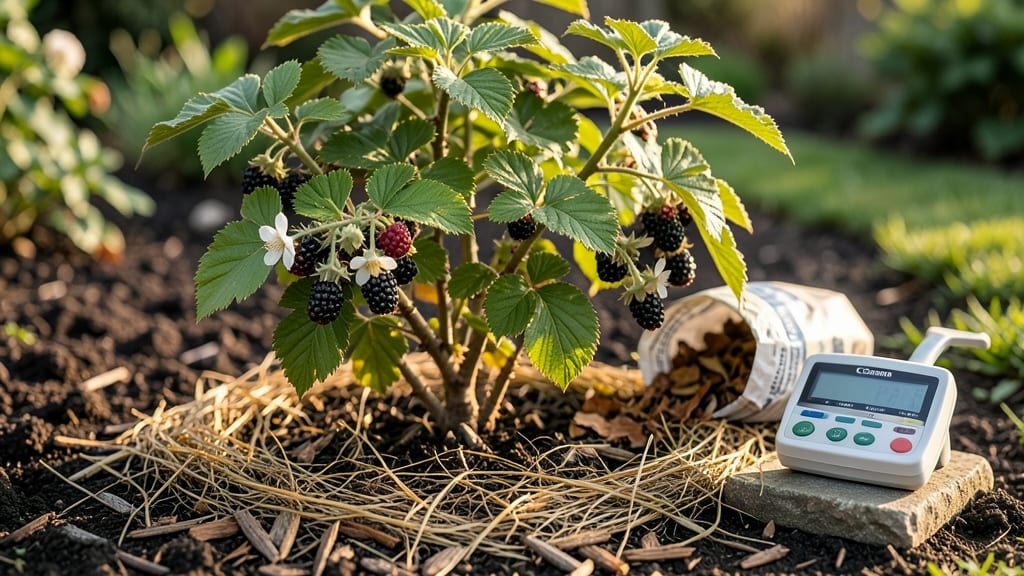
Growing thriving blackberries 🫐 depends on more than just sunlight—it starts with the right soil conditions that most gardeners overlook.
Picture this: you’ve planted your blackberry bushes, given them plenty of water, and even pruned them properly, but the canes still look weak and the fruit is sparse. The issue? Your soil might be missing the key elements these plants crave.
Blackberries thrive in well-draining, slightly acidic soil with a pH between 5.5 and 6.5, packed with organic matter to feed those hungry roots. Too much clay or sand, and you’ll end up with waterlogged roots or nutrient-starved plants—both of which can stunt growth or even kill your bushes.
In this guide, I’ll walk you through the exact soil mix your blackberries need, how to test and adjust your soil, and the quick fixes for common problems like poor drainage or nutrient deficiencies. No more guesswork—just lush canes and a bountiful harvest.
Ideal blackberry soil pH, texture, and nutrient requirements for maximum yield
Blackberries are finicky about their soil conditions—get it wrong, and you’ll end up with stunted canes, small fruit, or even root rot. The key to a thriving blackberry patch lies in three critical factors: pH balance, texture, and nutrient availability.
These elements work together to ensure your plants absorb water and nutrients efficiently, leading to bigger berries and healthier growth. Let’s break down exactly what your blackberries need to flourish.
Most blackberry varieties prefer a slightly acidic to neutral soil pH between 5.0 and 6.5. If your soil is too alkaline (above 7.0), essential nutrients like iron and manganese become unavailable, causing yellowing leaves (chlorosis) even when soil tests show adequate nutrients.
Similarly, overly acidic soil (below 5.0) can lock out phosphorus and calcium, leading to weak root systems and poor fruiting. Testing your soil is the first step—kits from garden centers or university extension services are affordable and accurate.
Here’s a quick reference for your blackberry soil needs:
The texture of your soil is just as critical as pH. Blackberries thrive in loamy soil—a mix of sand, silt, and clay that drains well but retains moisture.
Sandy soils drain too quickly, causing nutrient leaching and drought stress, while clay soils can become waterlogged, leading to root rot. If your soil is heavy clay, amend it with compost and sand to improve aeration.
For sandy soil, incorporate peat moss or coco coir to boost water retention.
Nutrients are the fuel that drives blackberry growth, and the NPK ratio (nitrogen, phosphorus, potassium) should shift with the plant’s needs. In early spring, focus on nitrogen-rich fertilizers (like blood meal or fish emulsion) to promote leafy cane growth.
As flowers appear, switch to a balanced 10-10-10 fertilizer or one with higher phosphorus (like bone meal) to support fruiting. During harvest, prioritize potassium (use greensand or wood ash) to enhance berry sweetness and disease resistance.
Organic options like compost tea or worm castings provide a slow-release nutrient boost without burning roots.
One of the most common mistakes gardeners make is assuming their soil is "good enough" without testing. A simple DIY pH test (using vinegar and baking soda) can reveal if your soil is too acidic or alkaline.
For a full analysis, send a sample to your local cooperative extension service—they’ll provide a detailed report on nutrient levels and amendments. If your soil is too acidic, add lime (calcium carbonate) in small doses.
For alkaline soil, mix in sulfur or peat moss to lower the pH gradually.
Blackberries also benefit from micronutrients like zinc, manganese, and magnesium. Symptoms of deficiencies often show up as yellowing between leaf veins (iron deficiency) or purple stems (phosphorus deficiency). If you notice these signs, apply a chelated micronutrient spray or mix Epsom salt (for magnesium) into the soil.
Regularly adding compost or well-rotted manure helps maintain a steady supply of these trace elements naturally.
Don’t overlook the role of organic matter in your soil. Blackberries need at least 3–5% organic content to thrive. This can come from composted leaves, grass clippings, or cover crops like clover. Organic matter
How to improve blackberry soil drainage and organic matter for long-term health
Blackberries thrive when their roots have well-draining soil that retains just enough moisture to prevent drought stress. If your soil stays soggy after rain or feels compacted, your blackberry bushes may suffer from root rot or nutrient deficiencies.
The good news? You can transform even heavy clay or sandy soil into an ideal growing medium with a few targeted strategies.
Start by testing your soil’s drainage. Fill a jar with soil and water, then observe how quickly the water drains. If it takes more than 2 hours, your soil is too dense.
Blackberries need soil that drains within 30–60 minutes while still holding moisture. Amending the soil with organic matter is the easiest way to achieve this balance.
🌱 5 Key Steps to Improve Blackberry Soil
- 🔹 Test drainage by filling a jar with soil and water—ideal drainage occurs in 30–60 minutes.
- 🔹 Mix in compost (3–4 inches deep) to improve texture and organic matter.
- 🔹 Use raised beds if your soil is heavy clay or sand—add coarse sand or perlite for better aeration.
- 🔹 Apply worm castings (1 cup per plant) for slow-release nutrients and microbial activity.
- 🔹 Mulch with straw or wood chips (3–4 inches thick) to retain moisture and suppress weeds.
For spring soil prep, focus on adding organic matter like composted leaves or well-rotted manure. Work these into the top 6–12 inches of soil around your blackberry plants. In fall, prioritize mulching to protect roots from winter freeze-thaw cycles and improve soil structure over time.
If your soil is particularly dense, consider building a raised bed specifically for blackberries. Fill it with a mix of 60% topsoil, 30% compost, and 10% coarse sand or perlite. This creates an ideal loose, airy environment for roots to spread and access nutrients.
Another game-changer is incorporating cover crops like clover or vetch in the off-season. These plants add nitrogen to the soil while preventing erosion. Simply till them into the soil before planting or let them decompose naturally to enrich the soil.
Finally, avoid overworking wet soil—this can compact it further. Instead, wait for dry conditions to amend and mulch. With these steps, your blackberry soil will become a nutrient-rich haven that supports healthy canes and abundant fruit for years to come. 🌱