
Tools
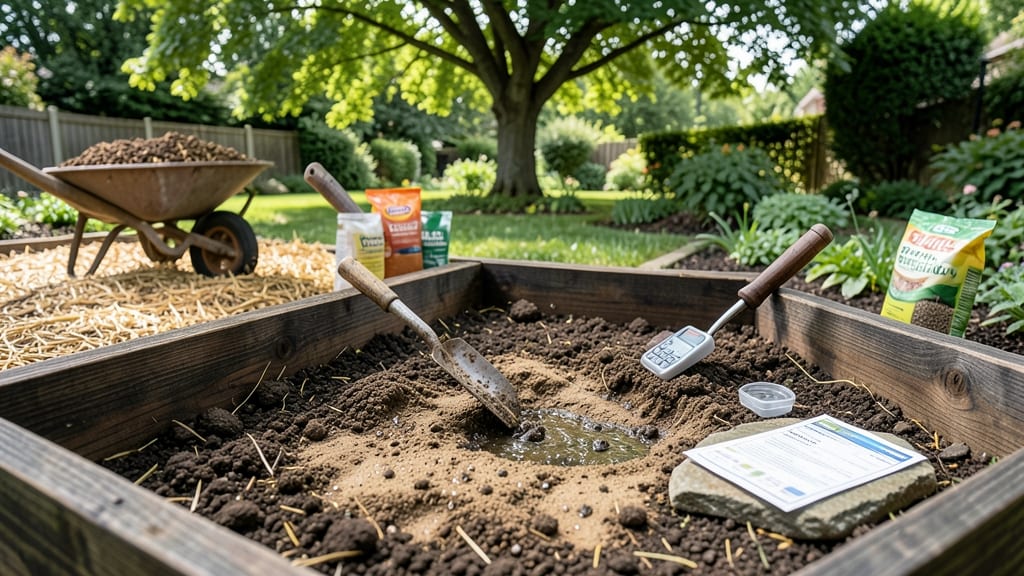
What soil to use for garden beds is a blend that combines loamy soil with compost (60% topsoil, 30% compost, 10% perlite or sand) to create a nutrient-rich, well-draining foundation. This blend supports strong root development and prevents soil compaction, while allowing you to tweak the ratios for different plants—like adding more compost for tomatoes or extra sand for succulents.
Choosing the right soil mix isn't just about drainage—it's about creating a balanced ecosystem for your plants. 🌱 Loamy soil provides the perfect balance of sand, silt, and clay, while compost adds essential nutrients and improves moisture retention.
The perlite or sand component ensures excess water drains away, preventing root rot. I’ve found that adjusting these ratios based on your local climate and plant types can make a huge difference in growth rates and yield.
For example, vegetable gardens thrive with extra compost to feed heavy feeders, while desert plants like cacti need a mix with more coarse sand to mimic their natural habitat. Testing your soil’s pH is also key—most vegetables prefer a slightly acidic to neutral range, while blueberries need more acidic soil.
Start with this basic blend, then fine-tune as you observe how your plants respond.
💡 In This Article
- How Soil Composition Affects Plant Growth and Drainage
- DIY Garden Soil Mixes for Specific Plants and Climates
How soil composition affects plant growth and drainage
The foundation of healthy garden beds starts with understanding soil texture—the delicate balance of sand, silt, and clay particles that determines how well roots breathe and absorb nutrients. Loamy soil, considered ideal, typically contains 40% sand, 40% silt, and 20% clay.
This ratio creates pore spaces that allow both air and water to reach roots efficiently, while the clay particles hold essential nutrients like nitrogen and phosphorus. 🌱 For comparison, pure sand drains too quickly (leaching nutrients) while heavy clay holds water but suffocates roots by limiting oxygen flow.
Organic matter—like compost or well-rotted manure—plays a critical role in improving soil structure. It binds particles together, creating stable aggregates that resist compaction.
When you add 30% compost to your soil mix, you're not just feeding plants; you're enhancing the soil's ability to retain moisture (up to 20% more than pure mineral soil) while improving its crumbly texture.
This is why gardeners often see a dramatic difference in root development within just a few months of amending heavy clay soil with organic material.
Aeration is where soil composition truly makes or breaks plant health. Roots need oxygen to respire, and compacted soil—common in clay-heavy areas—can reduce oxygen levels to 5-10% of what healthy soil provides.
Adding 10% perlite or coarse sand creates larger air pockets, while earthworms and microbial activity further enhance porosity. The result? Roots grow deeper and stronger, with access to both water and oxygen simultaneously.
This is especially critical for deep-rooted plants like fruit trees, which can develop root systems 6-8 feet deep when given proper aeration.
pH levels act as the gatekeeper for nutrient availability, and most garden plants thrive in a range of 6.0-7.0. At this neutral-to-slightly-acidic level, essential nutrients like phosphorus, calcium, and magnesium become soluble and accessible.
However, blueberries and azaleas prefer acidic soil (pH 4.5-5.5), while alkaline-loving plants like lavender need pH 7.0-8.0. Testing your soil's pH before planting can save you from nutrient deficiencies that appear as yellowing leaves or stunted growth—problems that are often mistaken for watering issues.
Consider this real-world example: Tomatoes planted in pure clay soil may show signs of blossom end rot (calcium deficiency) because the compacted soil prevents root uptake, even when calcium is present. The same plants in a 60% loam/30% compost/10% perlite mix will develop robust root systems that access nutrients efficiently.
This is why professional gardeners often recommend amending heavy soils with organic matter before planting—it's not just about drainage, it's about creating an optimal environment for roots to thrive.
For those dealing with sandy soils, the challenge is nutrient retention. Sand particles lack the surface area to hold onto nutrients, causing them to leach away quickly.
Adding 2-3% bentonite clay (a natural mineral) can dramatically improve nutrient retention by increasing the soil's cation exchange capacity—essentially giving nutrients a place to "park" where roots can access them. This simple amendment can transform a nutrient-poor sandy soil into one that supports vigorous plant growth.