
How To
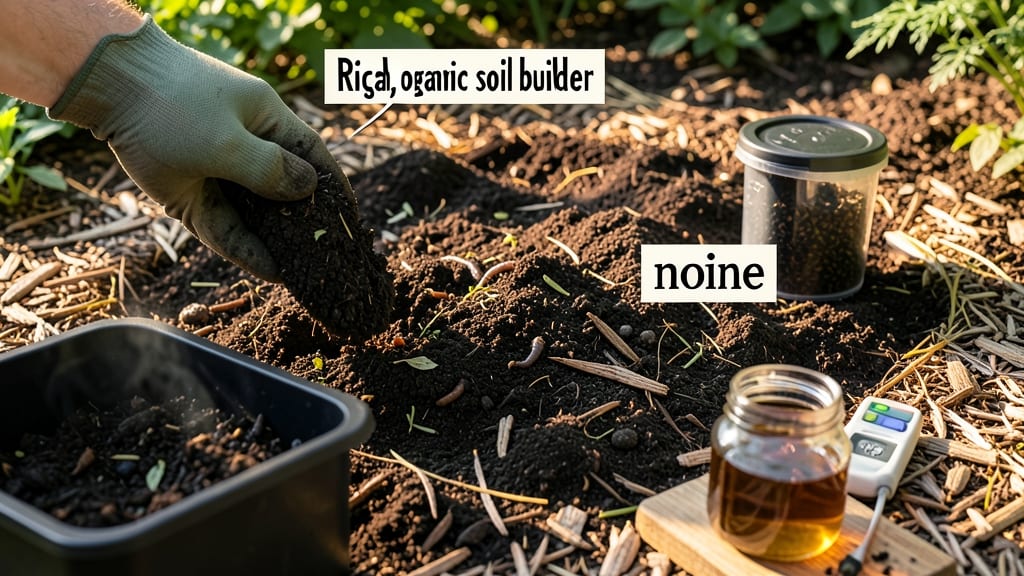
Soil builder refers to nutrient-rich organic or synthetic amendments that transform poor soil into fertile ground by improving structure, fertility, and moisture retention. These amendments—like compost, aged manure, or bio-stimulants—boost microbial activity and root development for stronger plant growth.
Soil builder works by breaking down organic matter into essential nutrients while creating air pockets for better root aeration. 🌱 Think of it as a soil "vitamin boost" that helps plants absorb water and minerals more efficiently.
Organic options like compost add long-term benefits, while synthetic blends provide quick nutrient fixes—both can turn struggling soil into a thriving garden foundation.
For gardeners, choosing the right type depends on your plants' needs.
Vegetable gardens benefit most from compost-rich builders, while lawns often need synthetic blends with slow-release nitrogen. 🌿 Always test your soil first to determine what your specific plot lacks—this ensures you're adding the most effective amendment for your growing goals.
💡 In This Article
- How Soil Builders Enhance Soil Health and Plant Growth
- Best Soil Builder Types for Different Gardening Needs
How soil builders enhance soil health and plant growth
Soil builders work their magic primarily through the decomposition of organic matter, which triggers a cascade of biological and physical changes in the soil. When you add compost or aged manure, for example, microorganisms like bacteria and fungi begin breaking down the organic material through a process called mineralization.
This releases essential nutrients like nitrogen, phosphorus, and potassium directly into the soil, creating a readily available food source for plant roots. 🌱 The breakdown also produces humus—a dark, spongy substance that improves soil structure by binding particles together while creating tiny air pockets that enhance aeration.
The real transformation happens at the microscopic level. Healthy soil teems with microbial life, and soil builders provide both the food and the habitat these organisms need to thrive.
A single teaspoon of rich garden soil can contain billions of bacteria and millions of fungi—these microbes form a complex food web that cycles nutrients, suppresses harmful pathogens, and helps plants absorb water more efficiently.
The cation exchange capacity (CEC) of soil, which measures its ability to hold and release nutrients, increases significantly with organic matter. For instance, sandy soils with low CEC can see their nutrient-holding capacity triple when amended with compost, while clay soils benefit from improved drainage and reduced compaction.
Water retention is another critical benefit. Organic soil builders absorb and hold water like a sponge, reducing runoff and making moisture available to plants during dry spells. This is especially valuable in sandy soils that drain too quickly or clay soils that become waterlogged.
The improved structure also allows roots to penetrate deeper, accessing nutrients and water that would otherwise be out of reach. For example, adding 2-3 inches of compost to a vegetable garden can increase water retention by up to 50% while reducing the need for irrigation by 30-40%.
This dual benefit of better water management and nutrient availability is why soil builders are a cornerstone of sustainable gardening practices.
Consider the case of biochar, a synthetic soil builder made from heated organic waste. When mixed into soil, biochar's porous structure acts like a tiny water reservoir, holding nutrients and microbes in its crevices where they're protected from leaching.
Studies show that biochar can increase soil fertility by up to 25% while reducing greenhouse gas emissions from decomposing organic matter.
The key difference between organic and synthetic builders lies in their speed and longevity—organic amendments like compost take time to break down but provide long-term benefits, while synthetic options deliver immediate results but may require more frequent applications.
What most gardeners don't realize is how soil builders influence plant growth indirectly through their impact on soil temperature. Organic matter insulates the soil, keeping roots warmer in winter and cooler in summer—this creates a more stable growing environment.
The microbial activity also produces growth-promoting hormones like auxins and gibberellins, which stimulate root development and flowering. For instance, plants grown in soil amended with compost often show 20-30% faster growth compared to those in unamended soil, thanks to these combined benefits of improved nutrition, water availability, and microbial support.
To see these benefits in action, try this simple test: Take two identical pots of soil—one amended with 50% compost and one left untreated. Plant the same type of seedling in each and monitor growth over 4-6 weeks.
You'll likely notice the amended soil pot produces taller, greener plants with stronger stems, demonstrating how soil builders create an optimal growing environment. The visual difference between the two pots becomes a tangible reminder of how much healthier soil can transform plant performance. 🌿