
How To
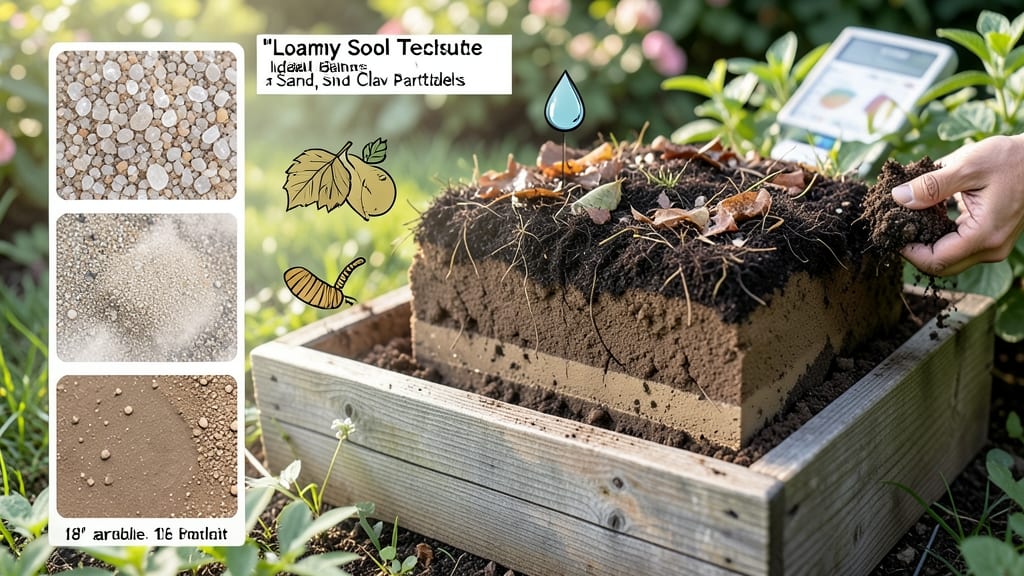
Loamy soil is made of roughly 40% sand, 40% silt, and 20% clay, combined with organic matter for optimal nutrient retention, drainage, and aeration—ideal for most plants.
This perfect balance creates soil that holds moisture without becoming waterlogged while allowing roots to breathe. 🌱 The sand particles provide drainage, silt retains nutrients, and clay holds moisture—together they create a crumbly, fertile medium that supports healthy root systems.
Many gardeners aim for this texture because it reduces compaction and improves water infiltration compared to pure clay or sandy soils.
What makes loamy soil particularly valuable is its ability to support beneficial microbial activity. The organic matter in loamy soil acts like a sponge, absorbing and slowly releasing nutrients that plants need. This creates an environment where beneficial bacteria and fungi can thrive, further enhancing soil fertility.
I've found that plants grown in loamy soil often show faster growth and better resistance to disease because of this balanced ecosystem.
💡 In This Article
- The Science Behind Loamy Soil Composition
- How to Test and Improve Your Garden’s Loam Content
The science behind loamy soil composition
Loamy soil achieves its ideal texture through the precise interplay of three mineral particles: sand, silt, and clay. Sand particles (0.05-2mm) create the largest component, providing the soil's structural framework and preventing compaction.
Their rough, angular shape creates air pockets that improve drainage and oxygen flow to roots, while their size prevents them from clinging together. Silt (0.002-0.05mm) acts as the nutrient reservoir, holding onto essential minerals like phosphorus and potassium that plants need for growth.
Clay (<0.002mm) completes the trio by forming tiny plates that retain moisture and exchange nutrients through their negatively charged surfaces.
The magic happens when these particles combine with organic matter—typically 5-10% of the total volume—which acts like a biological glue. This organic component, made up of decomposed plant and animal material, binds the mineral particles together while creating additional pore space.
Think of it as the soil's circulatory system: it holds water and nutrients near plant roots while allowing excess water to drain away. The result is a soil structure that's crumbly when dry and moist but not soggy when wet—perfect for root penetration and microbial activity. 🌱
This balanced composition supports plant health through three key mechanisms: aeration, water regulation, and nutrient availability. The sand component ensures oxygen reaches roots through its large pore spaces, while the silt and clay work together to store and gradually release water and nutrients.
Unlike pure sand, which drains too quickly, or pure clay, which becomes waterlogged, loamy soil maintains an optimal moisture level that most plants prefer. For example, tomatoes thrive in loamy soil because it provides consistent moisture while preventing root rot that can occur in heavy clay.
Microbial activity is where loamy soil truly excels. The organic matter feeds beneficial bacteria and fungi that break down complex nutrients into forms plants can absorb. These microorganisms also produce enzymes that further enhance nutrient availability.
Studies show that loamy soils can contain 10-100 times more microbial biomass than sandy soils, creating a thriving ecosystem that supports plant immunity. The physical structure of loamy soil—with its mix of large and small particles—provides both shelter and food for these microscopic helpers, creating a self-sustaining nutrient cycle.
To visualize this balance, imagine holding a handful of ideal loamy soil: it should feel smooth yet slightly gritty, with a texture similar to a well-made chocolate cake batter. When squeezed, it forms a loose ball that crumbles easily—this indicates the perfect balance between cohesion and structure.
The contrast with pure clay (which forms tight, hard clods) or pure sand (which falls apart completely) demonstrates why this composition is so prized by gardeners and farmers alike. 🌿
The particle size distribution isn't just about proportions—it's about the surface area each component provides. Clay particles, though tiny, have an enormous surface area relative to their volume, which explains their water-holding capacity.
A single gram of clay can have 1000 square meters of surface area, providing countless attachment sites for nutrients and microbial colonies. This microscopic architecture is what allows loamy soil to perform its balancing act: holding onto essential elements while preventing them from becoming locked away or washed out.