
How To
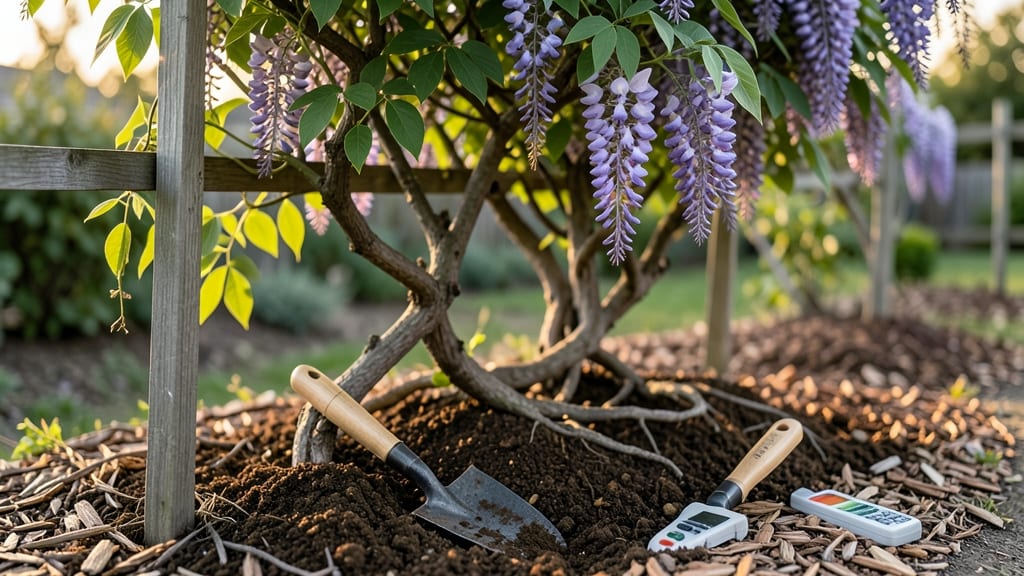
For wisteria to thrive, you need well-draining loam soil with a slightly acidic to neutral pH (6.0–7.5), rich in organic matter, and free from compacted clay or waterlogged conditions. Amend heavy soils with compost and coarse sand to create the perfect growing medium.
Wisteria roots spread aggressively, so they demand soil that breathes and drains efficiently. 🌱 The ideal loam mix—equal parts sand, silt, and clay—balances moisture retention with aeration, preventing both drought stress and root suffocation.
A pH between 6.0 and 7.5 ensures the plant can absorb essential nutrients like nitrogen and phosphorus without toxicity. For clay-heavy soils, I recommend blending in 30% perlite or coarse sand to break up compaction, while sandy soils benefit from 20% peat moss or compost to improve water retention.
Mulching with wood chips also helps maintain consistent moisture and temperature.
💡 In This Article
- Wisteria Soil Composition: Loam, pH, and Organic Matter Breakdown
- DIY Wisteria Soil Mix: Step-by-Step Blend for Containers or Gardens
Wisteria soil composition: loam, pH, and organic matter breakdown
Wisteria roots need a balanced loam soil because this texture—composed of roughly 40% sand, 40% silt, and 20% clay—creates the perfect compromise between drainage and moisture retention. The sand particles provide aeration, preventing root suffocation, while the silt and clay hold nutrients and water without becoming waterlogged.
Think of it like a sponge with just the right firmness: too much sand drains too quickly, while too much clay holds water and cuts off oxygen. Wisteria's deep, sprawling roots (which can reach 10-15 feet long) rely on this balance to access both water and nutrients efficiently.
The pH range of 6.0–7.5 isn't arbitrary—it's directly tied to nutrient availability. At pH 6.0, wisteria can access 85-90% of available phosphorus, a critical nutrient for root development and flowering.
Below pH 6.0, aluminum and manganese become toxic, stunting root growth, while above pH 7.5, iron and zinc become locked out, causing yellowing leaves (chlorosis). The slight acidity also encourages beneficial soil microbes that break down organic matter into forms wisteria can use.
For example, mycorrhizal fungi—essential for wisteria—thrive in this pH range, forming symbiotic relationships with roots to boost nutrient uptake by up to 30%.
Organic matter plays a dual role: it improves soil structure by binding particles together (creating crumbly loam) and acts as a slow-release fertilizer. A well-amended soil should contain 5-10% organic matter, which holds 10-20 times its weight in water while providing carbon for microbial activity.
Without it, wisteria struggles with nutrient deficiencies—like nitrogen starvation (purple stems) or potassium shortages (weak stems). Compost or well-rotted manure adds this organic boost while improving drainage in clay soils.
The key is freshness: over-composted material loses its structure, while fresh compost can harbor pathogens, so aim for a 2-3 year aged compost.
One often overlooked factor is soil temperature. Wisteria roots prefer 60-70°F—too cold (50°F) slows nutrient uptake, while too hot (> 80°F) accelerates organic matter decomposition. Organic matter helps regulate temperature by insulating roots and retaining moisture during heatwaves.
In containers, this becomes even more critical because soil heats up faster. Mulching with 3-4 inches of wood chips maintains stable temperatures and reduces water evaporation by 70%, creating an ideal microclimate for roots.
For visual learners, imagine wisteria roots as a network of straws: they need both water and air to function. Compacted soil blocks the "air straws," while sandy soil lets water drain too quickly, leaving roots thirsty.
The loam mix acts like a well-designed plumbing system—water flows where it's needed, and air reaches every root tip. This is why amending heavy clay with 25% perlite or coarse sand works wonders: it creates tiny air pockets while maintaining moisture. The result?
Roots that spread aggressively yet healthily, supporting that iconic wisteria vine growth.
Here's a quick test to check your soil's readiness: squeeze a handful. If it crumbles easily when dry and holds shape when moist (but doesn't stick), you've got ideal loam. If it forms a tight ball that won't break, add sand.
If it falls apart like dust, add compost. This tactile check saves time and ensures your wisteria gets the foundation it craves. 🌱