
Container Gardens
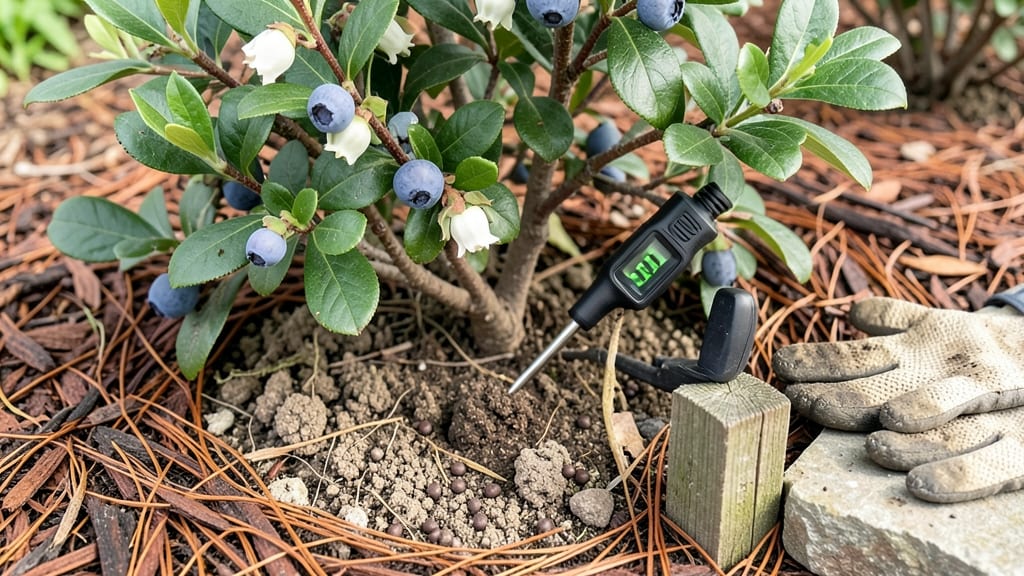
For growing blueberries, you need soil that's acidic (pH 4.5-5.5), packed with organic matter like peat moss or compost, and with excellent drainage to prevent root rot while maximizing nutrient absorption for healthy berry production.
Blueberries are famously particular about their growing conditions, and soil pH is the foundation of success. 🌱 The ideal acidic environment (4.5-5.5) isn't just a number—it unlocks essential nutrients like iron and manganese that plants need to thrive.
Without this acidity, blueberries develop yellowing leaves (chlorosis) and struggle to produce fruit. I've seen firsthand how amending soil with sulfur or pine needles can transform a struggling plant into a productive bush within a season.
Container gardens need special attention since they dry out faster, requiring regular pH checks and organic matter replenishment.
Don't stop at pH—drainage is just as critical. Blueberry roots need oxygen, and soggy soil leads to rot. 💧 Mixing in perlite or coarse sand creates air pockets while maintaining moisture retention.
The organic matter component (like compost or leaf mold) feeds beneficial microbes that help break down nutrients into forms the plant can use. This trio—acidity, drainage, and organic richness—works together to create the perfect blueberry-growing environment.
💡 In This Article
- Why Acidic Soil Is Critical for Blueberry Plants
- How to Test and Adjust Garden Soil for Blueberries
Why acidic soil is critical for blueberry plants
Blueberries evolved in acidic, nutrient-poor environments like bogs and wetlands, where the low pH (4.5-5.5) makes essential minerals like iron and manganese more available.
At this acidity level, these micronutrients exist in soluble forms that plant roots can easily absorb. 🌿 When soil pH rises above 6.0, iron becomes insoluble and forms compounds like iron oxide, which can't be taken up by the plant—leading to classic blueberry chlorosis (yellow leaves with green veins).
This is why even healthy-looking plants may fail to produce fruit if their soil isn't properly acidic.
The science gets even more interesting when you consider mycorrhizal fungi, which form symbiotic relationships with blueberry roots. These beneficial fungi thrive in acidic conditions and help extend the root system's reach for water and nutrients.
Without proper acidity, mycorrhizal activity drops by up to 40%, reducing the plant's ability to access phosphorus and other critical elements. 🔬 Studies show that blueberries in alkaline soil (pH 7.0+) can experience nutrient deficiencies even when fertilized, because the high pH disrupts the natural chemistry that makes nutrients plant-available.
What most gardeners don't realize is how quickly soil pH can shift.
Organic matter decomposition naturally lowers pH over time, but modern agricultural practices (like lime applications) often leave garden soils too alkaline for blueberries. 🌱 The ideal pH range isn't just about numbers—it's about creating the right chemical environment where iron exists as Fe²⁺ (ferrous) rather than Fe³⁺ (ferric).
This ferrous form is what blueberry roots can absorb through their specialized uptake mechanisms. Without this proper chemistry, even well-fertilized plants may show stunted growth or poor fruit set.
Container gardening presents unique challenges because the limited soil volume changes how quickly pH shifts. When you water with tap water (often slightly alkaline), the pH can creep up faster than in-ground plantings. 💧 This is why container-grown blueberries need regular pH monitoring—every 4-6 weeks during growing season.
The good news is that sulfur-based amendments can lower pH by 1-2 points per application, giving you precise control over the soil chemistry your blueberries need to thrive.
Visual clues can help you diagnose pH issues before they become severe.
Yellowing leaves between veins (interveinal chlorosis) is the most obvious sign, but you might also see stunted growth, small leaves, or poor flowering. 🌿 These symptoms appear because the plant can't access the iron it needs for chlorophyll production and energy transfer.
The key is catching these signs early—once established, blueberries are resilient, but they need that acidic foundation to reach their full potential.
Consider this: a single blueberry plant can produce up to 10 pounds of fruit per season when growing in optimal conditions. That same plant in alkaline soil might produce only 1-2 pounds—or none at all.
The difference comes down to those microscopic chemical reactions happening in the soil, where proper acidity unlocks the nutrients that make blueberry production possible. 💫