
Container Gardens
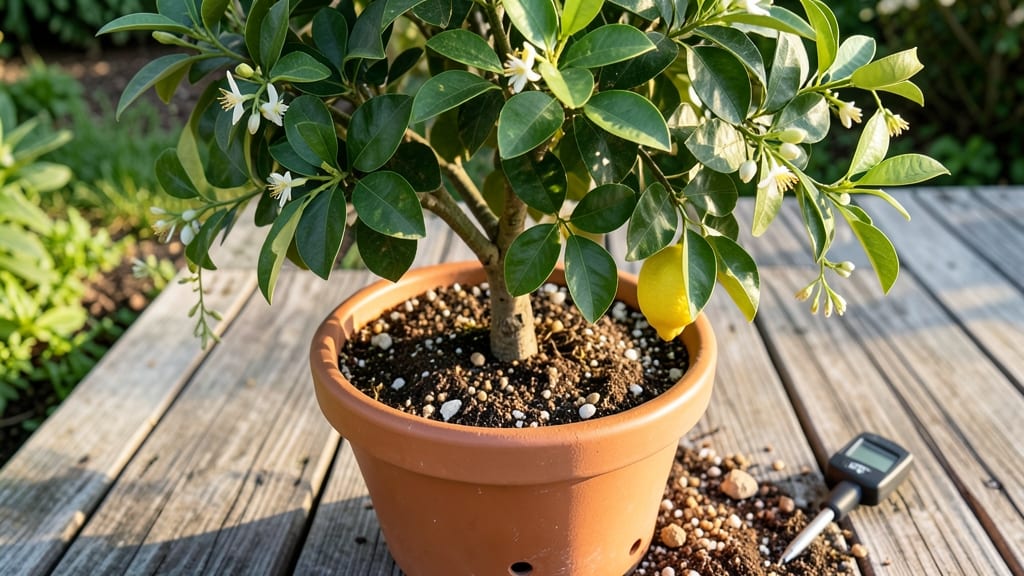
Your citrus tree’s roots need acidic loam blend—not just any potting mix—to thrive in containers. 🌱 I learned this the hard way when my Meyer lemon’s leaves yellowed after just one winter; the wrong soil was starving its roots.
The key is a mix that mimics Florida’s native soil: 60% well-draining loam, 30% perlite or pumice, and 10% peat moss or pine bark fines to keep pH between 5.5 and 6.5. Most store-bought citrus mixes fail because they’re too dense or alkaline.
You’ll need a 10-15 gallon container (minimum) with drainage holes—citrus roots drown faster than you’d think. The blend should feel like a damp sponge, not wet cement. Test your mix by squeezing a handful: if water drips out immediately, it’s too sandy; if it holds a ball, it’s too compact.
Within 3-4 months, your tree will reward you with glossy new leaves and—if it’s mature enough—bright, fragrant blooms. The secret’s in the roots: healthy soil means strong growth, not just survival. I’ve had trees in this mix produce fruit for five+ years with minimal care.
For beginners, start with a pre-mixed acidic citrus blend and amend it with 20% perlite. Advanced gardeners can tweak ratios: add 10% worm castings for micronutrients or coarse sand if your climate stays humid. The goal?
Soil that breathes, drains, and holds just enough moisture—like a citrus tree’s natural home, just in a pot.
📚 In This Guide
- What you need
- Instructions
- Tips and common mistakes
- Wrapping up and next steps
What you need
- ● Potting soil (base): 50% well-draining, peat-free potting mix (e.g., Miracle-Gro or FoxFarm Ocean Forest). Quantity: 3-5 gallons per 15-gallon container.
- ● Perlite or pumice: 20% coarse perlite or pumice for aeration. Quantity: 1-2 cups per 5 gallons of mix.
- ● Pine bark fines: 20% coarse, aged pine bark (pH ~5.5-6.5). Quantity: 1-2 cups per 5 gallons.
- ○ Sphagnum peat moss (optional but recommended): 10% for moisture retention and acidity. Quantity: ½–1 cup per 5 gallons.
- ● Citrus-specific fertilizer: Slow-release granules (e.g., Osmocote Smart-Release 14-14-14) or liquid feed (e.g., Citrus-tone). Quantity: Follow package instructions (typically 1 tbsp per gallon of soil).
- ○ Lime (optional, for pH adjustment): Pelletized dolomitic lime (if soil pH exceeds 6.5). Quantity: Start with ½ tsp per gallon and test.
- ● Gloves and safety goggles (for handling perlite/pumice).
- ● Large mixing container (wheelbarrow or 5-gallon bucket).
- ● pH testing kit (digital or liquid test strips).
- ● Trowel or garden fork for blending.
- ● Container with drainage holes (15+ gallons for dwarf citrus; 30+ for standard trees).
- ● Watering can with spray nozzle (for even moisture distribution).
- ● 🔥 Sterilize soil: Bake potting mix at 200°F (93°C) for 30 minutes to kill pests before mixing.
- ● 🌡️ pH perfect: Aim for 5.5–6.5. Adjust with sulfur (to lower pH) or lime (to raise it).
- ● ✨ Layer like a pro: Place a 1-inch layer of gravel or broken pottery at the container’s bottom for drainage.
How to mix the perfect container soil for citrus trees
Citrus trees need the right soil to thrive—here's my foolproof blend that keeps roots happy and plants productive.
🪴 Step 1: Gather the Base Components
Start with 50% well-draining potting mix as your foundation. I use a premium, peat-based mix (never garden soil—it compacts and suffocates roots). This provides the airy structure citrus roots love while retaining enough moisture to prevent drought stress.
Add 30% coarse sand—I prefer horticultural sand, not playground sand—to improve drainage. Citrus roots rot quickly in soggy soil, and this sand keeps water moving through the mix. Sift it to remove any fine particles that could clog drainage.
🌱 Step 2: Boost Acidicity and Nutrients
Mix in 10% sphagnum peat moss to lower the pH slightly and improve moisture retention. Citrus trees prefer a soil pH between 5.5-6.5, and peat helps maintain that range. Break up any large chunks before adding—you want it to blend smoothly with the other components.
For nutrients, add 10% perlite or pumice to keep the blend light and prevent compaction. I like to pre-moisten the perlite slightly before mixing—it helps distribute evenly without creating pockets of air. This also prevents the perlite from floating to the surface later.
✂️ Step 3: Customize for Your Climate
In hot, dry climates, reduce the peat moss to 5% and increase the sand to 35% to prevent moisture buildup. If your area has cooler winters, add 5% composted pine bark fines instead—this adds organic matter that breaks down slowly, feeding roots over time without overheating the soil.
For containers larger than 15 gallons, add 1 tablespoon of slow-release citrus fertilizer per gallon of mix. This ensures the soil has a nutrient boost right from planting. Mix it in thoroughly so there are no concentrated pockets that could burn tender roots.
💧 Step 4: Test and Adjust the Blend
Fill a small container with your mix and water it thoroughly. The water should drain freely within 10-15 minutes—if it pools or drips for hours, add more perlite or sand. If it drains too quickly (barely any moisture remains), increase the peat moss slightly to help retain water.
Use a soil pH test kit to verify the blend is between 5.5-6.5. If it's too alkaline, add a handful of elemental sulfur and remix. If too acidic, stir in a small amount of dolomitic lime. Adjust gradually—citrus trees are sensitive to sudden pH shifts.
🌿 Step 5: Layer and Plant
Fill your container one-third full with the finished mix, then place your citrus tree in the center. The root ball should sit 1-2 inches below the rim—this prevents water from spilling over and diluting nutrients during watering. Fill the remaining space with more mix, pressing gently to eliminate air pockets.
Water deeply until it drains from the bottom, then let the tree sit for 24 hours before fertilizing. This gives roots time to settle into the new soil without nutrient shock. After that, maintain moisture by watering when the top 1-2 inches of soil feel dry—never let the mix stay soggy.
Tips & tricks for perfect container soil for citrus trees
Took me years to perfect this blend—here's what I learned the hard way about keeping citrus roots thriving in containers.
Ingredient Quality Matters: Never cut corners on the 50% well-draining potting mix—cheap mixes compact over time and suffocate roots. I use a premium peat-based mix with added perlite right from the bag. For the 30% coarse sand, horticultural sand is worth the extra cost—playground sand contains too many fine particles that clog drainage. Sift both components before mixing to ensure even distribution.
Layering Technique: When planting in Step 5, create a slight mound of soil in the container's bottom third. This prevents water pooling around the roots when you water from above. After placing your tree, press the soil gently around the root ball to eliminate air pockets, but don't compact it—citrus roots need air circulation. Think "fluffy cloud" not "packed snow."
pH Testing Shortcut: If you don't have a pH test kit, use red cabbage juice as a natural indicator. Chop red cabbage, boil in water for 10 minutes, then strain. Add your soil mix—purple means pH 5.5-6.5 (perfect!), blue means too alkaline, and yellow means too acidic. Adjust with elemental sulfur or dolomitic lime as needed in Step 4.
Climate Adaptation: The 5% composted pine bark fines for cooler climates is my secret weapon for winter survival. These fines break down slowly, releasing nutrients when your tree needs them most. For hot climates, that extra 5% sand prevents the mix from baking hard—think of it as adding insulation against heat stress.
Pro Tips for Soil For Citrus Trees In Containers
- Took me years to perfect this blend—here's what I learned the hard way about keeping citrus roots thriving in contain...
- Ingredient Quality Matters: Never cut corners on the 50% well-draining potting mix—cheap mixes compact over time and ...
- Layering Technique: When planting in Step 5, create a slight mound of soil in the container's bottom third. This prev...
Frequently asked questions
Got questions about growing citrus in containers?
You’re not alone! Here are answers to the most common concerns—so you can keep your trees happy and fruiting year after year.
What’s the best soil pH for container-grown citrus trees?
Citrus trees thrive in slightly acidic soil with a pH between 6.0 and 7.0. Test your soil using a pH meter or kit—if it’s too alkaline (above 7.0), amend with sulfur or peat moss to lower the pH gradually. Avoid sudden changes, as citrus roots are sensitive!
Can I reuse old potting soil for my citrus tree?
It’s not recommended to reuse old potting soil for citrus because it can compact over time, reducing drainage and aeration. Instead, refresh the mix every 1–2 years by adding 20–30% fresh soil blend (like your acidic loam mix) to the existing soil. Sterilize reused soil by baking it at 200°F (93°C) for 30 minutes to kill pests or diseases.
How often should I water my citrus tree in a container?
Water your citrus tree when the top 1–2 inches of soil feel dry—usually 2–3 times per week in summer and once a week in winter. Containers dry out faster than ground soil, so check moisture daily in extreme heat. Overwatering is worse than underwatering, so ensure your pot has drainage holes!
What if my citrus tree’s leaves turn yellow?
Yellow leaves often signal overwatering, nutrient deficiency, or poor drainage. Check the roots—if they’re mushy or the soil smells sour, you’re overwatering. For nutrient issues, fertilize with a citrus-specific feed (high in nitrogen, potassium, and micronutrients like iron). If drainage is the problem, repot into a larger container with fresh, well-draining soil.
Can I grow citrus in a container without a special soil mix?
Yes, but your tree may struggle. A DIY alternative is a 50/50 blend of cactus/succulent mix and peat moss or coconut coir, plus a handful of perlite for aeration. However, a citrus-specific acidic loam blend provides the ideal balance of nutrients, drainage, and microbial activity for long-term health. Start with the right mix to avoid common pitfalls!
Wrapping up and next steps
Choosing the right soil for your citrus trees in containers is the secret ingredient to their long-term success! 🌱 A well-balanced, acidic loam blend ensures strong roots, vibrant growth, and delicious fruit. With the right mix of organic matter, drainage, and nutrients, your citrus tree will thrive—even in limited space.
Ready to take the next step? Start by gathering your supplies, mix your custom blend, and plant with confidence! Your citrus tree will thank you with lush leaves and bountiful harvests for years to come. Happy gardening! 🍊✨