
Tools
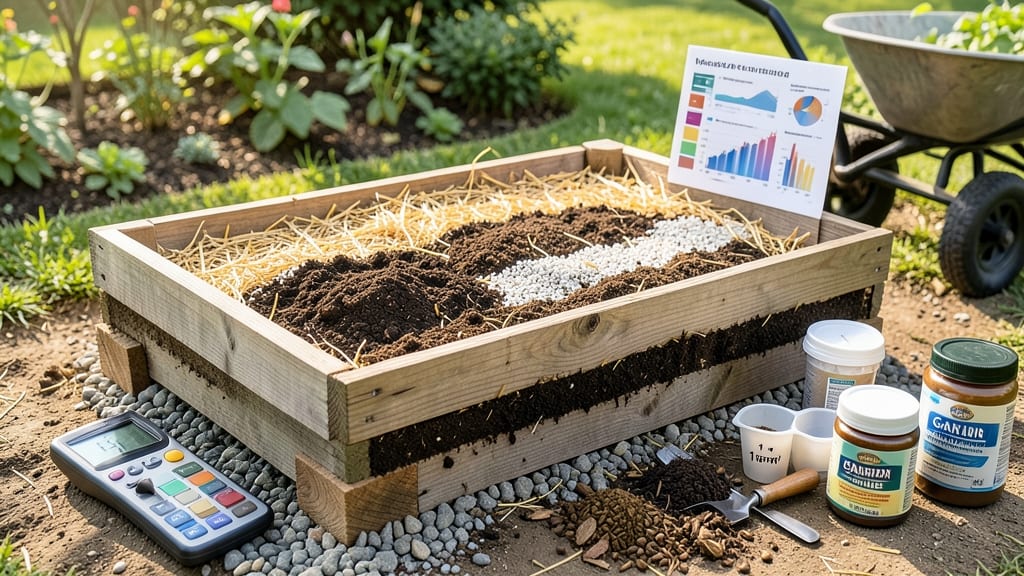
For a raised vegetable garden, the ideal soil composition includes 60% topsoil, 30% compost, and 10% coarse sand or perlite to balance drainage, aeration, and nutrient availability. These ratios support robust root systems while accommodating different plant types.
The 60-30-10 ratio creates a balanced growing medium where topsoil provides essential minerals, compost enriches organic matter, and sand/perlite prevents compaction. 🌱 This mix works particularly well for most vegetables, but heavy feeders like tomatoes benefit from an extra 5-10% compost.
The key is avoiding pure organic matter—too much compost can suffocate roots by reducing oxygen flow.
Adjustments depend on your specific crops: root vegetables (carrots, potatoes) need slightly looser soil with more sand, while leafy greens thrive in nutrient-dense mixes with extra compost.
Always test your soil's pH (ideal range is 6.0-7.0) since acidic or alkaline conditions can lock out essential nutrients, even with the perfect mix.
💡 In This Article
- Understanding Ideal Raised Garden Soil Mix Science
- Plant-Specific Soil Adjustments for Raised Beds
Understanding ideal raised garden soil mix science
The perfect raised garden soil mix isn't just about throwing together dirt and compost—it's a carefully balanced ecosystem where each component plays a specific role. The 60% topsoil foundation provides essential minerals like nitrogen, phosphorus, and potassium, while its natural structure creates spaces for roots to breathe.
Think of it as the skeleton of your soil: too little topsoil means poor structure, while too much creates a dense, compacted environment where roots struggle to expand.
Organic matter—typically 30% compost—acts like a moisture sponge, holding 15-20% more water than mineral soil alone while feeding beneficial microbes. Well-aged compost (not fresh manure) breaks down slowly, releasing nutrients gradually over 3-6 months.
The decomposition process also creates humus, a dark, crumbly substance that improves soil structure by binding particles together. For example, a 1-inch layer of compost can increase water retention by 25%, making it especially valuable in drought-prone areas.
That final 10% coarse sand or perlite serves as the soil's plumbing system, preventing waterlogging while allowing excess moisture to drain away. Sand particles (0.05-2mm) create large pores that improve aeration, while perlite's lightweight structure adds 20-30% more air space than sand.
This is critical because roots need oxygen—just 10 minutes of oxygen deprivation can start damaging root cells. The right balance prevents "wet feet" syndrome where roots suffocate, leading to yellowing leaves and stunted growth.
pH balance (aim for 6.0-7.0) acts like a nutrient gatekeeper—if your soil is too acidic (pH 5.0), essential nutrients like phosphorus and calcium become locked away, even if they're present.
Test kits costing $10-$15 reveal your soil's pH, and amendments like lime (to raise pH) or sulfur (to lower it) can adjust it precisely. For instance, blueberries—acid-loving plants—thrive at pH 4.5-5.5, while most vegetables prefer the neutral range.
Texture matters too: the ideal mix should feel like a crumbly cake batter when moist—not sticky (too much clay) or gritty (too much sand). You can test this by squeezing a handful—it should hold its shape but break apart easily.
This loam texture supports both water retention and drainage, preventing the extremes that cause root rot or dehydration. For example, strawberries need this balanced texture to develop their signature sweetness, while heavy feeders like corn benefit from slightly more compost to support their rapid growth.
Here's what happens when you get it wrong: Too much compost (40%+) creates a "soggy loaf" effect where roots can't access oxygen, while too little (20% or less) leaves plants nutrient-starved.
The science shows that plants grown in optimal soil mixes can yield 30-50% more produce** than those in unbalanced soil, proving that composition truly matters at the molecular level.