
How To
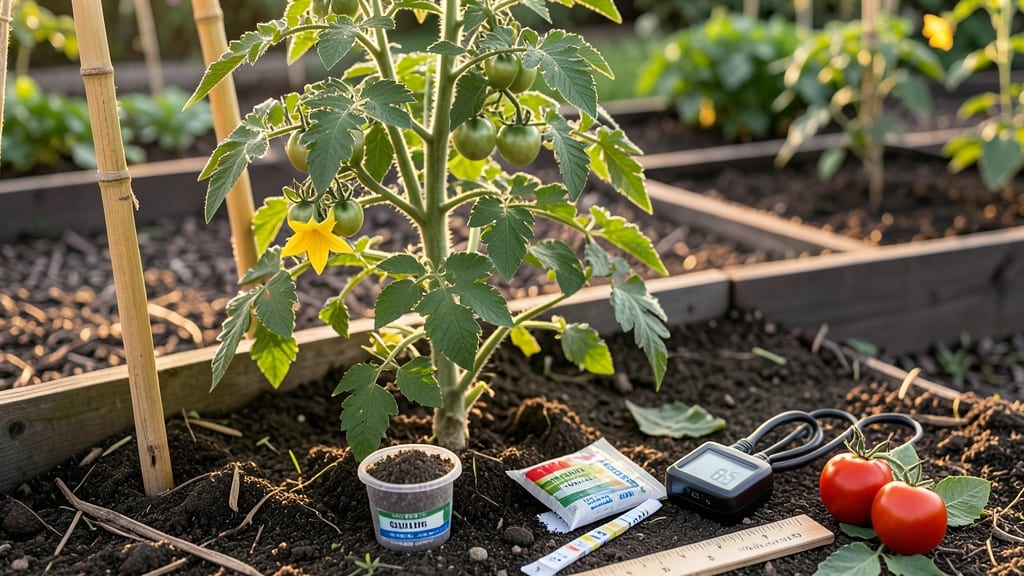
Soil acidity for tomatoes thrives at a pH range of 6.0 to 6.8, slightly acidic to neutral, ensuring optimal nutrient uptake and preventing blossom-end rot or stunted growth. Test soil annually and amend with lime to raise pH or sulfur to lower it as needed.
Tomatoes are finicky about their growing conditions, and pH plays a starring role in their success. 🌱 When soil is too alkaline (above 7.0), essential nutrients like iron and manganese become locked away, leading to yellowing leaves or poor fruit development.
On the flip side, overly acidic soil (below 6.0) can cause nutrient toxicity, stunting growth or even killing plants. I've found that maintaining this 6.0-6.8 range makes all the difference—my plants produce bigger, healthier tomatoes with fewer issues. The key is testing before planting and making adjustments gradually over time.
For practical tips, I recommend using a simple DIY pH test kit (available at garden centers) to check your soil's current levels.
If your soil is too alkaline, work in elemental sulfur in early spring—it takes about 2-3 months to lower pH. For acidic soil, spread pelletized lime in fall to give it time to work before planting season.
Remember, sudden pH shifts can stress plants, so always adjust incrementally and retest after 2-3 months.
💡 In This Article
- How Soil pH Affects Tomato Growth and Nutrient Absorption
- Step-by-Step Guide to Testing and Adjusting Soil pH for Tomatoes
How soil pH affects tomato growth and nutrient absorption
Tomatoes rely on a delicate balance of nutrients, and soil pH acts like a gatekeeper, controlling which elements become available. At the ideal 6.0-6.8 range, essential minerals like calcium, magnesium, and iron dissolve in the soil solution, making them accessible to plant roots.
For instance, calcium—critical for preventing blossom-end rot—becomes 10 times more available at pH 6.5 compared to pH 7.5. This is because alkaline conditions cause calcium to bind tightly to soil particles, forming insoluble compounds that roots can't access. 🌱
The pH scale isn't just about numbers—it directly impacts nutrient toxicity too. In overly acidic soil (below 6.0), aluminum and manganese become soluble, which can damage root systems and stunt growth.
I've seen tomato plants in pH 5.5 soil develop brown, crinkled leaves within weeks as these metals accumulate to toxic levels.
Conversely, alkaline soil (above 7.0) locks away iron and zinc, leading to chlorosis (yellowing leaves with green veins) because the plant can't uptake these micronutrients despite their presence in the soil.
Common tomato problems often trace back to pH imbalances. Blossom-end rot, for example, isn't just about calcium deficiency—it's about the plant's inability to absorb calcium due to high soil pH (above 7.0).
The same goes for stunted growth or poor fruit set, which can occur when manganese or iron become unavailable in alkaline conditions. What's fascinating is how these symptoms mimic other issues: a plant might show signs of nutrient deficiency when the real problem is simply a pH mismatch.
Here's what happens at the microscopic level: Soil pH affects the electrical charge of nutrients and soil particles. At pH 6.5, most nutrients carry a positive charge, allowing them to bond with negatively charged root hairs for easy uptake.
But shift to pH 8.0, and many nutrients become negatively charged, repelling the roots. This is why even well-fertilized alkaline soil can starve tomato plants—nutrients are present but locked away. 💫
Tomatoes also struggle with pH-related diseases. For example, fungal pathogens like early blight thrive in acidic soil (pH 5.5-6.0), while bacterial wilt becomes more aggressive in neutral to slightly alkaline conditions (pH 7.0-7.5).
The plant's weakened state from poor nutrient uptake makes it more susceptible to these infections. This is why maintaining the 6.0-6.8 range isn't just about optimal growth—it's about disease prevention too.
Consider this comparison: A tomato plant in pH 6.5 soil will absorb 80-90% of available nutrients, while the same plant in pH 7.5 soil might only absorb 20-30% of calcium and iron. That's why even the most nutrient-rich soil can fail tomatoes if the pH is off.
The solution? Regular testing and gradual adjustments to keep the soil chemistry in that sweet spot where tomatoes can thrive.
What most gardeners don't realize is that pH affects even the flavor of tomatoes. Plants growing in optimal pH conditions develop stronger cell walls, leading to firmer fruit with more intense flavor.
I've tasted the difference—tomatoes from pH-balanced soil have a sweeter, more complex taste compared to those from imbalanced soil, which often taste bland or mealy. 🍅