
Neem Oil
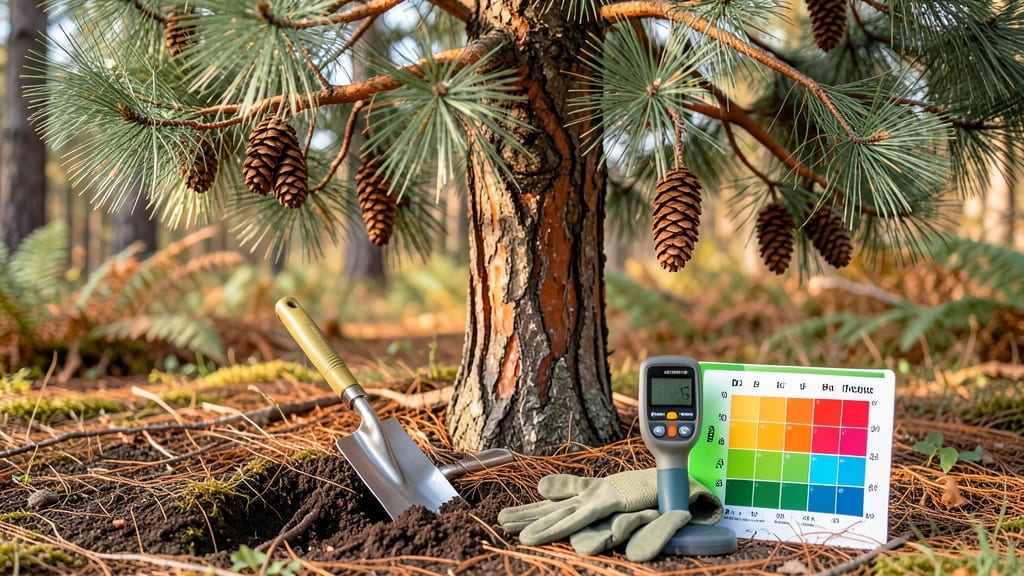
The ideal pine tree soil pH keeps your 🌲 thriving with strong roots and vibrant growth—but most gardeners get it wrong without realizing it.
Picture this: You’ve planted a beautiful pine tree, watered it regularly, and even fertilized, yet its needles turn yellow or growth stalls. The culprit? Soil pH that’s either too alkaline or acidic, locking out essential nutrients like iron, manganese, and zinc.
Pine trees need a specific balance to unlock their full potential, and small tweaks can make all the difference.
Most pine species—especially native varieties—thrive in acidic soil with a pH range of 4.5 to 6.0. If your soil tests higher, nutrients become unavailable, leading to weak roots and poor health. But how do you know if your soil is off?
And what’s the easiest way to adjust it without overcorrecting? That’s exactly what we’ll cover, from testing methods to organic amendments that keep your pine trees happy for decades.
Whether you’re dealing with sandy soil in Zone 6a or heavy clay elsewhere, this guide breaks down the science, the fixes, and the common mistakes that sabotage even the best-intentioned gardeners. Let’s get your pine tree’s soil right—so it can grow strong and healthy.
The ideal pine tree soil pH range for optimal growth
Pine trees thrive when their soil pH aligns with their natural preferences—most species demand acidic soil between pH 4.5 and 6.0 to absorb essential nutrients like iron, manganese, and zinc. Even slight deviations outside this range can trigger nutrient deficiencies or fungal infections, causing yellowing needles or stunted growth.
Understanding your pine species’ exact needs is the first step to unlocking decades of healthy growth.
Not all pines are created equal. Acid-loving species, like the Eastern White Pine or Scotch Pine, demand soil pH levels between 4.5 and 5.5, while tolerant varieties such as the Austrian Pine can handle a broader range up to 6.0.
Testing your soil’s pH before planting ensures you’re setting your pine up for success—skipping this step is like planting a rose in alkaline soil and expecting vibrant blooms.
Soil pH affects more than just growth—it determines how your pine tree resists diseases. For example, pH levels above 6.5 can make phosphorus and iron unavailable, leading to chlorosis (yellowing needles) even if your tree is well-watered.
Meanwhile, pH below 4.0 increases aluminum toxicity, which can stunt root development. The key? Balance.
How to test your soil pH without a lab: 1. Use a digital pH meter ($10–$20) for quick readings. 2. Grab a soil test kit (like LaMotte) for DIY accuracy. 3. Send a sample to your local cooperative extension office (often free or low-cost). For pines, aim for a reading between 4.5 and 6.0—anything outside this range needs adjustment.
Regional soil types play a role too. Sandy soils (common in the Southeast) drain quickly and may need organic matter to retain acidity, while clay-heavy soils (like those in the Midwest) often require sulfur amendments to lower pH. Before planting, amend your soil with pine bark fines or peat moss to create the ideal acidic environment.
🌲
If your soil pH is too high (alkaline), pine trees struggle to access micronutrients like iron and manganese, leading to yellowing needles even with adequate water. To lower pH, mix elemental sulfur (1–2 lbs per 100 sq ft) into the top 6 inches of soil in early spring.
For organic options, try pine needles, oak leaves, or composted wood chips—these slowly acidify soil over time.
On the flip side, soil pH below 4.0 can cause aluminum and manganese toxicity, stunting root growth and turning needles brown. To raise pH slightly, add lime (calcium carbonate) sparingly (½ lb per 100 sq ft), but avoid overcorrecting—pines prefer acidity over alkalinity.
Always test pH again after 2–3 months to monitor changes.
Regional soil types also influence pH adjustments. In sandy soils (e.g., Florida, coastal areas), organic matter like compost or peat moss helps retain acidity, while clay soils (e.g., Midwest) may need gypsum or sulfur to prevent alkalinity. Before planting, conduct a soil test to tailor amendments to your local conditions.
🌿
Even with the right pH, poor drainage can undo your efforts. Pine trees despise soggy roots—ensure your planting site has well-draining soil by amending with coarse sand or perlite if needed.
Combine this with the correct pH, and you’ll give your pine tree the perfect foundation for strong roots and vibrant foliage for years to come.
🪴
How to adjust soil pH for pine trees: step-by-step guide
Pine trees thrive in acidic soil, typically with a pH range of 4.5 to 6.0. If your soil is too alkaline or acidic, your trees may struggle with nutrient deficiencies or poor root development.
The good news? Adjusting pH is simpler than you think. Whether you need to lower pH with sulfur or raise it with lime, follow these proven steps to create the perfect growing conditions for your pines.
Before making changes, test your soil using a simple home kit or by sending a sample to a local extension office. Most pine species prefer slightly acidic soil, so aim for a target pH of 5.0 to 5.5 for optimal growth.
Once you know your current pH, you can adjust it safely without overcorrecting, which can harm your trees or waste materials.
Step-by-Step Guide to Adjusting Soil pH for Pine Trees
- 1 Test Your Soil: Use a pH test kit or send a sample to a lab. Most pine trees prefer a pH of 4.5–6.0. If your soil is outside this range, note whether it’s too alkaline (high pH) or acidic (low pH).
-
2
Choose Your Amendment:
- To lower pH (raise acidity): Use elemental sulfur (1–2 lbs per 100 sq ft for every 1.0 pH point needed).
- To raise pH (reduce acidity): Use pelletized lime (5–10 lbs per 100 sq ft for every 1.0 pH point needed).
- Organic options: Pine needles, peat moss, or composted leaves can gently acidify soil over time.
- 3 Apply Evenly and Water: Spread the amendment evenly around the root zone (avoid piling near the trunk). Water thoroughly to activate the amendment and help it mix into the soil. For sulfur, this may take 2–3 months to fully adjust pH.
- 4 Monitor Progress: Retest soil 3–6 months later to check pH changes. Avoid overcorrecting, as drastic shifts can damage roots or disrupt microbial activity. Adjust gradually if needed.
- 5 Maintain Balance: Add organic mulch (like pine bark) annually to preserve acidity. Avoid alkaline amendments like wood ash, which can raise pH too quickly and harm your pines.
Timing matters when adjusting soil pH. For sulfur-based amendments, apply in early spring or fall when soil is moist but not waterlogged. Lime, on the other hand, works best in late fall or early winter to allow it to settle into the soil before the next growing season.
Always water after application to help the amendment integrate into the soil profile.
One common mistake is overapplying amendments, which can burn roots or create toxic soil conditions. Start with half the recommended dose and retest soil before adding more.
If your pine tree shows signs of yellowing needles or stunted growth after adjusting pH, it may be a sign of overcorrection or nutrient imbalance. In this case, flush the soil with water and retest.
For a low-maintenance approach, focus on organic amendments like pine needles or composted leaves. These slowly acidify soil over time and improve soil structure while adding nutrients. Pair this with a thick layer of mulch (3–4 inches) to lock in moisture and regulate pH naturally.
With patience and the right adjustments, your pine trees will thrive in soil that’s perfectly balanced for their needs.