Tools
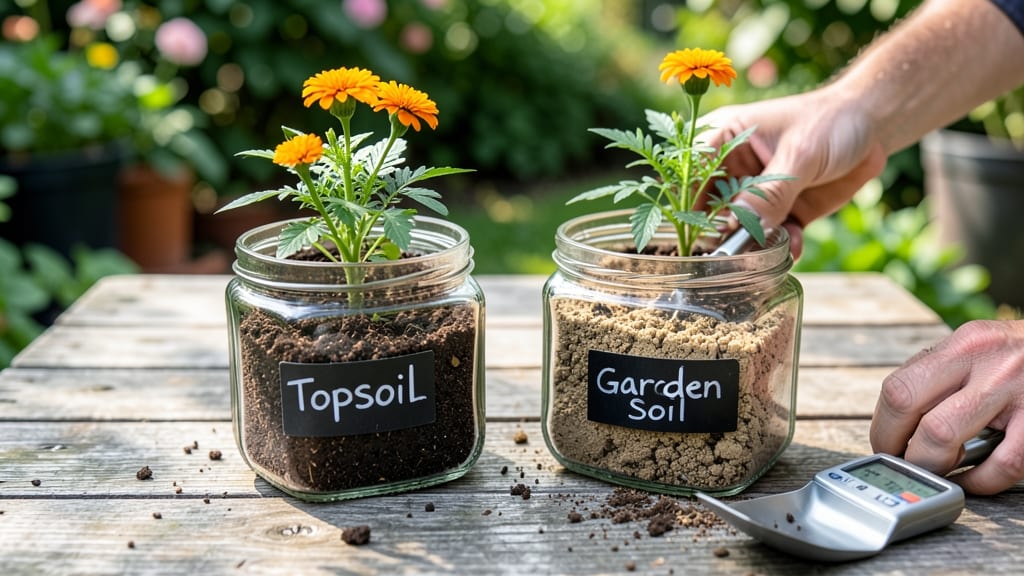
Top soil and garden soil are not the same: top soil is the nutrient-rich uppermost layer of earth, naturally packed with minerals and organic material that support deep root growth, while garden soil is a purposefully blended mix designed for optimal plant health with added compost or organic amendments.
Top soil is what you'll find naturally at the surface of any healthy landscape—it's packed with essential nutrients, beneficial microbes, and the right texture for roots to establish themselves. 🌱 Meanwhile, garden soil is specifically formulated to enhance fertility, often combining top soil with compost, sand, or other organic materials to create the perfect growing medium.
Think of top soil as nature's foundation and garden soil as the gardener's custom-built upgrade.
When choosing between them, consider your project: top soil works best for leveling ground or establishing new lawns, while garden soil shines in raised beds or containers where plants need extra nutrients. Many gardeners blend the two to create the ideal growing conditions for their specific plants.
💡 In This Article
- Composition Differences Between Top Soil and Garden Soil
- Best Uses for Top Soil vs Garden Soil in Gardening
Composition differences between top soil and garden soil
Top soil is nature's original growing medium—the top 2-6 inches of earth that forms naturally over centuries through weathering, decomposition, and biological activity. It contains 5-10% organic matter (like decomposed leaves and plant material) mixed with minerals from parent rock, creating a crumbly texture ideal for root penetration.
The microbial ecosystem here is bustling with bacteria, fungi, and earthworms that break down nutrients into plant-available forms.
Garden soil, however, is a human-engineered blend designed for peak fertility. It typically combines 30-50% compost or organic amendments with top soil or sand to adjust texture. For example, a standard garden soil mix might contain 60% top soil, 20% compost, and 20% perlite or vermiculite to improve drainage.
This artificial composition creates a higher nutrient density (often 10-15% organic matter) and a more uniform pH (usually 6.0-7.0), while natural top soil can vary widely from 5.0-8.0 depending on location.
The particle size distribution also differs significantly. Top soil contains a natural mix of sand (40-60%), silt (20-40%), and clay (10-30%), creating a balanced structure that holds moisture while allowing aeration.
Garden soil often includes coarse sand or peat moss to improve drainage in heavy clay soils, or coconut coir to retain moisture in sandy areas. This tailored composition explains why garden soil supports faster plant growth—it's essentially pre-optimized for cultivation.
Consider the microbial activity: natural top soil hosts 1-2 billion microbes per gram, while garden soil can contain up to 10 billion per gram due to added compost. These microbes accelerate nutrient cycling, allowing plants to access phosphorus and nitrogen more efficiently. 🌱 The trade-off?
Natural top soil develops its fertility slowly over time, while garden soil delivers immediate results but requires periodic replenishment of organic matter.
One key difference lies in their pH buffering capacity. Natural top soil's pH is influenced by local geology and vegetation, making it less stable for acid-loving plants like blueberries (which need pH 4.5-5.5). Garden soil's consistent pH makes it more predictable for specific crops.
For instance, a 6.5 pH garden soil mix will support tomatoes better than variable natural top soil that might dip into 5.5 or 7.5 in different spots.
Finally, the texture tells the whole story: top soil feels gritty with visible organic fragments, while garden soil has a smoother, almost velvety consistency thanks to finely ground compost.
This difference affects water retention—garden soil can hold 20-30% more moisture than natural top soil, reducing irrigation needs by 30-50% in some cases.