
Light Requirements
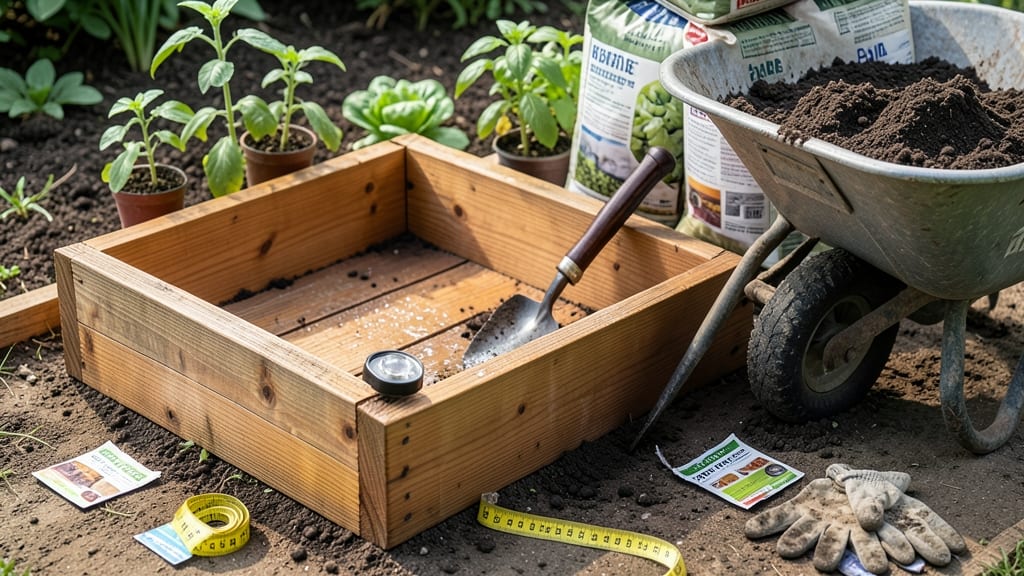
For a 4x4 raised bed, you'll need 12 cubic feet of soil for a 1-foot depth, but deeper beds (2–3 feet) require 24–36 cubic feet—always factor in root space, compost mixing, and soil settling over time. Multiply length × width × depth, then add 20–30% extra for best results.
Figuring out how much soil fits in your 4x4 raised bed isn't just about basic math—it's about creating the right environment for your plants. 🌱 The standard 1-foot depth gives you that 12-cubic-foot baseline, but most gardeners go deeper (18–24 inches) for better root development.
I always recommend adding a 4–6 inch drainage layer first, then mixing in compost for nutrients. This extra step makes a huge difference in how well your plants thrive, especially in containers where soil can dry out faster.
Here's the key: the numbers above are your starting point, but real-world conditions change things. Sandy soil settles less than loamy soil, and heavy clay mixes need more bulking agents like perlite.
For example, if you're growing deep-rooted crops like carrots or potatoes, you might need to go up to 24 inches—adding another 12 cubic feet to your total. Always check your soil mix's settling rate before filling the bed completely.
💡 In This Article
- Calculating Soil Volume for Raised Garden Beds
- Optimal Soil Depths for Vegetables, Herbs, and Root Crops
Calculating soil volume for raised garden beds
The cubic foot math for your 4x4 raised bed starts with simple multiplication: 4 feet × 4 feet × 1 foot = 16 cubic feet of raw space. However, this is just the container's capacity before accounting for the 4-6 inch drainage layer most experts recommend at the bottom.
That layer alone takes up 1.3 cubic feet (4x4x0.5), leaving you with 14.7 cubic feet for actual growing medium. 🌱
Here's where things get interesting: most soil mixes settle 20-30% after watering and root penetration. A bag of topsoil might advertise 0.5 cubic feet but shrink to 0.35 cubic feet once settled.
For your 4x4 bed, this means you should buy 18-21 cubic feet of soil mix for a 1-foot depth—about 50% more than the raw math suggests. Pro tip: Use a 60:30:10 ratio of topsoil, compost, and perlite for optimal aeration and moisture retention.
Let's break down the numbers for deeper beds. A 2-foot deep 4x4 bed requires 32 cubic feet of raw space, but after drainage and settling, you'll need 42-48 cubic feet of soil mix. For a 3-foot deep bed, that jumps to 72-86 cubic feet.
Many gardeners skip the full depth for vegetables but add 12-18 inches of rich topsoil over existing ground—this saves soil volume while still accommodating most crops.
The soil type dramatically affects your calculations. Sandy soil settles minimally (10% loss) but drains too fast, while clay-heavy mixes can compact 40%+. Organic matter like compost acts as a bulking agent, reducing settling.
For example, my 4x4x1.5 bed uses 24 cubic feet of raw space but only needs 30 cubic feet of finished mix because of the high compost content (40%). Always test your mix by filling a 1-foot test hole and measuring how much it settles after watering.
Don't forget about the weight factor. A cubic foot of soil typically weighs 80-100 pounds—your 4x4x1 bed could weigh 1,200-1,600 pounds! This is why many raised beds use cedar or composite lumber that can handle 200-400 pounds per square foot.
For deeper beds, consider interlocking blocks or steel frames to prevent warping under the load. The structural integrity becomes just as important as the soil volume calculation.
For precise planning, use this formula: (Length × Width × Depth) × 1.3 = Total Soil Needed. The 1.3 multiplier accounts for drainage and settling. For example: (4×4×1.5) × 1.3 = 31.2 cubic feet for a 1.5-foot deep bed.
Round up to 32 cubic feet to ensure you have enough for proper layering and future top-ups as the soil compacts naturally over seasons.