
Light Requirements
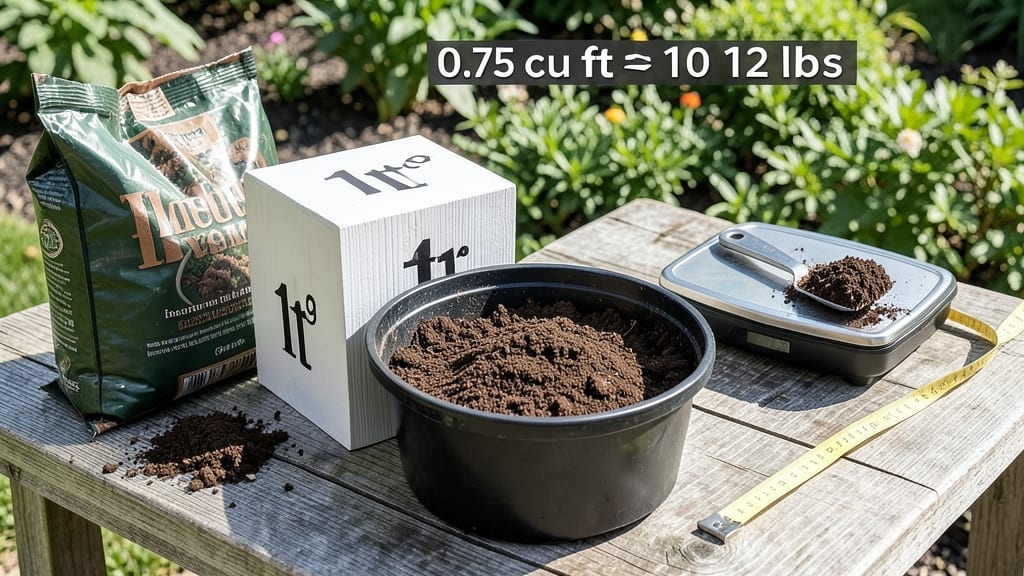
To determine how much 0.75 cubic feet of garden soil weighs, expect 20 to 35 pounds—dry, sandy soil averages 20-25 lbs, while wet, clay-heavy soil can reach 30-35 lbs due to moisture absorption and particle density.
Understanding soil weight matters because moisture and composition drastically change the numbers. For example, a loamy soil—often considered ideal for gardening—typically falls in the mid-range of 25-30 lbs for 0.75 cubic feet, while organic-rich compost can weigh even more when saturated.
I’ve found that sandy soils are the lightest, while clay-heavy soils are the heaviest, especially after rain. This variation is why gardeners often pre-measure soil for projects like raised beds or potting mixes. 🔥
If you're planning a project, I recommend testing a small sample first. Fill a known-volume container (like a 5-gallon bucket) with your soil, weigh it, then scale up. This method accounts for your specific soil’s unique density and moisture levels.
For large projects, consider using a moisture meter to adjust calculations—wet soil can add 5-10 extra pounds to the same volume!
💡 In This Article
- Factors Affecting Garden Soil Weight per Cubic Foot
- Practical Ways to Measure Soil Weight for Gardening Projects
Factors affecting garden soil weight per cubic foot
Soil weight isn't just about volume—it's a dance between particle size, moisture levels, and organic content. Sandy soils, with their large, loosely packed grains, typically weigh 100-130 pounds per cubic foot when dry, translating to about 20-25 lbs for 0.75 cubic feet. The reason?
Sand particles have minimal surface area for water adhesion, so they stay light even when damp. In contrast, clay soils contain tiny, densely packed particles that hold water like a sponge, swelling when wet and adding 20-30% more weight than their dry state.
Moisture is the wild card—water alone can add 0.43 pounds per cubic inch (or roughly 6.5 pounds per cubic foot), which is why clay-heavy soil jumps from 25 lbs dry to 35 lbs saturated.
Organic matter like compost or decomposed leaves adds another layer: a 30% organic soil can weigh 5-10 lbs more per cubic foot than mineral soil due to its porous structure holding both water and air.
For example, a loamy soil (ideal for gardening) with 20% organic content might weigh 28-32 lbs for 0.75 cubic feet when moist.
Compaction plays a sneaky role too. Tamped-down soil loses air pockets, increasing density by 10-20%. Imagine filling a 5-gallon bucket with loose soil versus packing it firmly—you might see weight differences of 2-4 lbs per cubic foot.
Regional variations matter: California's sandy loam averages 110 lbs/cubic foot dry, while Midwestern clay can hit 140 lbs/cubic foot wet. These differences explain why your neighbor's "same type" of soil might weigh differently!
Here's a quick breakdown of how particle composition affects weight:
- Sand: 100-130 lbs/cubic foot dry (lightest, drains fast)
- Silt: 80-100 lbs/cubic foot dry (holds moderate moisture)
- Clay: 90-120 lbs/cubic foot dry (heaviest when wet)
- Loam (ideal mix): 70-90 lbs/cubic foot dry (balanced texture)
For gardeners, this means your 0.75 cubic feet could swing wildly—from 18 lbs (dry sand) to 38 lbs (wet clay with compost). The key is testing your specific soil type, because even "standard" loam varies by location. 🌱
What most people overlook is how seasonal changes affect weight. After a heavy rain, that same 0.75 cubic feet of clay soil might weigh 10 lbs more than in summer.
Tracking moisture with a simple soil moisture sensor ($15-$25) can save you from overestimating or underestimating project needs—especially for raised beds or container gardens where weight matters for stability.