
Pruning
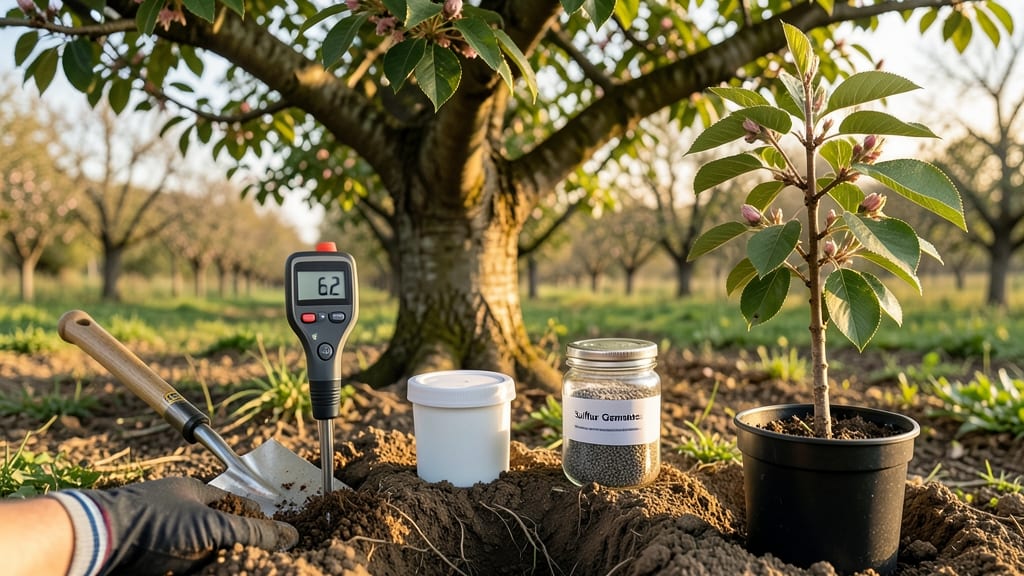
The ideal cherry tree soil pH is between 6.0 and 6.5—just slightly acidic—where your 🍒 tree thrives and absorbs nutrients efficiently.
Struggling with poor cherry tree growth? The soil pH might be the hidden culprit—getting it right can mean the difference between a thriving orchard and struggling saplings.
Most gardeners overlook soil pH until they notice yellowing leaves or stunted growth, but small adjustments can transform your tree’s health in just a few months.
Below, I’ll break down the exact pH range for sweet and sour cherries, how to test your soil, and the best organic amendments to keep your tree flourishing year after year.
Optimal soil pH range for cherry trees: what you need to know
If you've ever noticed your cherry tree leaves turning yellow or growth stalling, the soil pH balance might be the culprit. Unlike many fruit trees, cherries thrive in slightly acidic to neutral soil, but the exact range varies between sweet and sour varieties.
Getting this right ensures proper nutrient uptake—especially for iron, zinc, and phosphorus—which directly impacts fruit production and tree vigor.
Most gardeners assume all cherry trees prefer the same pH, but sweet cherries (like Bing or Rainier) typically need a slightly more acidic soil (pH 6.0–6.5) compared to sour cherries (such as Montmorency), which tolerate a broader range of pH 5.5–6.5.
Even small deviations can trigger chlorosis (yellowing leaves) or stunted growth, so testing before planting is critical.
Regional soil pH also plays a role—coastal areas often have naturally acidic soils (pH 5.0–6.0), while inland or limestone-rich regions may lean alkaline (pH 7.0+).
For example, gardeners in Pacific Northwest states rarely need to adjust pH, but those in Midwestern limestone zones often must add sulfur or peat moss to acidify the soil. Climate matters too: heavy rainfall can leach nutrients and lower pH over time, while drought conditions may concentrate salts, raising alkalinity.
Here’s how soil pH impacts your cherry tree’s health at different stages:
| Cherry Type | Optimal pH Range | Signs of Low pH (Acidic) | Signs of High pH (Alkaline) |
|---|---|---|---|
| Sweet Cherries (Bing, Rainier) | 6.0–6.5 | Brown leaf edges, poor flowering | Yellow leaves (chlorosis), stunted fruit |
| Sour Cherries (Montmorency, Morello) | 5.5–6.5 | Reduced fruit set, weak stems | Slow growth, poor nutrient absorption |
| Both Types (General) | 5.5–6.5 | Aluminum toxicity (crinkled leaves) | Iron deficiency (yellow new leaves) |
Understanding these ranges helps you avoid common pH mistakes. For instance, if your soil tests at pH 7.0 (alkaline), your cherry tree may struggle to absorb micronutrients like iron, even if the soil appears fertile.
This often shows as yellowing between leaf veins while the veins stay green—a classic sign of iron chlorosis. Conversely, if pH drops below 5.5, aluminum toxicity can occur, causing stunted roots and leaf curling.
Climate also influences how often you’ll need to adjust pH. In humid regions like the Southeast, organic matter breaks down faster, lowering pH naturally. Meanwhile, arid climates (e.g., Southwest U.S.) may require less frequent adjustments because evaporation concentrates salts, pushing pH upward.
Always retest soil every 2–3 years, especially after major amendments like adding compost or lime.
One misconception is that older cherry trees can tolerate wider pH ranges, but even mature trees suffer if pH strays too far. For example, a 20-year-old Bing cherry in pH 7.0 soil may produce fewer fruits because its roots can’t access enough phosphorus.
The key is consistency: aim to keep pH within the ideal range year-round, especially during spring flowering and summer fruiting.
To maintain balance, mix organic matter like compost or pine needles into the soil annually. These amendments buffer pH naturally, reducing the need for harsh chemicals. For example, adding 2–3 inches of compost each fall can gradually lower pH in alkaline soils by 0.5–1.0 points over time.
Always work amendments into the top 6–12 inches of soil where roots are most active.
If your soil tests reveal a pH outside the ideal range, act gradually. For alkaline soils, apply elemental sulfur (follow package rates) in early spring—it takes 2–4 months to lower pH. For acidic soils, avoid over-liming; instead, use pelletized lime sparingly and monitor pH closely.
Remember, sudden pH shifts can stress roots, so aim for changes of no more than 0.5 pH points per year.
Pro tip: Pair pH testing with a soil nutrient test to check for deficiencies like magnesium or zinc, which often worsen in imbalanced soils.
For instance, Epsom salt (magnesium sulfate) can help if chlorosis persists despite correct pH. Balancing pH isn’t just about numbers—it’s about creating the perfect environment for your cherry tree to flourish from bloom to harvest.
How to test and adjust cherry tree soil pH: step-by-step guide
Testing your cherry tree soil pH is the first step to unlocking healthy growth. Most sweet cherries thrive in pH 6.0-6.5, while sour cherries prefer pH 5.5-6.2.
If your tree shows yellowing leaves or stunted growth, the soil pH might be off. I’ll show you how to test and adjust it like a pro.
Start with a DIY soil pH test kit, which costs around $10 and gives quick results. These kits use color-changing indicators when mixed with soil and water. For more accuracy, send a sample to a local agricultural extension office—they’ll provide a detailed lab report for about $20.
I’ve used both methods, and while DIY kits are convenient, lab tests reveal micronutrient imbalances you might miss.
Testing Methods for Cherry Tree Soil pH
| Method | Pros | Cons |
|---|---|---|
| DIY Test Kits | Fast, affordable, easy to use | Less accurate, no micronutrient analysis |
| Lab Soil Test | Highly accurate, includes nutrient breakdown | Slower, costs more, requires mailing |
Once you know your current pH level, it’s time to adjust. For alkaline soil (pH > 6.5), add elemental sulfur or peat moss to lower pH. For acidic soil (pH < 5.5), use pelletized lime or wood ash.
I recommend starting with 1/2 pound of sulfur per 100 sq ft for alkaline soil or 5 pounds of lime per 100 sq ft for acidic soil. Apply amendments in early spring or fall for best results.
Timing matters! Adjusting pH in summer can stress your tree, while winter applications may wash away before taking effect. I’ve learned this the hard way—once, I added lime in July, and my cherry tree’s leaves turned brown from shock.
Always test soil again in 3-6 months to confirm changes. For long-term health, mix compost into the soil annually to buffer pH naturally.
Don’t forget to consider your climate zone. In wet climates, soil tends to be more acidic, while dry regions often have alkaline soil. For example, Pacific Northwest gardeners frequently need to add lime, while Southwest gardeners often use sulfur.
If your area has high rainfall, you may need to re-test pH more often, as water leaches nutrients and can lower pH over time.
For organic gardeners, try pine needles or coffee grounds to acidify soil, or kelp meal to raise pH slightly. These methods take longer but are gentler on your tree’s roots.
I’ve had success using alfalfa meal to add nitrogen while also helping balance pH. Just remember: patience is key—organic amendments work slowly but build long-term soil health.
After adjusting, monitor your cherry tree’s progress. Healthy leaf color, vigorous growth, and fruit production are signs your pH is now ideal. If problems persist, re-test and consider other factors like soil drainage or nutrient deficiencies.
With the right pH, your cherry tree will reward you with abundant harvests for years to come! 🍒