
Container Gardens
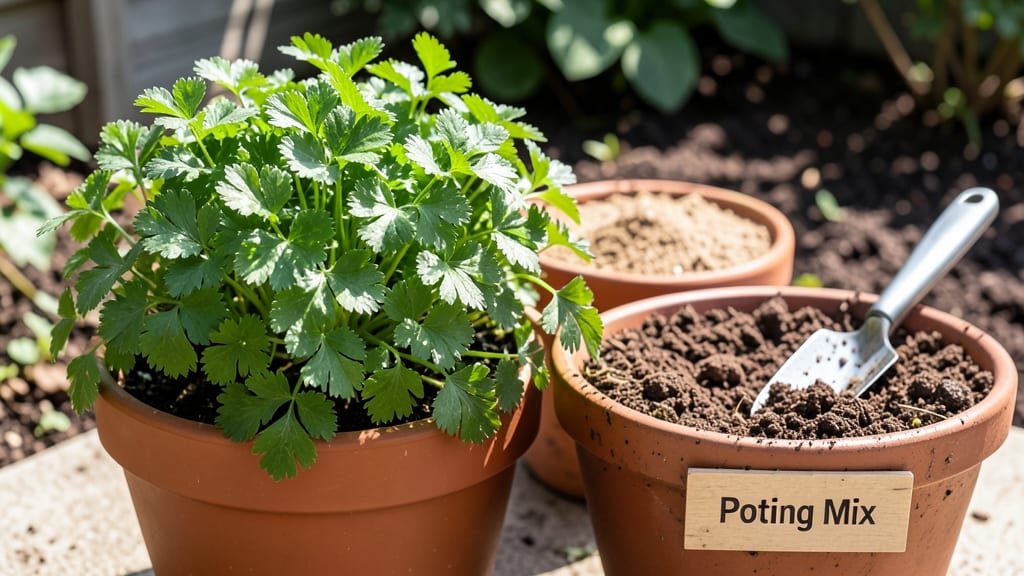
You can use raised bed soil in pots, but only after amending it carefully—it often compacts too much, drains poorly, and holds excess moisture, which can suffocate roots and slow plant growth. Mix in perlite or compost to improve airflow and structure before planting.
Raised bed soil works differently in containers because the confined space changes how moisture and air move through it.
Without adjustments, the dense texture can create waterlogged pockets that prevent roots from accessing oxygen, while nutrients may leach out too quickly. 🌱 For example, herbs like basil thrive in well-aerated soil, while heavy feeders like tomatoes need extra organic matter to replenish nutrients lost during frequent watering.
Always test your modified mix—stick your finger in after watering; if it feels damp but not soggy, you've struck the right balance.
Another key factor is the container's drainage system. Most raised bed soil lacks the gritty particles that create air pockets in commercial potting mixes, so adding 20-30% perlite or coarse sand mimics this natural structure.
I've found that blending 1 part raised bed soil with 1 part coconut coir and ½ part perlite creates an ideal lightweight medium for most vegetables. This approach also reduces the risk of salt buildup from fertilizers, which is more common in compacted soils.
💡 In This Article
- Why Raised Bed Soil Needs Adjustments for Containers
- How to Modify Raised Bed Soil for Potted Plants
Why raised bed soil needs adjustments for containers
Raised bed soil develops a completely different structure when confined to pots because the lack of depth and lateral space causes it to compact more easily. In a raised bed, soil particles settle naturally over time, creating a loose, well-aerated profile that allows roots to spread freely.
But in containers, the weight of the soil above compresses the lower layers, reducing pore space by up to 30-40%.
This compaction restricts root growth and cuts oxygen flow to 10-15% of healthy levels, which is why plants in unmodified raised bed soil often show stunted growth or yellowing leaves.
The moisture dynamics also shift dramatically. Raised beds benefit from natural evaporation from all sides, while pots create a "greenhouse effect" that traps humidity near the roots. This leads to soggy conditions that promote root rot, especially in clay-heavy soils.
For example, a 10-inch pot filled with unamended raised bed soil can retain 50% more moisture than the same volume in a raised bed, creating anaerobic zones where beneficial microbes struggle to survive. 🌱 The lack of organic breakdown also means nutrients like nitrogen and phosphorus leach out faster in containers, forcing you to fertilize more frequently.
Another critical factor is the soil's particle distribution. Raised bed soil typically contains larger mineral fragments that improve drainage, but these settle unevenly in pots, creating dense layers at the bottom. Without the natural stratification of a garden bed, water pools in these compacted zones rather than draining evenly.
This is why even drought-tolerant plants like rosemary often wilt in pots filled with unmodified raised bed soil—their roots can't access moisture consistently. The solution lies in recreating the air pockets that exist naturally in garden soil but are lost in containers.
Consider the texture differences: raised bed soil often has a crumbly, almost sandy feel when moist, while potting mixes should feel like a well-aerated sponge. The ideal container mix mimics this by incorporating 20-30% perlite or vermiculite, which adds microscopic air channels while preventing compaction.
For instance, blending 1 part raised bed soil with ½ part compost and ½ part perlite creates a structure that holds moisture without suffocating roots—a balance critical for plants like peppers that need consistent dampness but hate waterlogged conditions.
What most gardeners overlook is how container walls affect soil behavior. The rigid sides of pots prevent the natural expansion and contraction of soil during watering cycles, leading to cracks that channel water directly to roots rather than distributing it evenly.
This creates hot spots where roots either drown or dry out, depending on the plant's needs.
For example, a 1-gallon pot filled with unmodified raised bed soil might dry out in 3 days for herbs like thyme, while the same soil in a 5-gallon container could stay waterlogged for 10 days for heavy feeders like eggplants.
The key is adjusting the soil's composition to match the container's size and the plant's specific requirements.
Finally, the microbial ecosystem shifts dramatically. Raised beds support diverse soil life that breaks down organic matter continuously, while pots create isolated environments where beneficial bacteria and fungi struggle to thrive. Without these organisms, nutrients become locked in forms plants can't access, leading to deficiencies despite regular fertilization.
For instance, unamended raised bed soil in pots may show adequate phosphorus levels on a test but still fail to support strong root development because the microbial pathways for nutrient uptake are missing. 💫