
Landscaping
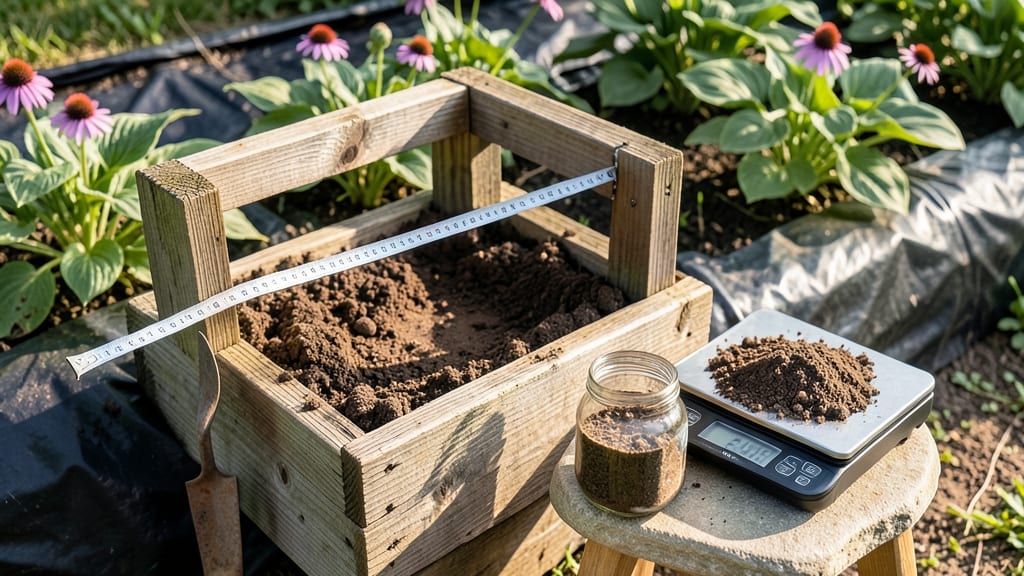
The weight of soil per cubic yard differs dramatically by type: clay soil ranges from 2,200–2,700 pounds, sandy soil 1,600–2,000 pounds, loamy soil 2,000–2,300 pounds, and peat soil 1,000–1,500 pounds. Wet soil can weigh up to 30% more than dry measurements.
The variations in soil weight stem from differences in particle size and composition. Clay soil, made of tiny particles, packs tightly and holds more water, giving it the highest weight per cubic yard. Sandy soil, with larger particles and less moisture retention, is significantly lighter.
Loam, a balanced mix of clay, sand, and silt, falls in the middle, while organic peat soil is the lightest due to its high air content and decomposition stage. Understanding these differences is crucial for projects like gardening or construction, where weight affects transportation costs and structural support.
For practical applications, always account for moisture levels—wet soil can add hundreds of pounds to your calculations. I recommend using a soil scale or consulting local supplier charts to get precise measurements before ordering. This helps avoid overestimating or underestimating the volume needed for your landscape or garden project.
💡 In This Article
- Why Soil Density Varies by Type and Moisture
- Practical Tips for Estimating Soil Weight in Projects
Why soil density varies by type and moisture
Soil weight per cubic yard isn't just about volume—it's a complex interplay of particle size, mineral composition, and how tightly those particles pack together.
Clay soil, with its microscopic particles, creates a dense matrix that traps water and air, giving it the highest weight range of 2,200–2,700 pounds per cubic yard. These particles are plate-like and stack like pages in a book, leaving minimal space for air.
In contrast, sandy soil has larger, rounded particles that create more air pockets, reducing its weight to 1,600–2,000 pounds per cubic yard.
The science gets even more interesting when you consider moisture. Water adds significant weight because it fills the spaces between particles. A cubic yard of dry clay might weigh 2,500 pounds, but when saturated, it can reach 3,200 pounds—a 28% increase.
This is why construction sites often test soil moisture before calculating loads for foundations or retaining walls. Peat soil, composed mostly of decomposed organic matter, is the lightest at 1,000–1,500 pounds per cubic yard because its fibrous structure holds vast amounts of air rather than water.
Porosity plays a key role too. Sandy soils have high porosity (up to 45% air space) but low water retention, while clay soils have low porosity (30% air space) but high water retention.
Loam, the balanced middle ground, typically weighs 2,000–2,300 pounds per cubic yard because its mix of particle sizes creates an optimal balance of air, water, and mineral content. This is why gardeners often seek loamy soil—it's the Goldilocks of soil types for plant growth.
Compaction further complicates things. When soil is tilled or driven over (like in construction sites), particles pack tighter, increasing density and weight. For example, a 10% compaction increase in clay soil could add 200–300 pounds per cubic yard.
This is why landscapers recommend testing soil in its natural state before moving it. 💫 Understanding these factors helps you avoid overestimating or underestimating soil weight for projects, from raised garden beds to foundation work.
Here's a quick breakdown of what affects soil weight most:
- Particle size: Smaller particles (clay) = heavier; larger particles (sand) = lighter
- Moisture content: Wet soil can weigh 20–30% more than dry
- Organic matter: Peat and compost reduce weight due to high air content
- Compaction: Tightly packed soil weighs more than loose soil
For gardeners, this means your 10 cubic yards of sandy soil might weigh 16,000–20,000 pounds, while the same volume of clay soil could tip the scales at 22,000–27,000 pounds.
That's a 30% difference in weight for the same volume—knowledge that can save you money on transportation and labor costs.