
Companion Plants
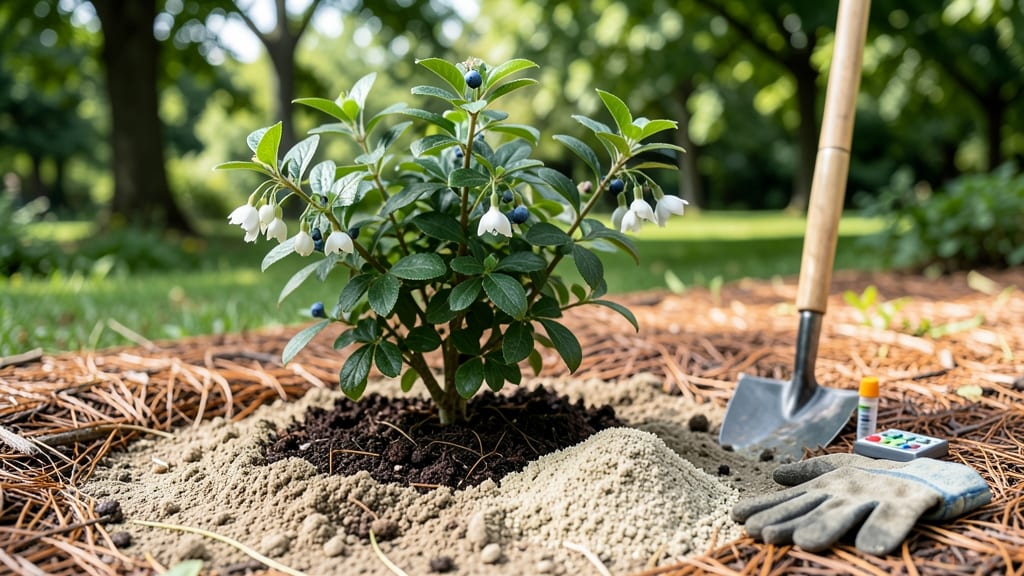
Your blueberry bushes won’t thrive unless the soil is acidic and well-draining—soil prep for blueberry plants starts with a pH test and a few key amendments. 🌱 I learned this the hard way when my first batch of bushes produced tiny, sour berries because the soil was too alkaline.
The fix? A simple blend of peat moss, pine needles, and sulfur to lower the pH to the ideal 4.5–5.5 range.
You’ll need basic tools—a trowel, garden fork, and a pH testing kit—and a few organic amendments like composted pine bark or sphagnum peat moss. These materials improve drainage while keeping the soil acidic, which blueberries crave.
The goal is a loose, crumbly texture that holds moisture but doesn’t stay soggy, because waterlogged roots lead to root rot and stunted growth.
After amending, mix everything into the top 12 inches of soil and let it settle for a few weeks before planting. The first harvest won’t happen overnight—it takes 2–3 years for new bushes to bear fruit—but the prep work ensures they’ll produce sweet, plump berries for decades.
Think of it as laying the foundation for a blueberry bonanza.
Regional adjustments matter: In hot climates, add extra organic matter to retain moisture, while cooler areas may need a thicker mulch layer to protect roots in winter. And here’s the golden rule—never use lime or wood ash, as they raise pH and send your bushes into a decline.
Stick to acidic amendments, and you’ll be rewarded with bushes that look like they’ve been growing there forever.
📚 In This Guide
- What you need
- Instructions
- Tips and common mistakes
- Wrapping up and next steps
What you need
- ● Peat moss or coconut coir: 2–3 bags (1 cubic foot each) – the backbone of acid-loving soil.
- ● Sulfur or aluminum sulfate: 1–2 lbs (for pH adjustment to 4.5–5.5).
- ● Composted pine bark fines: 1–2 bags (1 cubic foot each) – improves drainage and aeration.
- ● Well-rotted compost or leaf mold: 1–2 bags (1 cubic foot each) – adds organic matter without raising pH.
- ● Balanced organic fertilizer (e.g., 5-5-5): 1–2 lbs (for initial nutrient boost).
- ● Garden fork or spade: For turning and aerating soil (1–2 units).
- ● Garden trowel: For precision planting and soil adjustments.
- ● pH testing kit: Digital or liquid test strips (to monitor acidity).
- ● Gloves and knee pads: Because blueberry prep is not a spa day. 😉
- ● Watering can or hose with spray nozzle: For even moisture distribution.
- ● Epsom salt (magnesium sulfate): 1 tbsp per plant (boosts flavor and growth).
- ● Mulch (pine needles or wood chips): 2–3 inches thick (retains moisture + acidity).
- ● Companion plants (e.g., rhododendrons, azaleas): For a thriving, low-maintenance ecosystem.
- ● Soil solarizer (clear plastic sheet): If your soil has weeds or pests (lay for 4–6 weeks in sun).
Step-by-step soil prep for blueberry plants
Here's how I transform ordinary soil into the perfect acidic loam blueberries crave—no guesswork, just science-backed results.
🌱 Step 1: Test and Adjust Soil pH to 4.5-5.5
Blueberries refuse to thrive in alkaline soil, so grab a soil pH test kit first. Dig a 6-inch hole, collect samples from different spots, and mix them. The ideal range is 4.5-5.5—anything above 6.0 and your plants will struggle to absorb nutrients.
If your soil tests too high, mix in sulfur at a rate of 1 pound per 100 square feet. Work it into the top 6 inches of soil and water thoroughly. It takes 2-3 months for sulfur to fully acidify the soil, so plan ahead. You'll know it's working when the soil feels lighter and smells faintly of sulfur—like a struck match.
🌿 Step 2: Amend Soil With Organic Matter
Blueberries love loose, well-draining soil rich in organic material. Spread 3-4 inches of compost or well-rotted leaf mold over the planting area. I use a mix of composted pine needles (they naturally lower pH) and peat moss for structure. Avoid fresh wood chips—they rob nitrogen as they break down.
Use a garden fork or tiller to mix the amendments into the top 12 inches of soil. Break up any clumps and remove rocks larger than 1 inch. The goal is soil that crumbles easily between your fingers like a moist sponge. If it feels gummy or compacted, add more peat moss or perlite to improve drainage.
☀️ Step 3: Create a Raised Planting Bed (Optional but Recommended)
For the best results, especially in heavy clay soil, build a 12-inch high mound of amended soil. This gives roots room to spread without hitting compacted layers below. Mound the soil into a 3-foot diameter circle for each plant, leaving the center flat for the root ball.
Water the mound thoroughly before planting to settle the soil. The surface should look slightly darker and feel uniformly moist. If it still feels dry after watering, mix in an additional 1 inch of peat moss to help retain moisture. This step prevents root rot by keeping roots in well-aerated soil.
💧 Step 4: Mulch to Lock in Moisture and Acidify Further
Spread 4-6 inches of pine bark mulch or wood chips around each plant, keeping it 3 inches away from the stem. This mulch slowly breaks down, adding organic matter and keeping the soil acidic. Avoid cedar mulch—it's too acidic and can stunt growth.
Water the mulch until it's damp 1 inch deep. The mulch should look uniformly dark and retain moisture like a damp sponge. Check weekly during dry spells—blueberries hate soggy roots but also despise drought. You'll see the mulch darken over time as it decomposes, signaling it's working to improve your soil.
⏰ Step 5: Wait 4-6 Weeks Before Planting
Give the soil time to settle and for the pH adjustments to take full effect. This waiting period ensures the amended soil is stable and ready for your blueberry plants. Test the pH again after 4 weeks—if it's still above 5.5, add a bit more sulfur and mix it in.
When you're ready to plant, dig a hole twice as wide as the root ball but no deeper. The top of the root ball should sit 1 inch above ground level to prevent waterlogging. Fill the hole with water and let it drain before placing the plant in—this ensures the soil settles evenly around the roots.
Tips & tricks for perfect blueberry soil prep
Common mistakes can turn your blueberry soil prep into a frustrating guessing game—here's how to nail it every time.
Testing Accuracy: Don't just test one spot! Collect samples from multiple areas of your yard since pH can vary dramatically. I've seen gardens where one side tested at 7.0 while another was 5.5—mixing samples gives you the true average. For the most precise reading, test after rain when soil is naturally moist, not dry.
Sulfur Application: When adding the 1 pound of sulfur per 100 square feet, spread it evenly and water it in immediately. I've learned the hard way that dry sulfur can create hot spots that burn plant roots. Think of it like salt on icy sidewalks—it needs moisture to activate properly. The 2-3 month wait might seem long, but patience here prevents future nutrient deficiencies.
Organic Matter Mix: For Step 2, aim for a 50/50 blend of composted pine needles and peat moss when amending—this combo gives you both acidity and structure. If your soil feels too dense after mixing, add perlite at a 1:4 ratio (1 part perlite to 4 parts soil). This creates those tiny air pockets roots need to breathe, especially in clay-heavy soils.
Mulch Depth: The 4-6 inches of pine bark mulch in Step 4 might seem thick, but it's worth it. I've seen gardeners use only 2 inches and struggle with moisture retention. Think of it like a blanket for your soil—it keeps roots consistently moist while slowly releasing nutrients as it breaks down. Just remember to keep that 3-inch clearance from the stem to prevent rot.
Pro Tips for Soil Prep For Blueberry Plants
- Common mistakes can turn your blueberry soil prep into a frustrating guessing game—here's how to nail it every time.
- Testing Accuracy: Don't just test one spot!
- Sulfur Application: When adding the 1 pound of sulfur per 100 square feet, spread it evenly and water it in immediately.
Frequently asked questions
Got questions about prepping your soil for blueberry bushes? You’re not alone! Here are answers to the most common queries—so you can get your plants off to the best start.
How acidic should my soil be for blueberries?
Blueberries thrive in soil with a pH between 4.5 and 5.5. Test your soil with a pH meter or kit before planting—if it’s too alkaline, amend it with sulfur or peat moss to lower the pH gradually. Pro tip: Avoid quick fixes like vinegar, which can harm soil microbes!
When is the best time to prepare the soil for blueberries?
Start soil prep 6–8 weeks before planting (fall or early spring). This gives amendments like compost, peat moss, or pine bark time to integrate. For container-grown blueberries, prep the pot mix 2–4 weeks ahead to stabilize pH and texture.
Can I use regular garden soil for blueberries?
No—regular garden soil is usually too alkaline and lacks the organic matter blueberries need. Mix in 50% acidic loam (like peat or pine fines) and 50% well-rotted compost for ideal drainage and nutrients. Alternative: Use a pre-mixed blueberry soil blend if DIY isn’t an option!
What if my soil is already too acidic? Can I fix it?
If your soil’s pH is below 4.0, it’s too acidic—but don’t panic! Add lime (calcium carbonate) or wood ash sparingly to raise pH slowly. Monitor with tests every few weeks. Warning: Over-correcting can stress plants, so adjust in small increments.
Do blueberries need special companion plants for soil health?
Yes! Plant clover, ferns, or rhododendrons nearby—they thrive in acidic soil and improve nitrogen levels. Avoid legumes like peas, which raise pH. Bonus: Mulch with pine needles to maintain acidity naturally over time!
Wrapping up and next steps
Prepping your soil for blueberry bushes is the secret ingredient to a bountiful harvest! 🌱 By focusing on acidic loam, proper drainage, and organic matter, you’ve set the stage for thriving plants that will reward you with juicy berries for years.
Now that you’re armed with the right knowledge, it’s time to roll up your sleeves—dig in, test your soil, and get growing!
Your next step? Plant those blueberries! Whether you’re starting from bare-root plants or potted seedlings, your soil is now ready to support their growth. Happy gardening—your future blueberry pies will thank you! 🍰