
How To
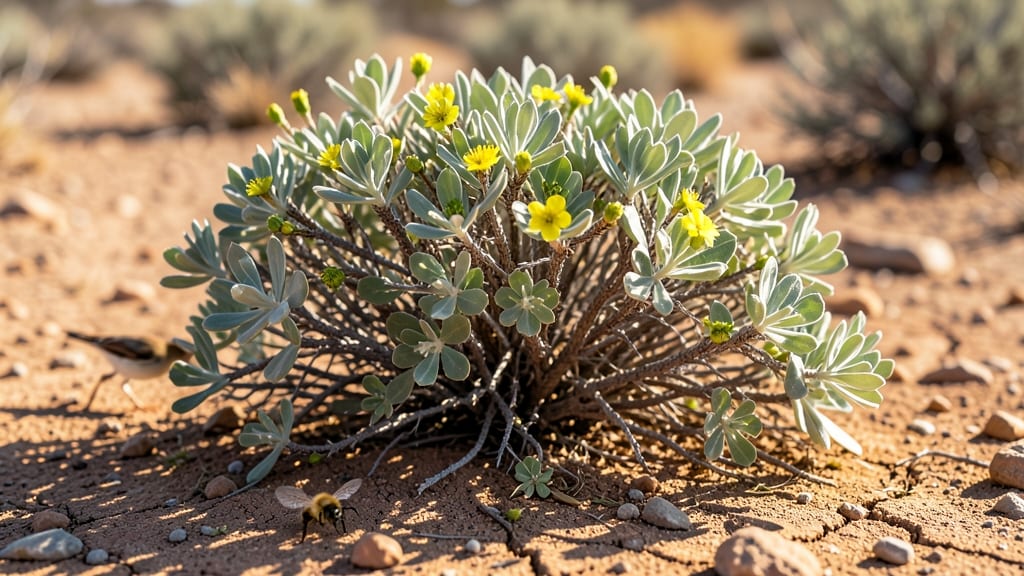
Desert biome soil is coarse and nutrient-deficient, primarily composed of sand or gravel with minimal organic material and poor water retention. These extreme conditions drive plant adaptations like deep root systems, drought resistance, and specialized survival traits such as water storage or succulence.
Desert soils develop under intense heat and scarce rainfall, creating a harsh environment where organic matter decomposes rapidly and nutrients like nitrogen and phosphorus become scarce. 🌵 The alkaline pH and high salt concentrations further inhibit plant growth, forcing species to evolve unique survival strategies.
Unlike fertile soils rich in microbial activity, desert soils often lack the biological diversity needed to break down organic material efficiently. This scarcity shapes entire ecosystems, where only the most resilient plants can thrive.
Understanding these soil dynamics helps explain why desert landscapes appear barren at first glance. The lack of moisture retention means even a light rain can quickly evaporate, leaving little behind for plant roots. This forces adaptations like the deep taproots of mesquite trees or the water-storing tissues of cacti.
For gardeners in arid regions, replicating these natural adaptations—through proper plant selection and soil amendments—can transform even challenging landscapes into sustainable gardens.
💡 In This Article
- How Desert Soil Chemistry Limits Plant Growth
- Adapted Plants That Thrive in Desert Soil
How desert soil chemistry limits plant growth
Desert soils develop under extreme conditions where evaporation far outpaces precipitation, creating a cycle of nutrient depletion. The arid climate accelerates organic matter breakdown, leaving behind coarse mineral particles with little organic content.
Unlike fertile soils that contain 3-5% organic matter, desert soils often have less than 1%, depriving plants of essential carbon compounds for growth. 🌵 This scarcity forces plants to rely on slow-release nutrients like phosphorus, which bind tightly to minerals and become nearly inaccessible.
The alkaline pH of desert soils—typically ranging from 7.5 to 9.0—further restricts nutrient availability. At these levels, critical elements like nitrogen and iron become chemically locked, making them unusable by most plants. Salt accumulation from evaporated water compounds the problem, creating hyper-saline conditions where even hardy species struggle.
For comparison, agricultural soils maintain a near-neutral pH (6.0-7.0) to maximize microbial activity and nutrient cycling, a stark contrast to desert conditions.
Microbial life in desert soils operates at a fraction of the activity found in temperate regions. The lack of moisture limits bacterial and fungal populations, which are vital for decomposing organic material and recycling nutrients.
In fertile soils, microbes can process organic matter at rates of 1-2% per year, while desert soils might see only 0.1%—a 20-fold difference. This microbial deficit creates a vicious cycle where organic inputs decompose too slowly to replenish depleted nutrients, leaving the soil increasingly barren over time.
One critical factor often overlooked is the role of wind erosion in desert soil formation. Fine particles are constantly stripped away, leaving behind coarse sand and gravel that offer minimal surface area for nutrient retention.
This physical structure also reduces water infiltration, as the large grain sizes create gaps that allow moisture to evaporate quickly rather than percolate into the soil.
In contrast, loamy soils with a mix of sand, silt, and clay can hold 10-30% more water by volume, providing a reservoir for plant roots.
The combination of these chemical and physical limitations explains why desert soils appear lifeless. Without human intervention, these conditions create an environment where only the most specialized plants can survive.
Understanding these constraints helps explain why desert ecosystems rely on such unique adaptations—from deep root systems to water-storing tissues—and why replicating these conditions in arid agriculture requires careful soil management techniques.
For gardeners working with desert soils, recognizing these chemical limitations is the first step toward creating sustainable landscapes. Techniques like mulching to reduce evaporation or amending soils with gypsum to improve structure can help mitigate some of these challenges.
However, the fundamental constraints remain: desert soils will always be a challenging medium for plant growth without significant modification. 💫