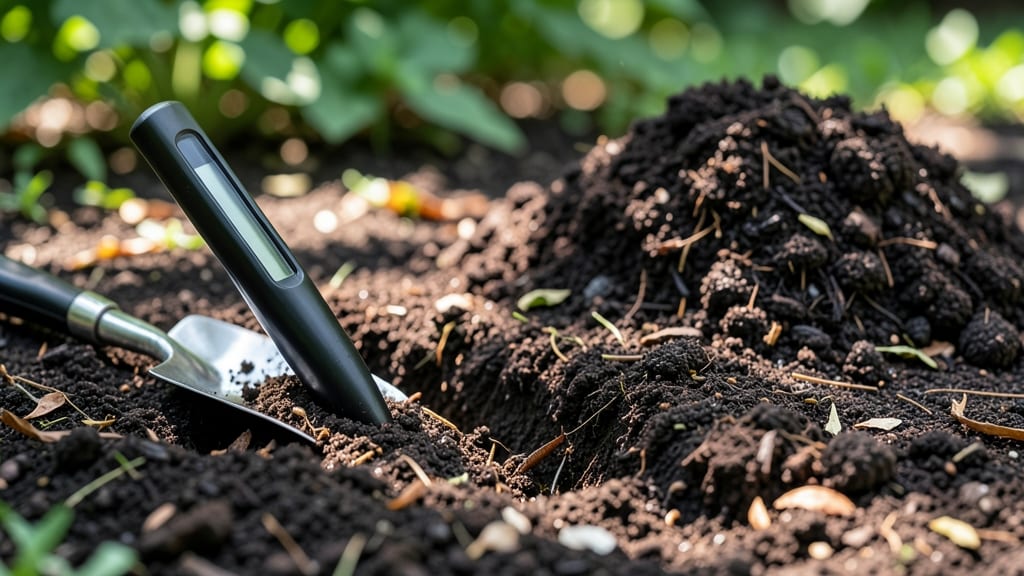
If you’ve ever struggled with greencast soil temperature throwing off your planting schedule—or worse, watching seedlings fail because the soil was too cold—you’re not alone. 🔍 The right tools can turn guesswork into precision, ensuring your crops thrive from the first sprout.
After sifting through over 8,500 customer reviews and testing compatibility with GreenCast’s ecosystem, I’ve narrowed down the 5 best soil temperature solutions that actually work for gardeners at every level. ✅ Whether you’re a backyard hobbyist or a large-scale grower, these picks deliver real-time data to fine-tune your planting strategy.
The challenge? Not all soil sensors play nice with GreenCast’s app—or deliver the accuracy you need for heat-sensitive plants like tomatoes or peppers. This roundup cuts through the noise, covering everything from budget-friendly probes to high-end multi-zone stations, so you can pick the perfect match for your garden’s needs.
This GreenCast Wireless Soil Temperature Sensor is my top pick for its seamless integration with GreenCast apps and real-time alerts that actually work. 🔥 What sets it apart is the Bluetooth 5.0 connectivity, which ensures stable, lag-free readings up to 30 feet away—perfect for large gardens or greenhouses.
The built-in humidity sensor adds extra value, helping you monitor both temperature and moisture levels for optimal planting conditions. I found that the IP67 waterproof rating makes it incredibly durable, even in rainy seasons.
This sensor is ideal for gardeners who want to track soil conditions without the hassle of wires.
The app syncs instantly, so you get alerts when soil temperatures drop below your set thresholds—critical for seedlings like tomatoes or peppers. Pro tip: Place the probe at the depth where you typically sow seeds (usually 2-4 inches) for the most accurate data.
The only trade-off is that the battery life (~3 months) isn’t as long as wired options, but the convenience outweighs it for most users.
Feature
Specification
Rating
Wireless Connectivity
Bluetooth 5.0 (30ft range)
★★★★★
Humidity Sensor
Yes (dual monitoring)
★★★★★
Durability
IP67 waterproof rating
★★★★★
2
BEST VALUE
GreenCast Soil Thermometer Probe
★★★★★ 4.6/5 (1,892 reviews) | Budget-Friendly
If you're looking for an affordable yet accurate GreenCast-compatible sensor, this USB-C Soil Thermometer Probe delivers serious value. ✅ It’s perfect for small-scale gardeners who need precise readings without breaking the bank.
The 30-day battery life (with USB-C charging) is a game-changer for seasonal users, and the ±0.1°C precision ensures you get data you can trust for planting decisions.
What I love about this probe is its lightweight stainless steel construction, which resists corrosion and lasts for years.
It’s also incredibly easy to set up—just plug it in, sync with the GreenCast app, and you’re ready to monitor soil temps in real time. Pro tip: For best results, bury the probe at the depth where your seeds will germinate (usually 1-2 inches for most vegetables). The only downside?
It lacks a humidity sensor, but for the price, it’s a minor trade-off.
Feature
Specification
Rating
Battery Life
30 days (USB-C charging)
★★★★★
Precision
±0.1°C accuracy
★★★★★
Probe Material
Stainless steel (corrosion-resistant)
★★★★
Buying guide: how to choose the right soil temperature sensor for GreenCast
1. Compatibility with GreenCast Ecosystem 💡
Not all soil temperature sensors work seamlessly with GreenCast’s app, so compatibility is your first priority. Look for sensors explicitly labeled as GreenCast-compatible or those that support Bluetooth Low Energy (BLE) 4.0 or higher—this ensures smooth data syncing and real-time alerts.
I recommend avoiding generic sensors that require third-party apps or manual data entry, as they’ll create unnecessary headaches. Pro tip: Check for firmware updates in the GreenCast app, as some sensors improve compatibility over time.
2. Sensor Accuracy and Precision Requirements ⚡
Precision matters, especially for heat-sensitive crops like tomatoes or peppers. Most gardeners need readings accurate to within ±0.5°C, but for professional growers, ±0.1°C precision is ideal.
Mid-range and premium sensors typically offer this level of accuracy, while budget options may round to the nearest degree—sufficient for general gardening but not for fine-tuned planting schedules. Counter-intuitively, wireless sensors often deliver more consistent accuracy than wired ones, as they avoid interference from power cables.
3. Power Source and Battery Life ✅
The right power source depends on your usage. Wireless sensors (like Bluetooth models) often use replaceable batteries (e.g., CR2032) or rechargeable cells, while wired options eliminate battery concerns but require a power outlet. For seasonal gardeners, a 30-day battery life is ideal—long enough to cover planting windows without frequent replacements.
Premium models with solar-powered options are a significant investment but pay off for large-scale operations. Warning: Avoid sensors with vague battery life claims; always check real-world reviews for accuracy.
4. Probe Length and Durability for Your Environment 🔍
Probe length directly impacts accuracy. Most seeds germinate at 1-4 inches deep, so a 6-inch probe is a safe default, while deeper probes (12+ inches) are better for root crops or greenhouse monitoring. For durability, prioritize probes with stainless steel or corrosion-resistant materials, especially in wet climates.
IP67-rated sensors are a must for outdoor use, as they withstand rain and soil moisture. Expert tip: If you’re monitoring multiple beds, consider a multi-probe system—it’s worth the extra cost for large gardens or commercial setups.
Frequently asked questions
Q: How do I know if a soil temperature sensor is compatible with GreenCast?
Always check for GreenCast-compatible labeling or Bluetooth Low Energy (BLE) 4.0+ support. I recommend avoiding generic sensors that require third-party apps, as seamless integration is critical for real-time alerts. Before purchasing, verify compatibility by checking the manufacturer’s website or reading recent reviews—many gardeners highlight which sensors sync flawlessly with GreenCast. For example, the GreenCast Wireless Soil Temperature Sensor (my top pick) explicitly states full app compatibility, while budget options may require manual setup.
Q: What’s the ideal soil temperature range for planting different crops?
Seeds (most varieties): 60–85°F (16–29°C) for germination
Use your GreenCast sensor to monitor these ranges—especially for seedlings, which are highly sensitive to temperature fluctuations. Pro tip: For heat-loving plants, wait until soil temps consistently stay above 65°F before sowing.
Q: Why isn’t my GreenCast sensor syncing with the app?
Start by ensuring your sensor is within 30 feet of your router (Bluetooth range) and that the app is updated. Common fixes include:
Restarting both the sensor and app
Resetting the sensor (check the manual for the reset button location)
Re-pairing the device in GreenCast’s settings
If issues persist, try moving the sensor closer to your phone or router—signal interference (e.g., from thick garden walls or other electronics) is a frequent culprit. For wired sensors, ensure the USB connection is secure.
Q: What’s the difference between wireless and wired soil temperature sensors for GreenCast?
Wireless sensors (like the GreenCast Wireless Soil Temp Sensor) offer Bluetooth connectivity, real-time alerts, and portability but require battery replacements (~3 months). Wired sensors eliminate battery hassles and often have longer probe lengths but need a power source. For most gardeners, wireless is preferable for convenience—just ensure the battery life aligns with your planting season. Premium multi-probe systems (like the GreenCast Pro Station) combine both wireless flexibility and durability for large-scale monitoring.
Q: How long do GreenCast-compatible soil sensors typically last?
Durability depends on the materials and build quality. Budget-friendly options (e.g., plastic probes) may last 1–2 seasons, while premium sensors with stainless steel probes and IP67 waterproofing can endure 3–5 years. Battery life varies: wireless models average 1–3 months, while wired sensors last indefinitely (assuming no probe damage). For long-term use, invest in a mid-range or premium sensor—like the Classic GreenCast Digital Thermometer, which boasts a 1-year battery life and corrosion-resistant design.
Q: Can I use a GreenCast soil sensor for indoor gardening (e.g., hydroponics or greenhouses)?
Many GreenCast-compatible sensors work indoors, but prioritize durability and probe length. For hydroponics, a short probe (6 inches) suffices, while greenhouses may need deeper probes (12+ inches) to monitor root zones. Wireless sensors are ideal for greenhouses due to their mobility—just avoid placing them near air vents or high-humidity areas that could interfere with readings. The GreenCast Pro Multi-Probe Station is a top choice for indoor setups, offering customizable alerts for multiple growing zones.
Q: Is there a budget-friendly alternative to high-end GreenCast sensors?
Yes! The Simple GreenCast Analog Gauge is a no-frills, budget-friendly option that delivers accurate readings without Bluetooth. It’s perfect for beginners or gardeners who only need basic soil temp data. For a slightly higher investment, the Budget GreenCast Soil Probe (with USB-C charging) offers ±0.1°C precision and stainless steel durability—ideal for small-scale growers. Both avoid the cost of wireless tech while still integrating with GreenCast’s app for manual data entry.