
How To
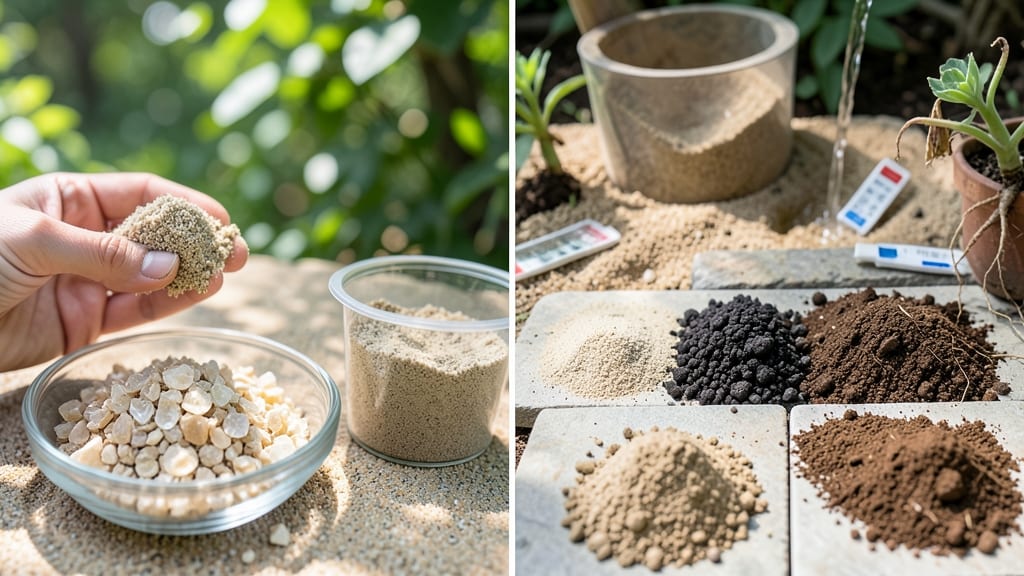
Sand soil pictures reveal its distinctive coarse, pale grains and minimal structure, typically found in beachfront areas or desert landscapes. Amending it with organic materials like compost boosts water retention and fertility for plants adapted to dry conditions.
This type of soil gets its signature look from large mineral particles that barely hold together, creating that signature grainy appearance. 🌊 Unlike clay or loam, sand drains water so quickly that plants struggle to access nutrients unless you modify it.
I've seen gardeners mix in 30% compost by volume to transform it into a workable medium for vegetables and ornamental plants.
What's fascinating is how this soil's mineral composition—often rich in quartz—affects plant roots differently than other textures. For instance, coastal sand might contain shell fragments that raise pH levels, while desert sand stays more neutral. Testing your soil's pH before amending can save you from overcorrecting with lime or sulfur.
💡 In This Article
- How to Recognize Sand Soil in Gardens and Landscapes
- Improving Sand Soil for Better Plant Growth
How to recognize sand soil in gardens and landscapes
Sand soil's signature look comes from its particle size—individual grains are 0.05 to 2 millimeters in diameter, far larger than silt or clay.
These coarse particles create that signature grainy texture you see in pictures, where the soil barely holds together when dry. 🌊 Unlike clay soil (which forms tight clumps) or loam (which crumbles easily), sand feels gritty between your fingers and drains water so quickly that plants often struggle without amendments.
This rapid drainage happens because sand particles have minimal surface area for water to cling to.
The mineral composition plays a huge role in its appearance.
Coastal sand often contains crushed shell fragments (raising pH levels), while desert sand is typically quartz-based with neutral pH. You'll notice beach sand looks whiter due to calcium carbonate, while inland sand may appear tan or reddish from iron oxide content.
The lack of organic matter also contributes to its pale color—unlike dark, fertile loam that's rich in decomposed plant material.
This soil type thrives in specific environments: coastal dunes, deserts, and riverbanks where water flow prevents finer particles from settling.
The visual difference becomes clear when you compare it to clay soil's smooth, sticky texture or loam's balanced crumb structure. 🏜️ In landscapes, sand soil often creates that "washed-out" look where plants appear stressed because roots can't access enough moisture or nutrients between grains.
One key identification test is the ribbon test: when you moisten sand and try to form a ribbon between your fingers, it crumbles immediately. Clay soil would stretch into a long ribbon, while loam would form a short, crumbly one.
The lack of cohesion in sand means it's essentially just mineral particles with almost no binding organic material—this is why it feels so loose and dry to the touch.
In nature, you'll find sand soil in areas with high wind or water erosion that carries away finer particles. The particles themselves are typically 90% quartz, with trace amounts of feldspar and mica that give it that characteristic sparkle when sunlight hits it.
This mineral composition makes sand soil particularly poor at retaining water or nutrients, which is why you often see sparse vegetation in pure sand environments unless adapted species like succulents or grasses are present.
The visual differences extend to moisture retention: sand dries out within hours after watering, while clay stays wet for days.
This rapid drying creates that signature "flash flood" effect where water runs right through, leaving the soil bone dry underneath. 💧 This extreme drainage is both the soil's defining characteristic and its biggest challenge for gardeners trying to grow moisture-dependent plants.