How To
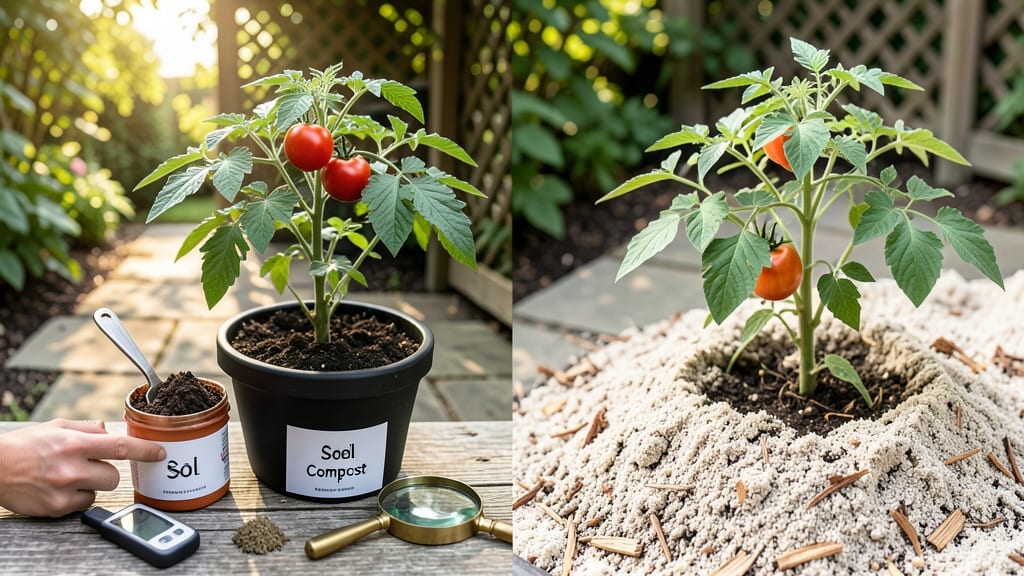
Soil and compost are not the same thing: soil is the natural medium where plants grow, made of minerals, organic matter, and microorganisms, while compost is decomposed organic material used to enrich soil fertility and structure. Each serves distinct roles in gardening and plant health.
Soil is the foundation where plants anchor and thrive, packed with minerals, living organisms, and air pockets that create the perfect ecosystem. 🌱 Meanwhile, compost acts like a nutrient booster shot—it’s rich in decomposed plant and food scraps that add organic matter to improve soil texture and fertility over time.
Think of soil as your garden’s home base and compost as the premium fertilizer that keeps it healthy and productive.
Many gardeners mix them together to create the ideal growing medium, but using them separately serves different purposes.
For instance, I always use pure compost as a top-dressing for established plants to feed their roots without disturbing the soil structure, while new planting beds get a 50/50 blend of soil and compost for the best start.
💡 In This Article
- How Soil and Compost Differ in Composition and Function
- When to Use Soil vs Compost in Gardening Projects
How soil and compost differ in composition and function
At the microscopic level, soil is a complex ecosystem containing 45% minerals (sand, silt, clay), 25% water, 25% air, and 5% organic matter—including decomposed leaves, roots, and microbial life. This mineral framework provides physical support for plants while holding moisture and nutrients.
For example, clay soil particles (less than 0.002 mm) create tiny pores that retain water and nutrients, while sandy soil (particles 0.05-2 mm) drains quickly but lacks nutrient-holding capacity. 🌱
Compost, on the other hand, is primarily organic matter in various stages of decomposition. When you pile kitchen scraps like banana peels or coffee grounds with brown materials like shredded newspaper, aerobic bacteria and fungi break down the carbon-rich and nitrogen-rich materials into humus—a dark, crumbly substance.
This process raises the organic matter content of soil from its typical 5% to 20-30% when mixed in, dramatically improving water retention and microbial activity. The key difference? Soil provides the structural foundation, while compost acts as a nutrient powerhouse.
Here’s where the chemistry gets interesting: compost has a neutral to slightly acidic pH (6.0-7.5), which helps buffer soil pH extremes that might lock out essential nutrients like phosphorus. Meanwhile, soil pH varies widely—from 4.5 (acidic, like pine forests) to 8.5 (alkaline, like desert soils).
When you add compost, it not only feeds plants directly but also creates the ideal environment for beneficial microbes to thrive, which in turn break down organic matter even further. This microbial activity is what transforms hard, compacted soil into loose, fertile growing medium.
The decomposition process in compost also releases plant-available nutrients like nitrogen, phosphorus, and potassium at a slower, steadier rate than synthetic fertilizers. For instance, a well-aged compost pile can release 1-3% nitrogen over months, compared to the immediate but short-lived boost from chemical fertilizers.
This gradual release matches plant uptake patterns, reducing the risk of nutrient runoff while promoting long-term soil health. The texture of finished compost—soft, spongy, and dark—contrasts sharply with raw soil’s gritty, mineral-heavy composition.
Consider this real-world example: When I planted tomatoes in pure garden soil, their growth was stunted until I mixed in 20% compost by volume. The compost didn’t just add nutrients—it improved soil structure, allowing roots to penetrate deeper and water to drain more efficiently.
Without the compost, the soil’s natural mineral content alone couldn’t support the tomatoes’ heavy feeding demands. This demonstrates how soil and compost work together: soil provides the physical space, while compost supplies the biological activity that keeps it productive.
One common misconception is that compost can replace soil entirely. While it’s possible to grow plants in 100% compost (like in raised beds), it lacks the mineral diversity and structural stability of natural soil. For example, compost alone won’t provide the calcium-rich minerals that prevent blossom-end rot in tomatoes.
That’s why most gardeners blend them—using soil for structure and compost for fertility creates the perfect balance for plant growth. 🌿