
How To
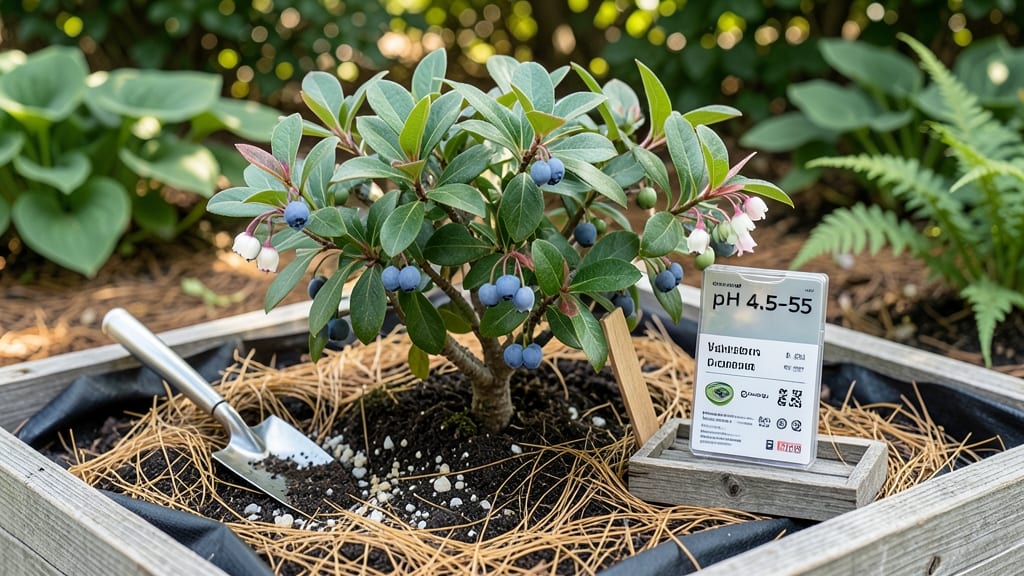
Creating the ideal soil for blueberries means maintaining a pH between 4.5 and 5.5, ensuring a well-draining yet moisture-retentive blend with 50% organic matter (such as peat moss or composted pine bark), and avoiding alkaline conditions that lock out essential nutrients. Heavy clay or unamended soil will stunt growth and reduce fruit production.
Blueberries are finicky about their growing conditions, and soil pH is the foundation of success. 🌱 The acidic environment isn't just about flavor—it's about unlocking nutrients like iron and manganese that become unavailable in neutral or alkaline soil.
I've found that even a slight pH drift above 6.0 can trigger iron chlorosis, where leaves turn yellow while veins stay green, effectively starving the plant. For container growers, this means testing your mix annually since organic matter breaks down and pH naturally rises over time.
Beyond pH, the texture matters just as much. Blueberries hate soggy roots but need consistent moisture, so I blend equal parts peat moss (for acidity) with perlite or coarse sand (for drainage) and add composted pine fines for structure.
This creates a sponge-like medium that holds water without suffocating roots. Pro tip: If your soil feels compacted when squeezed, add more organic matter—it's the best insurance against poor drainage.
💡 In This Article
- Why Blueberry Soil Must Be Acidic: pH Science and Nutrient Absorption
- DIY Blueberry Soil Mix Recipes: Organic Amendments for Containers and Beds
Why blueberry soil must be acidic: pH science and nutrient absorption
Blueberries evolved in acidic, nutrient-poor environments like bogs and pine forests, where the soil naturally stays between pH 4.5 and 5.5. This acidity isn't just a preference—it's a biological necessity. At these levels, essential micronutrients like iron, manganese, and zinc become soluble and available for uptake.
When soil pH rises above 6.0, these nutrients precipitate into insoluble forms, effectively locking them out of the plant's reach. 🌿 For example, iron chlorosis (yellowing leaves with green veins) occurs when pH exceeds 6.5, because iron oxides form and the plant can't access it despite being present in the soil.
The chemistry gets even more interesting when you consider aluminum toxicity. While aluminum is harmful to most plants, blueberries actually thrive with trace amounts in acidic soil. This element helps strengthen cell walls and improves drought resistance.
However, in neutral or alkaline soils, aluminum becomes toxic to blueberries, causing stunted growth and poor fruit set. What's fascinating is how mycorrhizal fungi—beneficial soil microbes that form symbiotic relationships with blueberry roots—prefer acidic conditions too.
These fungi help the plant absorb phosphorus and water, but their activity drops sharply when pH exceeds 6.0.
Here's what happens when you ignore these requirements: plants may grow leaves but produce little to no fruit, or the berries that do form are small and lack flavor. I've seen firsthand how a pH of 6.5 can reduce blueberry yield by 40-50% compared to ideal conditions.
The key is regular testing—use a soil pH meter or send samples to a lab. For container growers, I recommend testing every 3-6 months since organic matter breaks down and pH naturally rises over time.
To maintain the right pH, you'll need to monitor and adjust regularly. If your soil tests above 5.5, add elemental sulfur (it takes 2-3 months to lower pH) or aluminum sulfate for faster results.
For alkaline soils, you might need to replace 25-50% of the existing mix with fresh acidic amendments. The opposite problem—too acidic (below 4.5)—is rare but can be corrected with dolomitic lime, though this should be done cautiously in small amounts.
One common mistake is assuming all organic matter is acidic. While peat moss and pine bark are naturally acidic, composted leaves or cow manure can raise pH over time. That's why I recommend using sphagnum peat moss (pH 3.0-4.5) as the base for blueberry mixes.
It's the gold standard for maintaining that critical 4.5-5.5 range while providing excellent moisture retention. For long-term success, think of your soil as a living ecosystem that needs regular maintenance—just like your blueberry plants.
Consider this analogy: blueberry roots are like straws trying to sip from a glass. In alkaline soil, the glass is coated with an invisible sealant that prevents the straw from reaching the liquid—no matter how much water is present.
That's why even well-fertilized blueberries in neutral soil may look healthy but produce tiny, tasteless berries. The acidity isn't just about nutrients—it's about creating the perfect chemical environment where every part of the plant can thrive. 💫