
Light Requirements
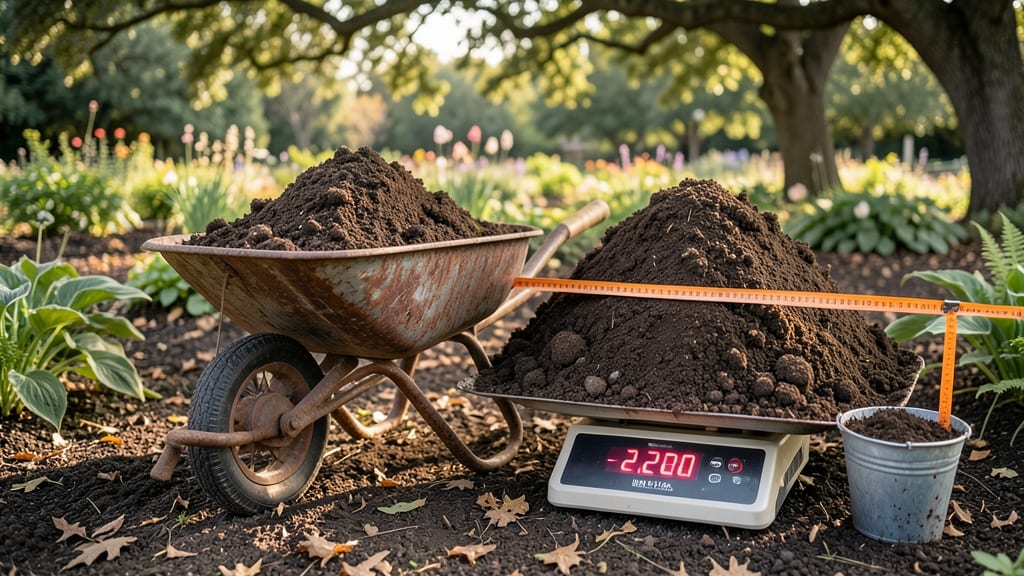
A yard of garden soil weighs 1,800 to 2,200 pounds on average, with variations depending on soil type—loose topsoil typically falls between 1,500–1,700 pounds, while clay-heavy soil can exceed 2,500 pounds. Moisture levels play a critical role, as wet soil can add 20–30% more weight compared to dry conditions.
A yard of garden soil's weight shifts dramatically based on its composition and moisture. Loose, sandy soil sits lighter at the lower end of the scale, while dense clay packs in more mass per cubic yard. 💫 The moisture factor alone can swing your calculations by hundreds of pounds—dry summer soil behaves differently than spring's damp mix.
For practical projects, I always account for a 25% buffer when ordering, especially if rain is forecasted.
Understanding these variations helps avoid overpaying for delivery or underestimating project needs. For instance, a 10-cubic-yard order of clay soil could weigh over 25,000 pounds—that's roughly the weight of a small truck! Knowing your soil type and current moisture lets you plan truck capacity and budget accordingly.
💡 In This Article
- Factors Affecting Garden Soil Weight by Type and Composition
- Calculating Soil Weight for Delivery and Landscaping Projects
Factors affecting garden soil weight by type and composition
The weight of garden soil isn't just about volume—it's a science of particle density and moisture interaction. Clay particles, for example, are flat and plate-like, packing tightly together to create dense soil that can weigh up to 2,500 pounds per cubic yard.
In contrast, sandy soil has round, loose particles that leave air pockets, reducing weight to 1,500–1,700 pounds—about the same as a small sedan! 🔥 The key difference lies in how these particles arrange themselves: clay's high surface area allows it to hold more water, while sand drains quickly.
Organic matter plays a surprising role too. Compost-amended soil contains decomposed plant material that's lighter than mineral particles, typically reducing overall weight by 10–15%. A mix of 50% topsoil and 50% compost might weigh 1,600–1,900 pounds per yard instead of the heavier clay range.
The moisture factor compounds this—wet clay can swell 40% in volume when saturated, while sandy soil only absorbs 20% of its weight in water, making moisture's impact type-dependent.
Compaction matters just as much as composition. Foot traffic or machinery can compress soil by 15–25%, increasing density and weight. Imagine walking on a garden bed: each step forces particles closer together, making the same cubic yard suddenly 200–300 pounds heavier.
This explains why freshly tilled soil feels lighter than packed garden paths—it's the same material, just differently arranged! For accurate measurements, always test soil in its natural state before projects.
Let's break down the science: soil weight = particle density × moisture content × compaction factor. Clay's 2.6–2.8 g/cm³ density contrasts with sand's 1.6–1.8 g/cm³, while loam (the ideal mix) sits at 2.2–2.4 g/cm³.
When you factor in moisture—where clay can hold 30–50% of its weight in water—you get the dramatic variations we see in real-world projects. 💫
Real-world example: A 10-cubic-yard delivery of clay soil could weigh 25,000 pounds when dry, but swell to 30,000+ pounds after rain. That's why landscapers always ask about recent weather—it directly impacts truck capacity and delivery costs.
For precise calculations, multiply your cubic yards by the soil type's density factor (1.5 for sand, 2.2 for loam, 2.6 for clay) and adjust by 25% for moisture as a safety margin.
Here's what most people overlook: the air content in soil. Loose topsoil contains 30–40% air by volume, while compacted clay may have only 10–15%**. This invisible factor explains why freshly dug soil feels deceptively light—until you compress it.
Understanding these factors lets you predict weight changes during projects, like when tilling transforms loose soil into dense planting beds.