
Light Requirements
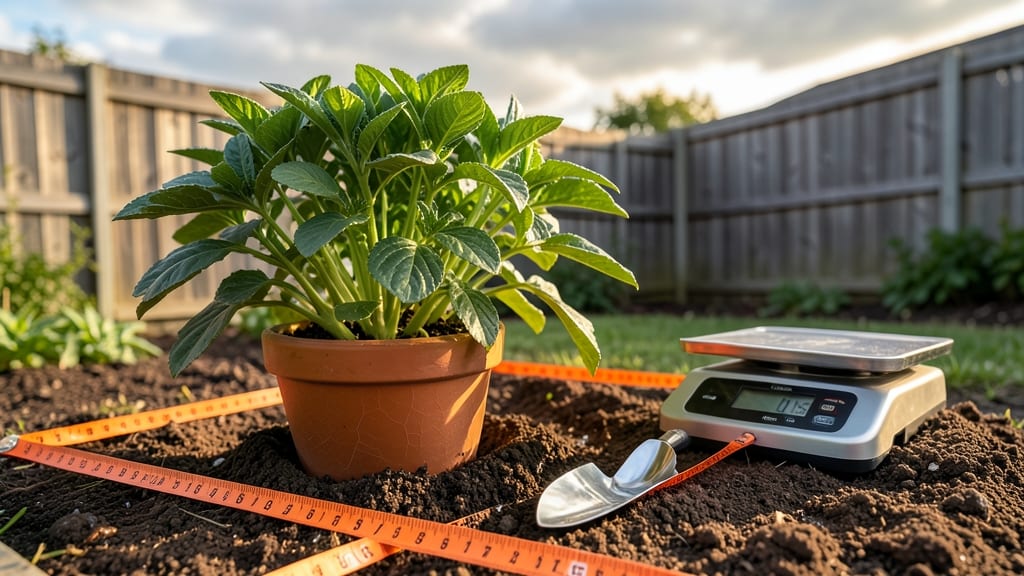
To determine how much 1 yard of topsoil weighs, expect 1,800 to 2,200 pounds based on moisture levels, compaction, and soil composition—sandy mixes are lighter while clay-rich blends hit the upper range. Always verify with suppliers, as screened topsoil can weigh up to 20% more than loose varieties.
Understanding topsoil weight is all about what's in that cubic yard. 🌱 Moisture plays the biggest role—wet soil can add 300-500 extra pounds compared to dry, while organic matter like compost increases weight slightly. Clay soils pack more densely, giving them that heavier feel, while sandy soils stay lighter.
For landscaping, I always ask suppliers for their specific weight guarantees to avoid surprises during delivery—some brands even offer weight-adjusted pricing!
This weight variance explains why 1 yard of topsoil might feel deceptively light when loose but become surprisingly heavy once spread and compacted. The key is balancing your project's needs with realistic weight estimates—especially when calculating for slopes or raised beds where additional soil volume may be required.
Pro tip: If you're estimating for a large area, use a soil calculator that accounts for both cubic yards and weight—many online tools let you input your soil type and moisture conditions for precise ordering.
This saves money and prevents those last-minute delivery headaches when you realize you're short on coverage.
💡 In This Article
- Factors Affecting Topsoil Weight per Cubic Yard
- Topsoil Weight Calculator: Estimating for Landscaping Projects
Factors affecting topsoil weight per cubic yard
The weight of topsoil isn't fixed—it's a dynamic balance of four key variables. First, moisture content creates the biggest swing: dry topsoil typically weighs 1,800-2,000 pounds per yard, while saturated soil can jump to 2,200-2,500 pounds.
This happens because water fills the tiny air pockets between particles, effectively adding 300-500 extra pounds of liquid weight to that cubic yard. Think of it like packing a suitcase—wet soil is the overstuffed version that feels much heavier than its dry counterpart. 💧
Next comes particle composition, where soil type acts like a density scale. Sandy soils, with their larger particles and more air space, usually weigh 1,600-1,900 pounds per yard—about 15-20% lighter than clay-heavy blends.
Clay particles are microscopic and pack tightly, creating a denser matrix that can reach 2,100-2,300 pounds per yard. Even loamy soils (the gardener's gold standard) fall in the middle at 1,900-2,100 pounds, thanks to their balanced mix of sand, silt, and organic matter.
The organic component itself adds 50-100 pounds per yard when compost or decomposed plant material is present.
Compaction plays its own sneaky role—loose, freshly delivered topsoil might weigh 1,800 pounds, but after spreading and tamping down (as you'd do for a lawn or garden bed), that same volume could shrink to 1,500 pounds due to reduced air pockets.
Conversely, screened topsoil—where larger rocks and debris are removed—often weighs 10-20% more because it's packed with finer particles that settle tighter. This is why suppliers sometimes offer "bulk" vs. "premium" weight guarantees: the processing method changes the end product's density. 🏗️
Temperature also sneaks into the equation through seasonal variations. In winter, frozen topsoil can weigh up to 30% more than its thawed equivalent because ice crystals form within the particles. Meanwhile, summer heat can dry out soil, reducing weight by similar margins.
These fluctuations explain why professional landscapers always specify "moisture-adjusted" weights in contracts—it's the only way to get consistent results across different seasons and climates.
For real-world comparison, imagine carrying a 10-gallon bucket of each type: sandy soil would feel like lifting 50-60 pounds, while clay-heavy soil would be more like 70-80 pounds—even though they occupy the same space.
This physical difference is why contractors often recommend ordering 10-15% more topsoil than your cubic yard calculations suggest, especially for projects with uneven terrain where settling will occur.
The science here is simple: what looks like the same volume can feel like completely different weights depending on these hidden factors. ⚖️
One final twist: salinity in coastal areas can add another 50-100 pounds per yard due to mineral deposits. This is why topsoil near oceanfront properties sometimes carries weight guarantees that seem unusually high—those extra minerals don't just affect weight, they also change how plants will grow in the amended soil.
Always ask suppliers about regional variations if you're working near bodies of water or in areas with known mineral-rich deposits. 🌊