
Light Requirements
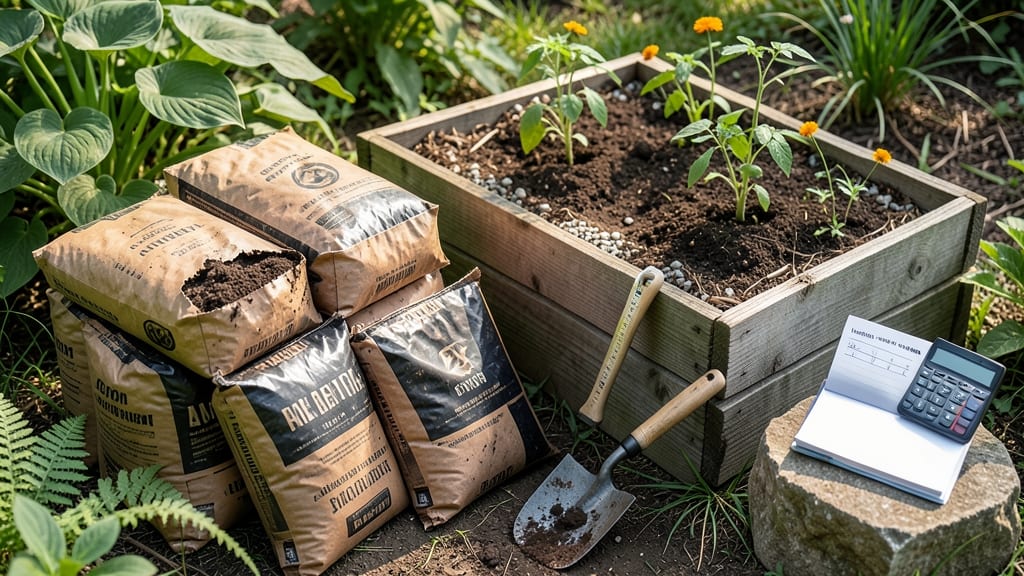
To determine how many bags of soil you need, calculate your container's volume (length × width × height), multiply by 1.3 to account for loose soil, then divide by 2 cubic feet per standard 40-pound bag. For instance, a 12-inch-deep planter typically requires about 1 bag per square foot of surface area.
Understanding your container's dimensions is key—most gardening bags contain 2 cubic feet of soil, but planters often need more due to settling. 🌱 For example, a 10-inch-deep window box with 2 square feet of surface area would need roughly 3 bags (accounting for settling and depth).
I always recommend buying an extra bag for deeper-rooted plants or when mixing in amendments like compost. The right amount ensures proper drainage while preventing soil compaction over time.
Consider your project type too: raised beds need 1-2 bags per square foot depending on depth, while hanging baskets may only require 1 bag total. Always factor in any drainage layers or mulch you'll add beneath the soil—these can take up valuable space in your calculations.
💡 In This Article
- Calculating Soil Volume for Different Container Types
- Best Soil Bag Sizes for Common Gardening Projects
Calculating soil volume for different container types
Understanding how to calculate soil volume starts with measuring your container's dimensions. For rectangular planters, multiply length × width × height in feet, then multiply by 1.3 to account for loose soil settling—this gives you the cubic feet needed.
For example, a 2-foot-long × 1-foot-wide × 1-foot-deep planter holds 2 cubic feet of soil before settling, but you'll need about 2.6 cubic feet of loose soil (1.3 × 2), which means 2 standard 40-pound bags (2 cubic feet each). 🌱
Hanging baskets and window boxes require special attention because their depth is often shallower than their width. A 12-inch-deep hanging basket with a 10-inch diameter (about 0.6 square feet of surface area) holds roughly 0.5 cubic feet of soil when packed.
However, you'll need about 0.65 cubic feet of loose soil (1.3 × 0.5), so 1 bag (2 cubic feet) will cover multiple small baskets. Always leave 2-3 inches of space at the top for watering and mulch.
Raised beds are trickier because they often have deeper root zones. A 4-foot × 8-foot raised bed that's 12 inches deep holds 26.67 cubic feet of soil (4 × 8 × 1.33 feet).
Dividing by 2 cubic feet per bag gives you 13.3 bags—round up to 14 bags to account for drainage layers (like landscape fabric or gravel) and settling. For in-ground planting, subtract the depth of existing soil and add 6-12 inches for root space, adjusting calculations accordingly.
Drainage layers and mulch also impact your soil volume needs. A 2-inch layer of gravel or rocks at the bottom of a planter can take up 10-15% of the container's depth, reducing usable soil space.
For example, in a 12-inch-deep planter, a 2-inch drainage layer leaves only 10 inches for soil. Adjust your height measurement downward by 2 inches before calculating volume. Mulch on top doesn't affect soil volume but helps retain moisture and regulate temperature.
For deeper-rooted plants like tomatoes or shrubs, add an extra 2-4 inches to your depth measurement. These plants need more room to establish strong root systems, which can double your soil requirements.
For instance, a tomato plant in a 18-inch-deep pot needs about 1.5 times the soil volume of a shallow planter. Always check plant tags for recommended pot sizes—they often include soil volume guidelines.
Pro tip: Use a tape measure for accuracy, especially in irregularly shaped containers. For circular pots, measure the diameter and divide by 2 to get the radius, then use the formula πr² × depth.
For example, a 16-inch-diameter pot with 12-inch depth holds about 1.2 cubic feet of soil (π × 8² × 1 = 201 cubic inches ÷ 1,728 = 0.116 cubic feet × 12 inches = 1.4 cubic feet). 💫