
How To
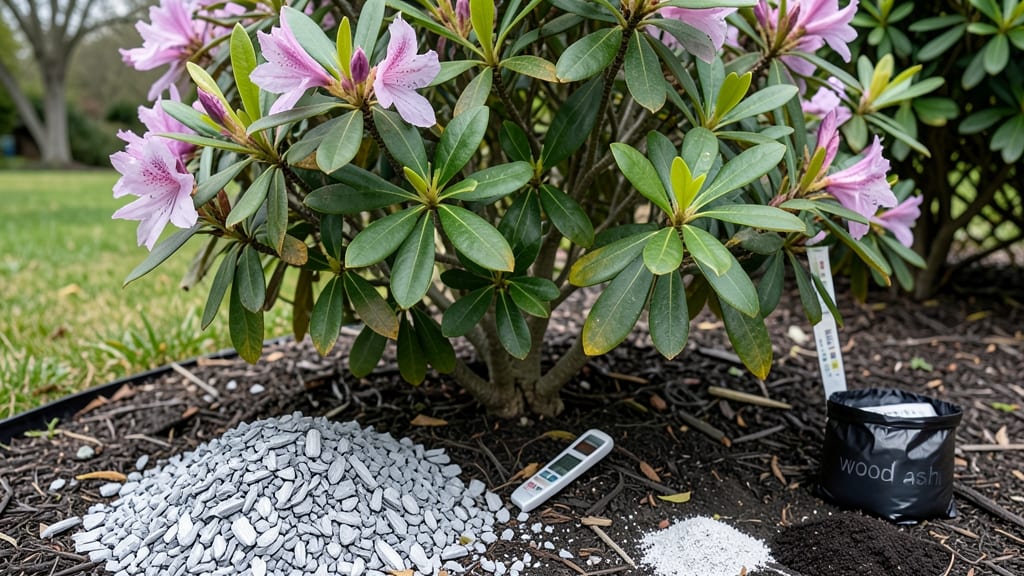
Wood ash does not make soil acidic—instead, it raises soil pH by neutralizing acidity, making it alkaline. However, overuse can disrupt nutrient balance, harming plants like blueberries or azaleas that prefer acidic conditions.
Wood ash actually does the opposite—it increases soil pH by neutralizing acidity, which is why gardeners sometimes use it to counteract overly acidic soil. 🌱 The alkaline properties come from potassium carbonate in the ash, which reacts with hydrogen ions in acidic soil.
This shift can actually benefit plants like lavender or broccoli that thrive in neutral to alkaline conditions, but it can stress acid-loving plants by locking out essential nutrients like iron and manganese.
For best results, I recommend testing your soil's pH before applying ash and sticking to small amounts—about 1 pound per 100 square feet—then monitoring plant responses. Overapplication can lead to nutrient imbalances that show up as yellowing leaves or stunted growth, especially in sensitive plants.
Think of wood ash as a pH adjuster rather than a fertilizer. While it can help raise soil pH, it won't provide the nutrients your plants need to grow strong. 💫 Pair it with compost or organic matter for balanced results.
💡 In This Article
- How Wood Ash Alters Soil pH Chemistry
- Safe Wood Ash Application Rates for Different Plants
How wood ash alters soil pH chemistry
Wood ash primarily contains potassium carbonate (K₂CO₃), which acts as a natural alkaline agent when mixed with soil. When ash dissolves in water, it releases potassium (K⁺) and carbonate (CO₃²⁻) ions.
The carbonate ions react with hydrogen ions (H⁺) in acidic soil through a neutralization reaction: CO₃²⁻ + 2H⁺ → H₂O + CO₂. This process consumes acidic hydrogen ions, effectively raising the soil's pH level from acidic (below 7.0) toward neutral or alkaline (above 7.0).
The pH shift isn't immediate—it depends on soil moisture and organic matter. In sandy soils with minimal buffering capacity, you might see a noticeable pH increase after just 1-2 applications, while clay soils may require 3-4 applications spread over months to achieve similar results.
For example, a soil starting at pH 5.5 (mildly acidic) could rise to pH 6.5 (neutral) after applying 2 pounds of wood ash per 100 square feet in a well-drained garden bed. 💫
This alkaline boost explains why wood ash benefits certain plants. Vegetables like broccoli and cabbage prefer neutral to slightly alkaline soils (pH 6.0-7.5), while ornamental plants such as lavender and roses thrive in similar conditions.
The potassium in ash also serves as a mild fertilizer, supporting plant growth—but the pH adjustment is the primary mechanism at work. However, this same alkalinity can become problematic for acid-loving plants like blueberries or hydrangeas.
For acid-sensitive plants, the pH shift can trigger nutrient deficiencies. When soil becomes too alkaline (above pH 7.5), essential micronutrients like iron (Fe), manganese (Mn), and zinc (Zn) become less available.
These nutrients are crucial for chlorophyll production and enzyme function, so their scarcity often manifests as yellowing between leaf veins (interveinal chlorosis) or stunted growth. 🌱 The imbalance occurs because alkaline conditions cause these metals to form insoluble compounds that plants can't absorb.
Consider the example of azaleas, which require acidic soil (pH 4.5-5.5) to access iron. If wood ash raises the pH to 6.0, the plant may develop yellow leaves despite adequate iron in the soil—because the iron is chemically locked away.
This phenomenon highlights why wood ash should never be used as a blanket soil amendment without first assessing your plants' specific needs.
The chemical process also varies based on ash source. Hardwood ashes (like oak or maple) are more alkaline than softwood ashes (like pine), with pH levels ranging from 10.0-12.0 when dissolved in water. Softwood ashes contain more organic compounds that decompose slowly, providing a gentler pH adjustment over time.
Always use untreated, untreated wood ash—never from painted or chemically treated wood, as these can introduce harmful toxins into your soil.